Venedig bei Sonnenuntergang — History & Facts
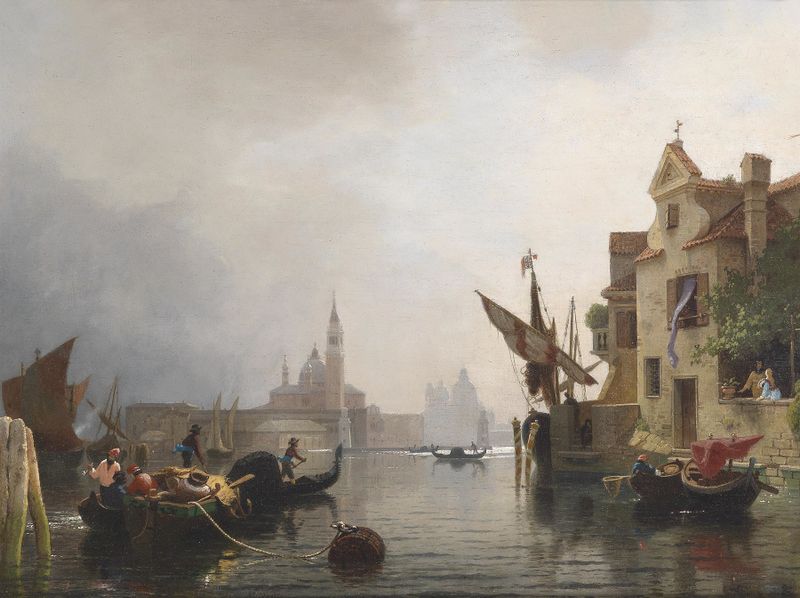
What secret hides in the quiet of the canvas? As the sun sinks towards the horizon, a sense of nostalgia washes over the viewer, inviting reflection on fleeting moments and the beauty of impermanence. Focus on the gentle hues that emerge from the sky, blending soft oranges and muted pinks that cradle the tranquil waters of Venice. The painter captures the serene reflection on the canal, where the ripples delicately dance, creating an interplay of light and shadow. Look closely at the architectural silhouettes framing the scene; their outlines dissolve into warmth as they harmonize with the sunset, drawing you into a world that feels both vibrant and contemplative. Beneath the serene surface, a tension emerges between the ephemeral beauty of the moment and the inevitable passage of time.
The juxtaposition of the warm colors against the cool shadows of the buildings evokes a bittersweet longing, as if the viewer is peering into a past that both comforts and eludes them. Each brushstroke carries an echo of memory, encouraging the audience to ponder their own experiences intertwined with the landscapes of their lives. In 1877, while painting Venedig bei Sonnenuntergang, the artist found inspiration in a city rich with history and romance. Meixner was absorbed in the evolving art scene, where Impressionism was beginning to take root in Europe.
As he navigated personal and artistic transformations, this work reflects both his technical mastery and a yearning for the transient beauty that defined the era.