
Venice — History & Facts
Can beauty exist without sorrow? The tranquil canals of Venice, with their reflections dancing in the soft light, suggest that even in exquisite settings, a whisper of loneliness lingers. Look to the left at the delicate blend of blues and greens, where water meets stone, capturing a moment eternally suspended in time. Notice how the buildings, weathered yet proud, stand guard over the waterway, their soft hues muted by the gentle caress of twilight. The brushwork is fluid and almost impressionistic, urging your eye to follow the flowing line of the canal, leading you through a scene imbued with both serenity and isolation. As you delve deeper, observe the solitary gondola that glides silently across the water, an emblem of both romance and solitude.
The stark contrast of the rider’s dark silhouette against the shimmering light reflects the bittersweet nature of the scene—beauty intertwined with the echo of absence. The stillness here captures a poignant moment, as if the city itself mourns the loss of its once-bustling life, leaving only silence in its wake. Frits Thaulow painted this work in 1899 during his time in Venice, a city that inspired many artists with its ethereal charm. At this point in his life, Thaulow was already recognized for his mastery of light and water, reflecting the technological advancements in painting techniques that allowed for greater vibrancy.
The world of art was shifting, embracing impressionistic influences, and Thaulow's work embodies this transition, capturing not just the visual beauty of Venice but the deeper, more complex emotions that weave through its canals.
More Artworks by Frits Thaulow
Browse all →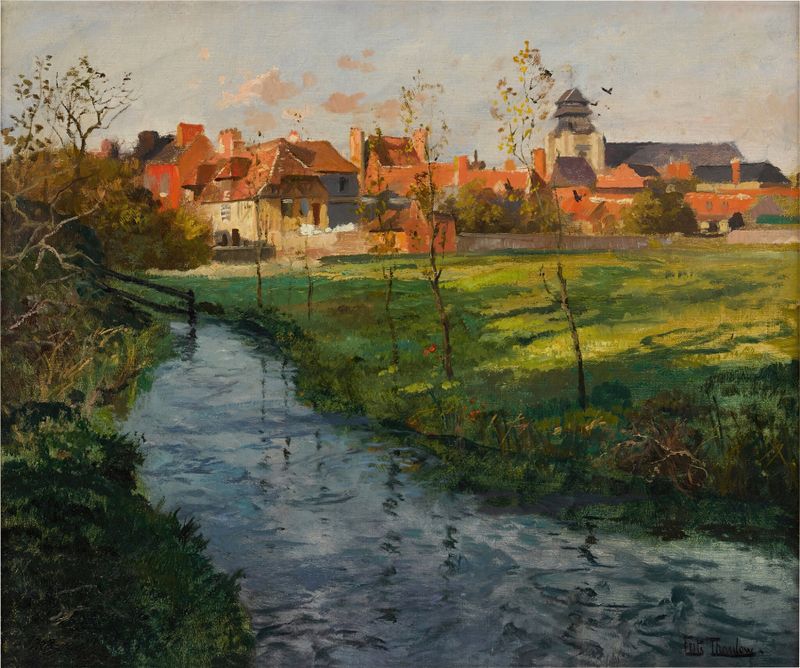
Village by a Stream
Frits Thaulow

Spring Thaw
Frits Thaulow
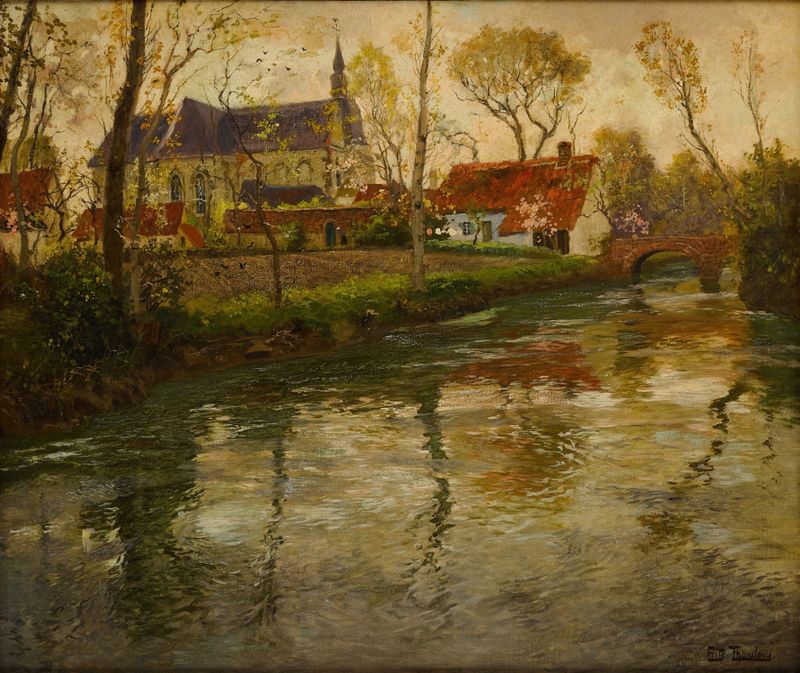
A River Landscape with a Church Beyond
Frits Thaulow

Hameau en bord de rivière
Frits Thaulow
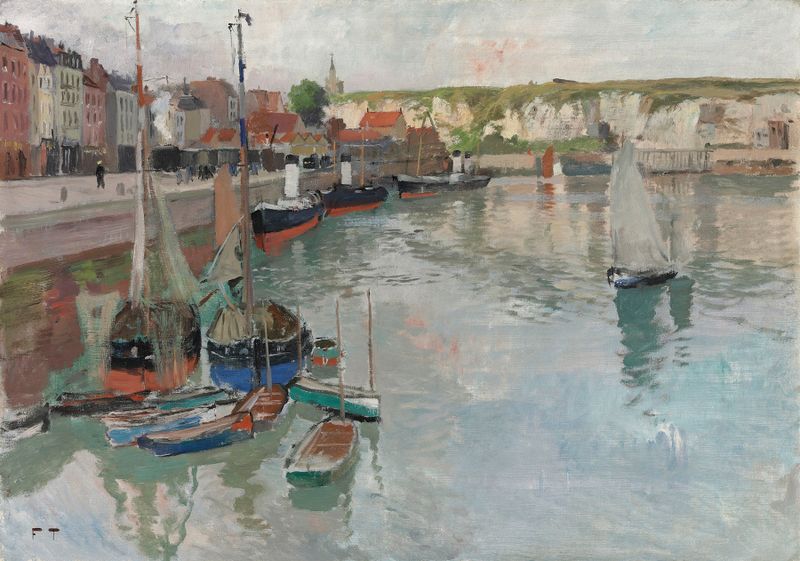
Dieppe
Frits Thaulow
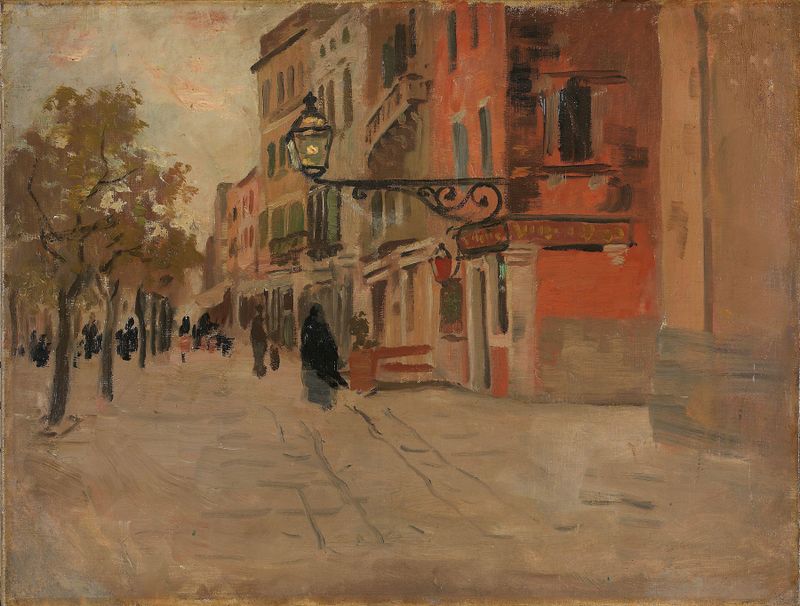
Street in Venice
Frits Thaulow

The Lysaker River In Winter
Frits Thaulow
Street in Kragerø
Frits Thaulow
Canal en hiver
Frits Thaulow

Marble Arch, London
Frits Thaulow





