
Venice — History & Facts
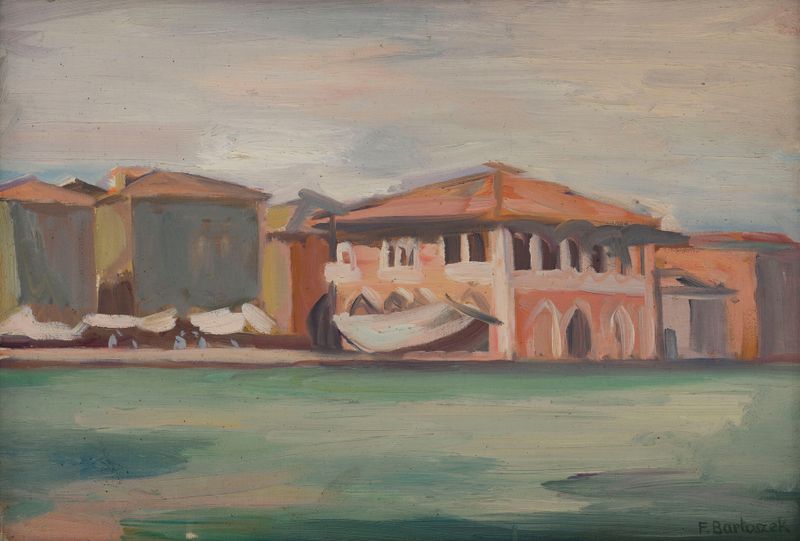
Can paint confess what words never could? In Venice, the ethereal essence of dreams whispers through the fluid strokes and shimmering colors, inviting us to wander the winding canals of imagination. Look closely at the gentle swirls of blues and greens that envelop the scene. The light plays upon the water, creating a dance of reflections that beckons the viewer's gaze toward the horizon. Notice how the artist captures the intricate architecture, with its soft, sweeping lines and muted tones, suggesting a world both familiar and elusive.
The brushwork is loose yet purposeful, evoking the feeling of a dream in motion, where the boundaries of reality blur and dissolve. Delve deeper into the interplay of light and shadow, where the warm hues of the buildings clash with the cool tones of the water. This contrast evokes a sense of duality — the vibrant life of the city versus the tranquil stillness of the canals. The floating gondolas, though static in composition, seem to glide effortlessly, hinting at an underlying current of nostalgia and longing.
Each detail, from the delicate ripples to the distant figures, carries the weight of stories untold, reflecting the fleeting nature of memory. In 1938, Franciszek Bartoszek painted Venice amidst a turbulent time in Europe, marked by political unrest and the impending storm of World War II. Living in a world on the brink of change, Bartoszek sought solace in the beauty of urban landscapes, capturing their ephemeral charm. The painting reflects not only his mastery of technique but also his desire to preserve the beauty of a world that felt increasingly fragile.
More Artworks by Franciszek Bartoszek
Browse all →
View of San Marco and Campanillo
Franciszek Bartoszek
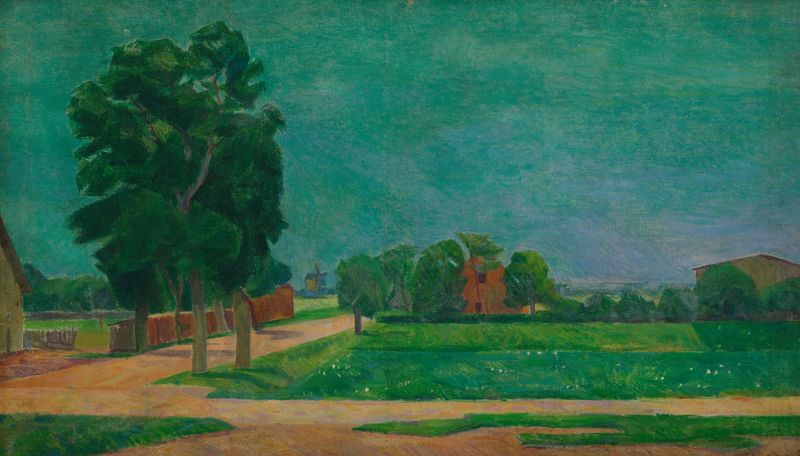
Landscape
Franciszek Bartoszek

Venice
Franciszek Bartoszek

Landscape with Pine Trees
Franciszek Bartoszek
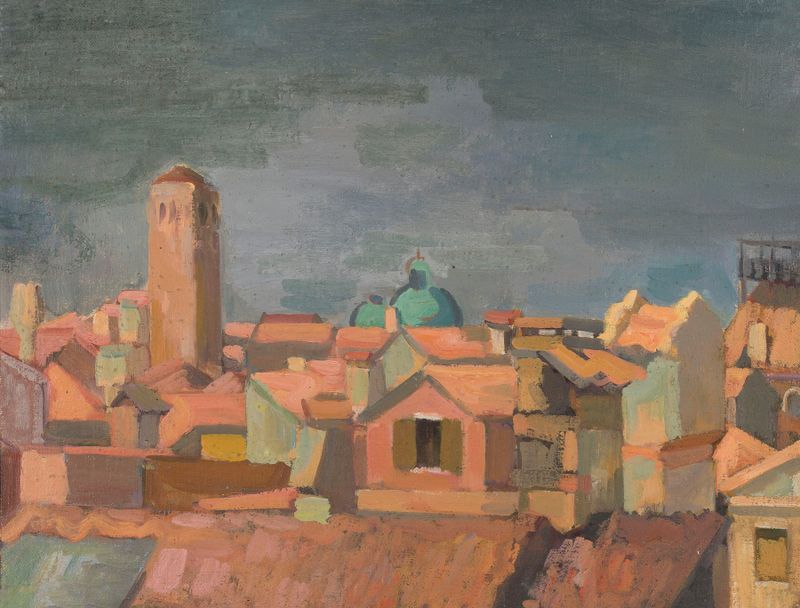
View of an Italian city
Franciszek Bartoszek
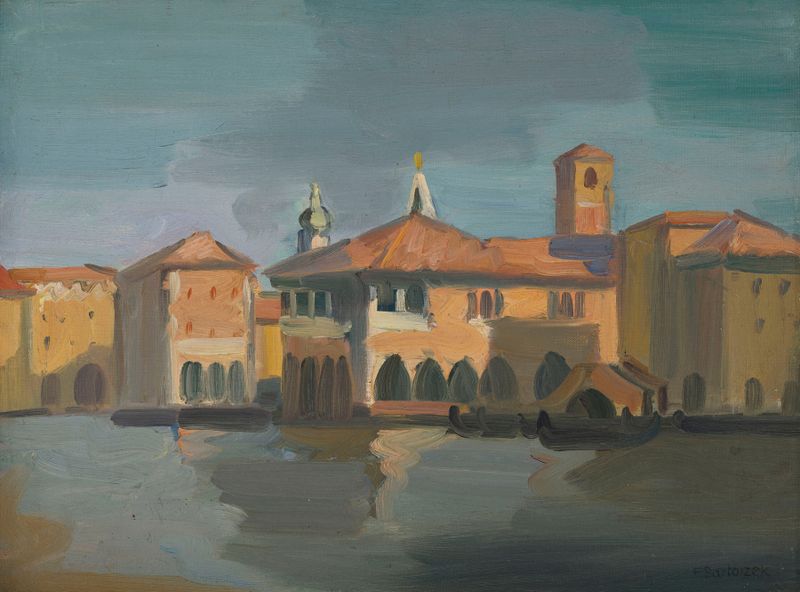
Venice II
Franciszek Bartoszek
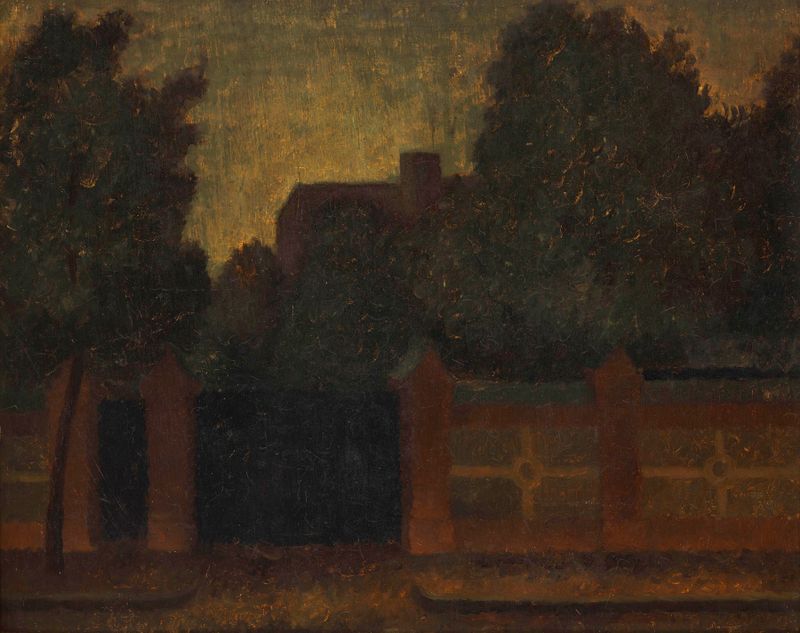
Landscape – Road behind a Fence
Franciszek Bartoszek

Venice (Canal)
Franciszek Bartoszek
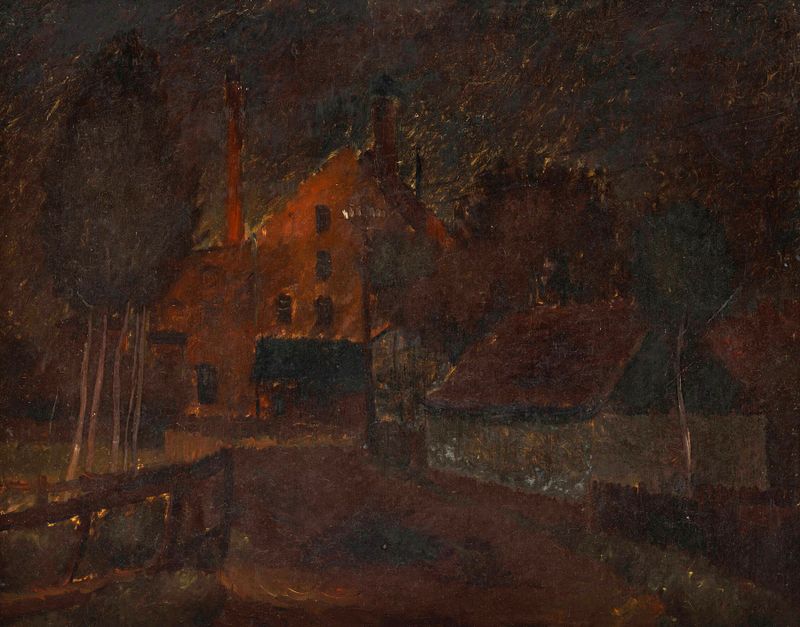
Brewery in Czarnków
Franciszek Bartoszek
Venice
Franciszek Bartoszek





