Venice, The Entrance to the Canal Grande with Santa Maria della Salute and Punta della Dogana — History & Facts
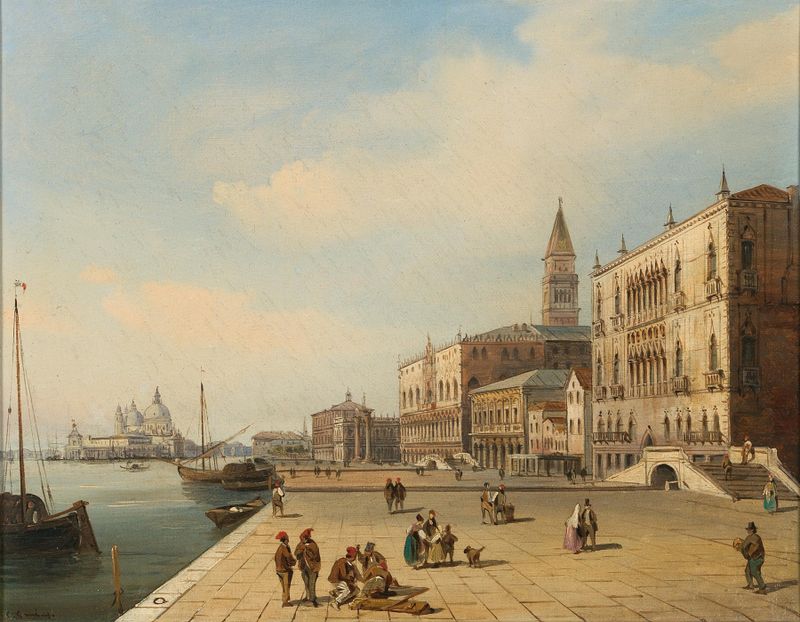
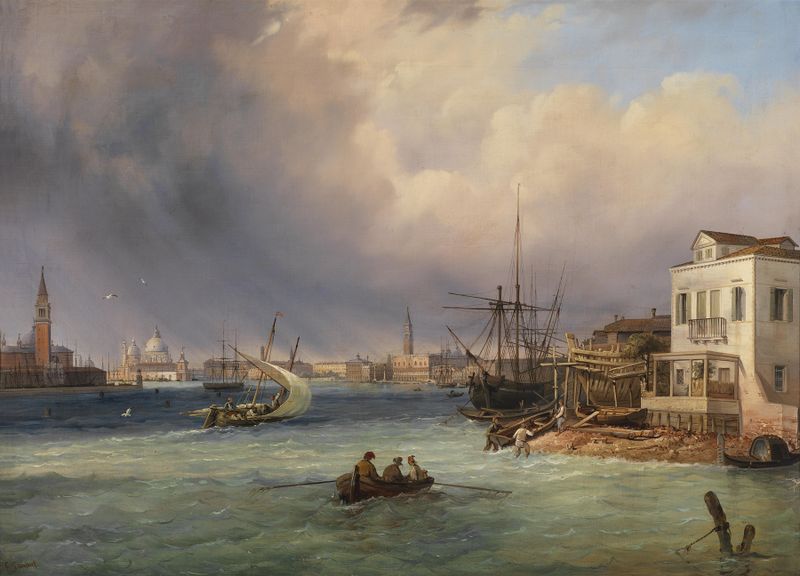
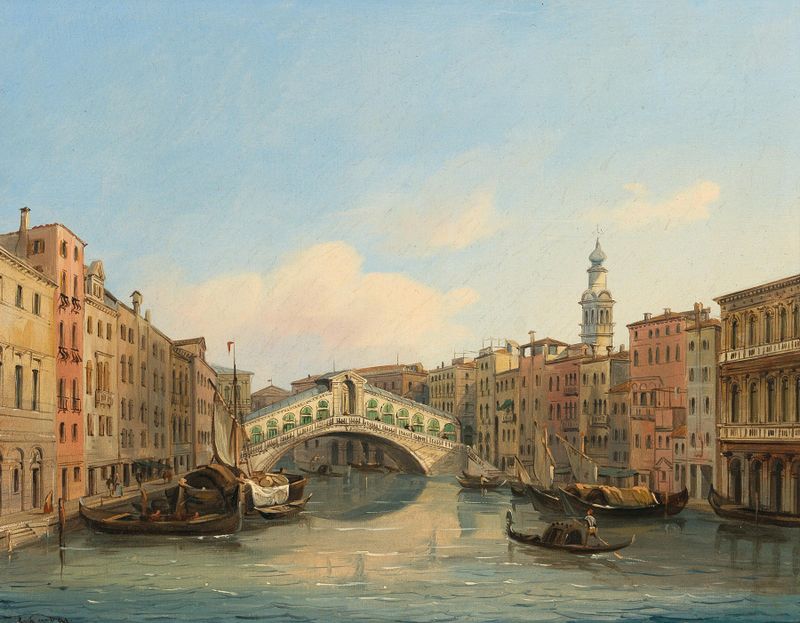
Can beauty exist without sorrow? In the stillness of a Venetian evening, where silence reigns over the shimmering waters, the heart finds a curious echo of longing and grace. Focus your gaze upon the majestic silhouette of Santa Maria della Salute. Notice how the dome stands proud against a gradient sky, the colors shifting from deep indigo to soft gold as twilight descends. The reflections in the Canal Grande are mesmerizing, a dance of light and shadow that draws your eye deeper into the scene.
Grubas employs delicate brushstrokes to capture the fluidity of water, while the soft hues evoke a sense of tranquility, inviting contemplation. Yet, beneath this serene exterior lies a tension. The contrasting architecture of Punta della Dogana, sharp and angular, disrupts the harmonious flow, suggesting a narrative of time and change. The calm water, so inviting, also seems to whisper secrets of the past—lives intertwined, stories forgotten.
In this moment, beauty dances with a poignant melancholy, hinting at the fragility of existence. The artist created this work during a period when Venice was celebrated as a beacon of artistic innovation, yet also faced the shadows of economic decline. In that moment, the city was a paradox, reflecting both splendor and decay. Grubas, likely influenced by the rich artistic heritage surrounding him, sought to capture the duality of Venice, transforming it into a timeless reflection on beauty's elusive nature.