
Via delle Tombe Pompeii — History & Facts
What first catches the eye in Via delle Tombe Pompeii is the way sunlight seems to bleach the ancient stone, flattening centuries of history into a single, dazzling moment. The painter, Apollinari Mikhailovich Vasnetsov, guides us along a Roman street where the architecture stands both proud and broken, the crisp archway on the left framing a shadow that hints at the mysteries within. The brushwork is broad and confident, almost sculptural—each stroke suggesting the roughness of carved marble and the dust of ages.
The palette is all ochres, creams, and a piercing blue sky, lending the ruins a warmth that belies their silence. The emptiness of the street, untroubled by figures, invites us to imagine ourselves as solitary visitors, pausing before the tombs of a lost city. Painted in 1898, this work belongs to a moment when artists and scholars across Europe were newly captivated by the discoveries at Pompeii. Such views were not merely records of archaeological interest; they were invitations to meditate on the passage of time and the endurance of culture.
Russian artists like Vasnetsov often traveled or drew inspiration from the Mediterranean, seeking to capture the light and atmosphere so different from their homeland. While little is recorded about the specific journey of this painting, its presence in a Russian collection today speaks to the cosmopolitan reach of late 19th-century art. The viewer is left with a sense of both distance and intimacy—a vanished world, rendered immediate by the artist’s hand.
More Artworks by Apollinari Mikhailovich Vasnetsov

Landscape With Lake
Apollinari Mikhailovich Vasnetsov
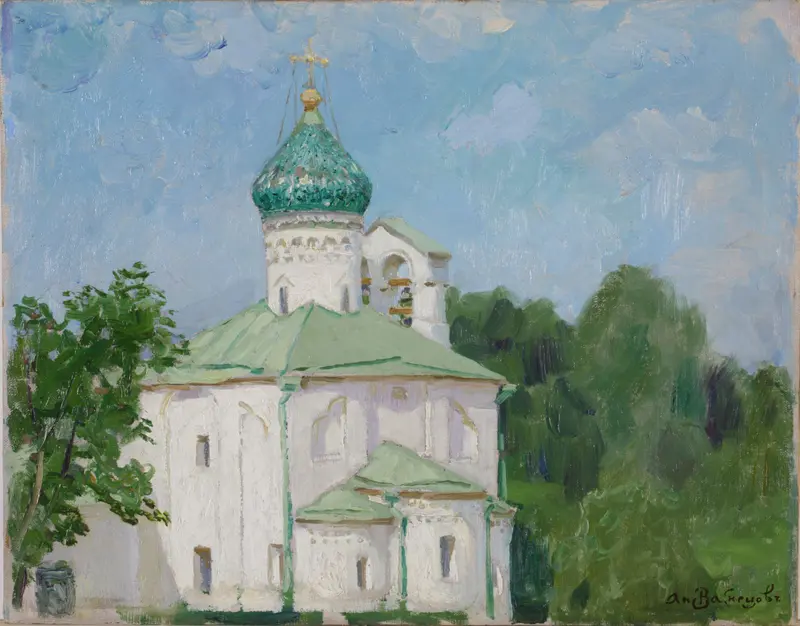
Sergius Luzhki
Apollinari Mikhailovich Vasnetsov
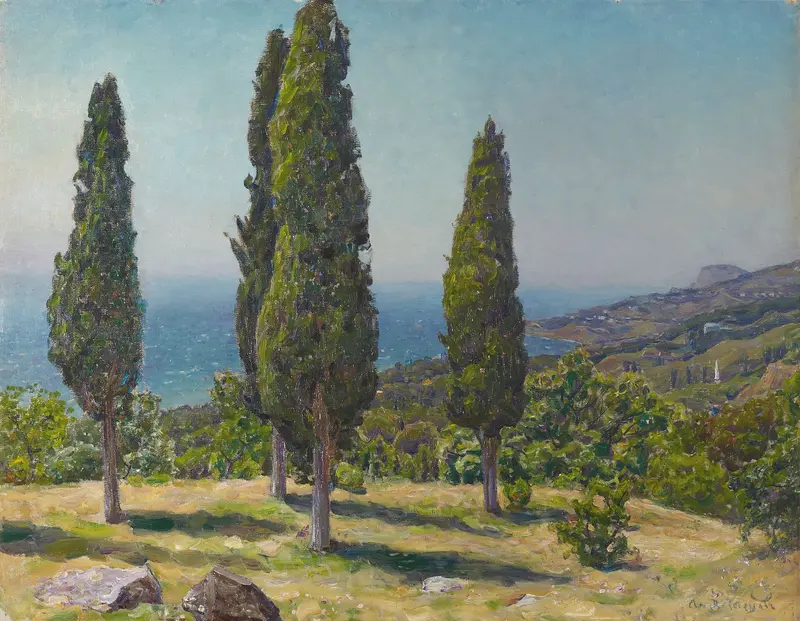
cypresses. Crimea
Apollinari Mikhailovich Vasnetsov
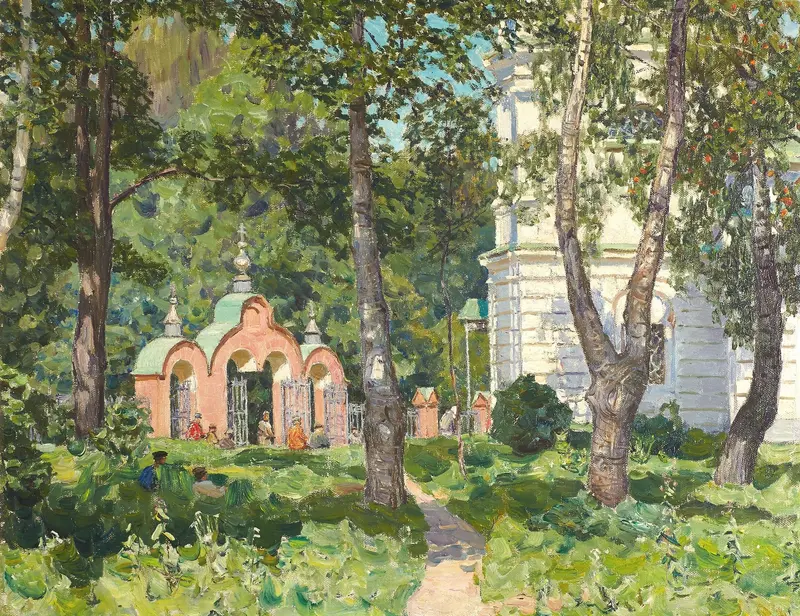
Demyanovo. At the churchyard
Apollinari Mikhailovich Vasnetsov
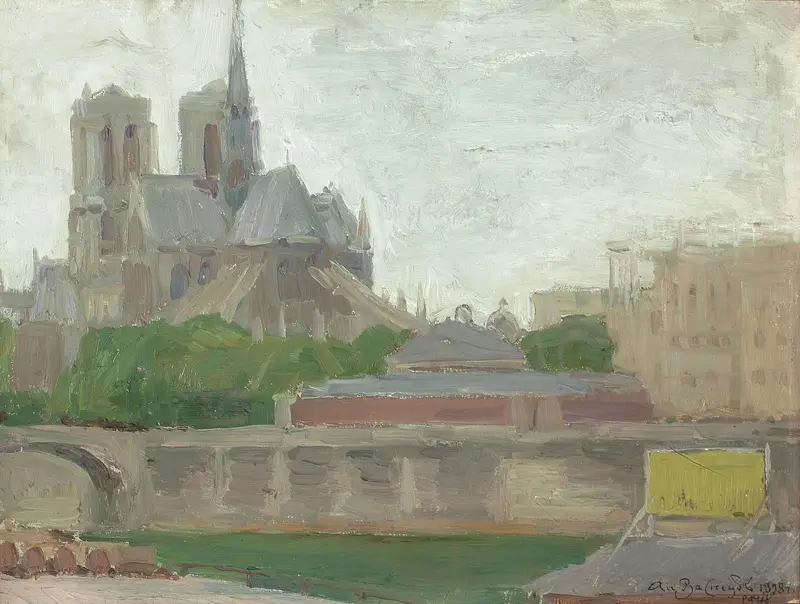
Notre Dame de Paris
Apollinari Mikhailovich Vasnetsov
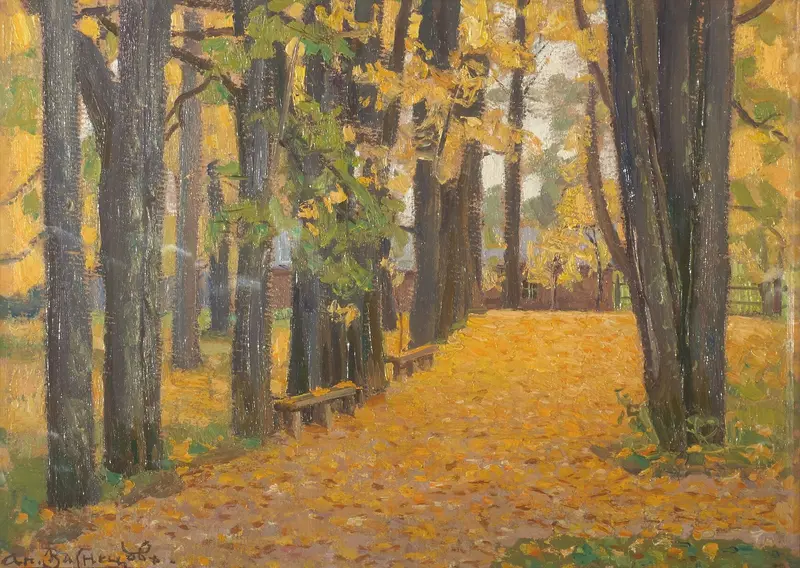
Autumn park
Apollinari Mikhailovich Vasnetsov
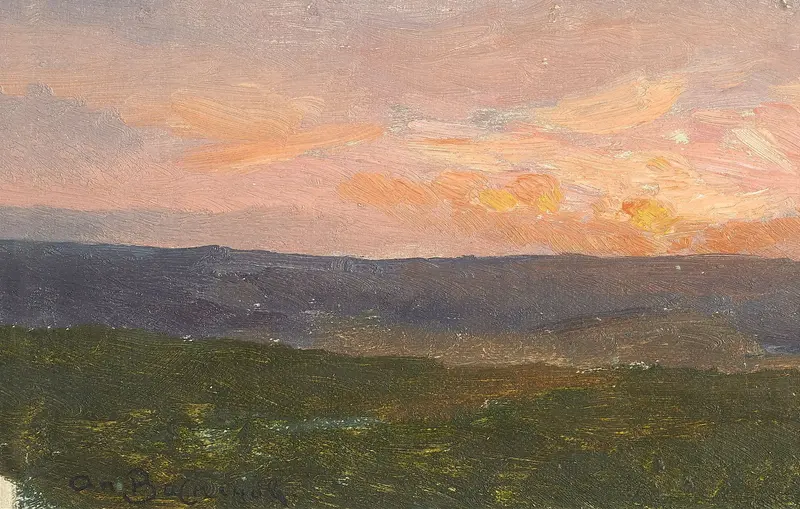
Sunset. Shurma
Apollinari Mikhailovich Vasnetsov
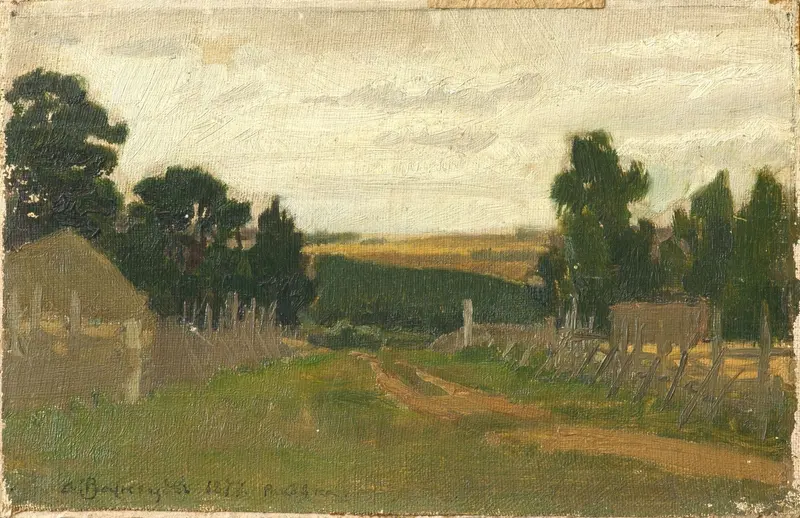
Rakovka
Apollinari Mikhailovich Vasnetsov
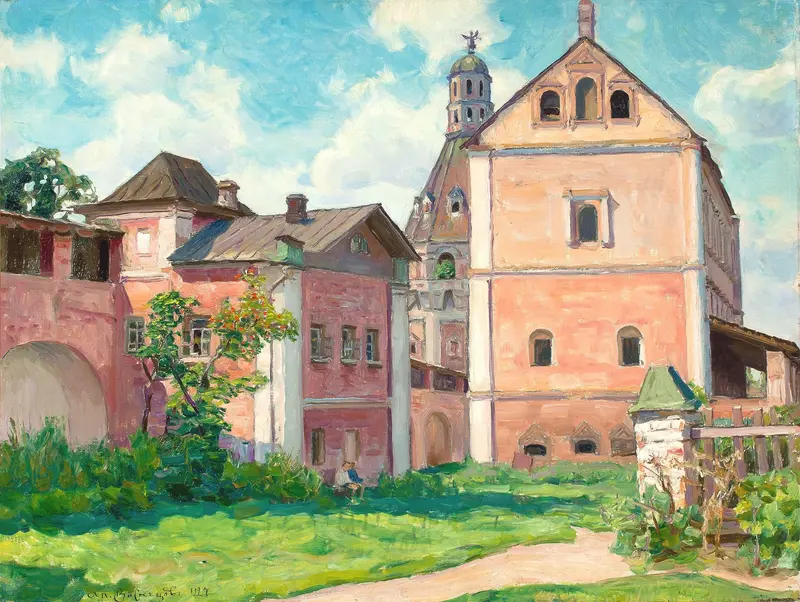
Simonov tower
Apollinari Mikhailovich Vasnetsov

Kozlovka. Fields
Apollinari Mikhailovich Vasnetsov





