
Vidiecky motív — History & Facts
What if beauty was never meant to be finished? In Vidiecky motív, an exploration of color unfolds like a whispered promise, inviting the viewer into a world suspended between reality and the ethereal. Look to the left at the vibrant greens and earthy browns that form a lush backdrop, creating a sense of life and tranquility. The artist’s use of thick brush strokes provides a tactile quality, allowing the colors to blend seamlessly, imbuing the landscape with a sense of movement. Notice how the sun filters through the trees, casting dappled light onto the ground, where shadows dance and play, suggesting a fleeting moment of serenity captured in time.
Majsch’s palette speaks not only of nature but also of emotion, weaving an intricate connection between observer and scene. Beneath the surface, the painting reflects a deeper dialogue between solitude and connection. The gentle curves of the hills contrast with the sharp lines of the trees, symbolizing the delicate balance between the wild and the cultivated. The interplay of light and shadow evokes a feeling of nostalgia, as if the viewer stands on the precipice of memory, lost in a daydream.
Each stroke resonates with a yearning for a beauty that is at once tangible and ephemeral—a reminder of life's constant change. In 1900, Eduard Majsch painted this work during a time of artistic transition in Central Europe, where the influence of Impressionism was beginning to reshape perceptions of color and light. Living in Slovakia, he sought to capture the serene beauty of his homeland, a response to the burgeoning nationalism that celebrated regional identity through art. This piece not only reflects his personal vision but also aligns with the larger movement of artists seeking to connect with their cultural roots amidst the transformations of the modern age.
More Artworks by Eduard Majsch
Browse all →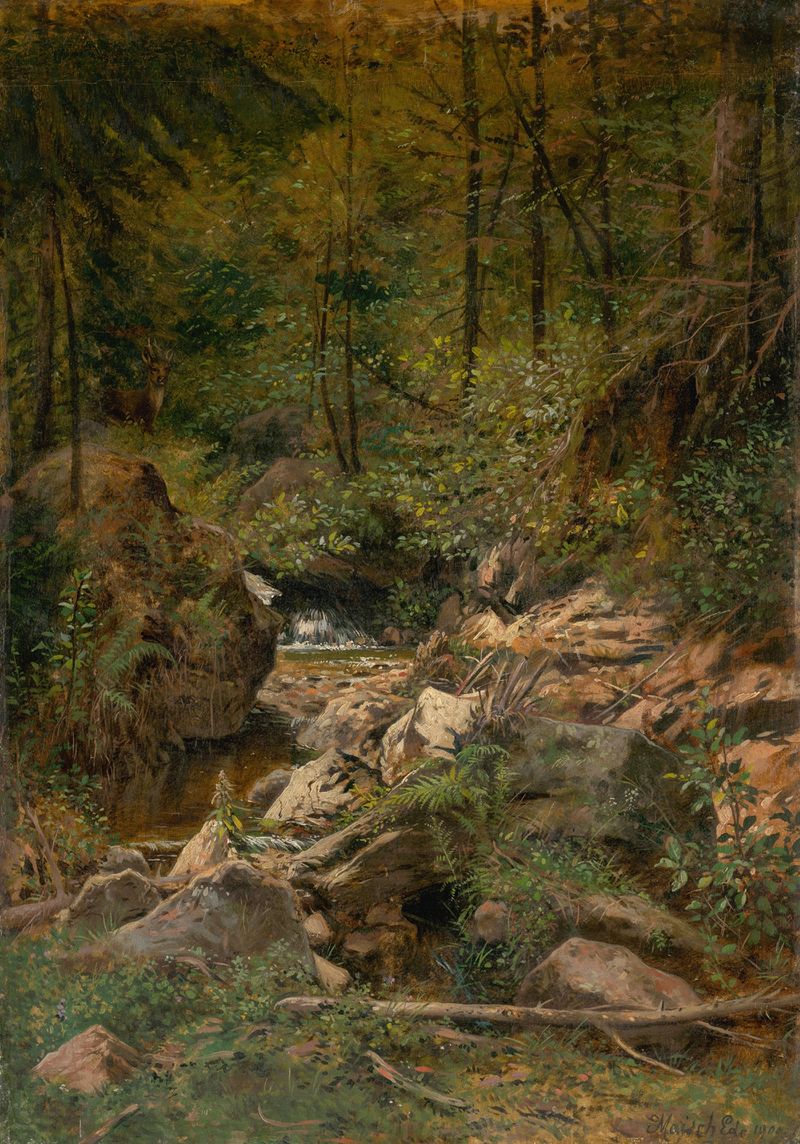
Forest Stream
Eduard Majsch
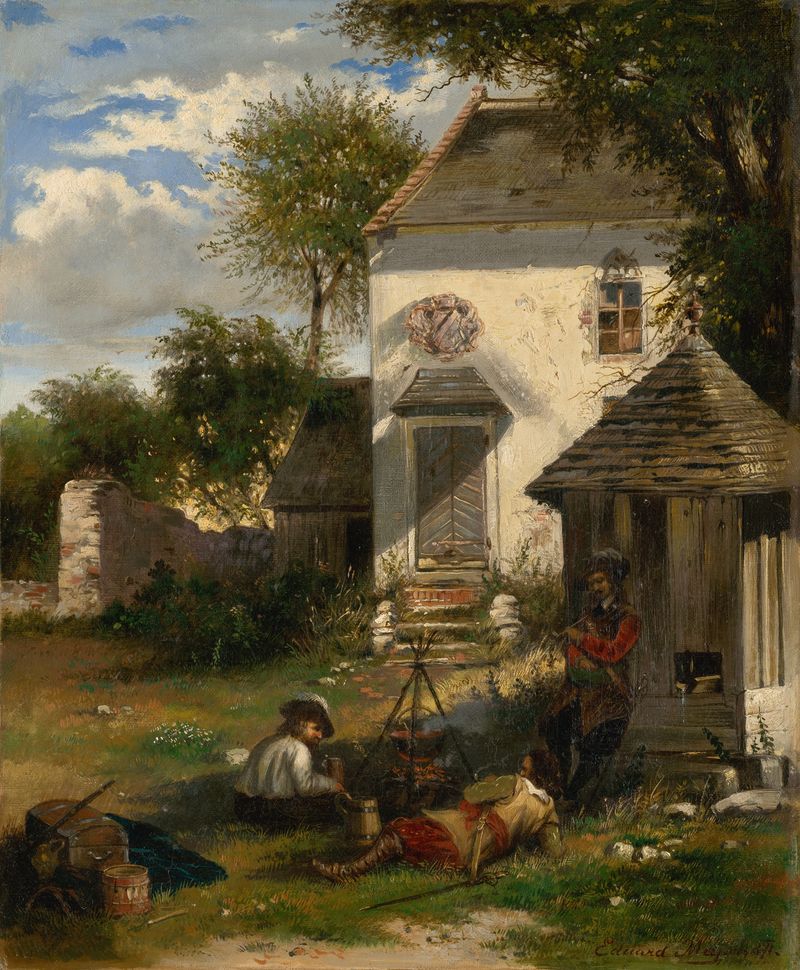
Soldiers Camping in a Nobleman’s Yard, Motif from the Thirty Years’ War
Eduard Majsch
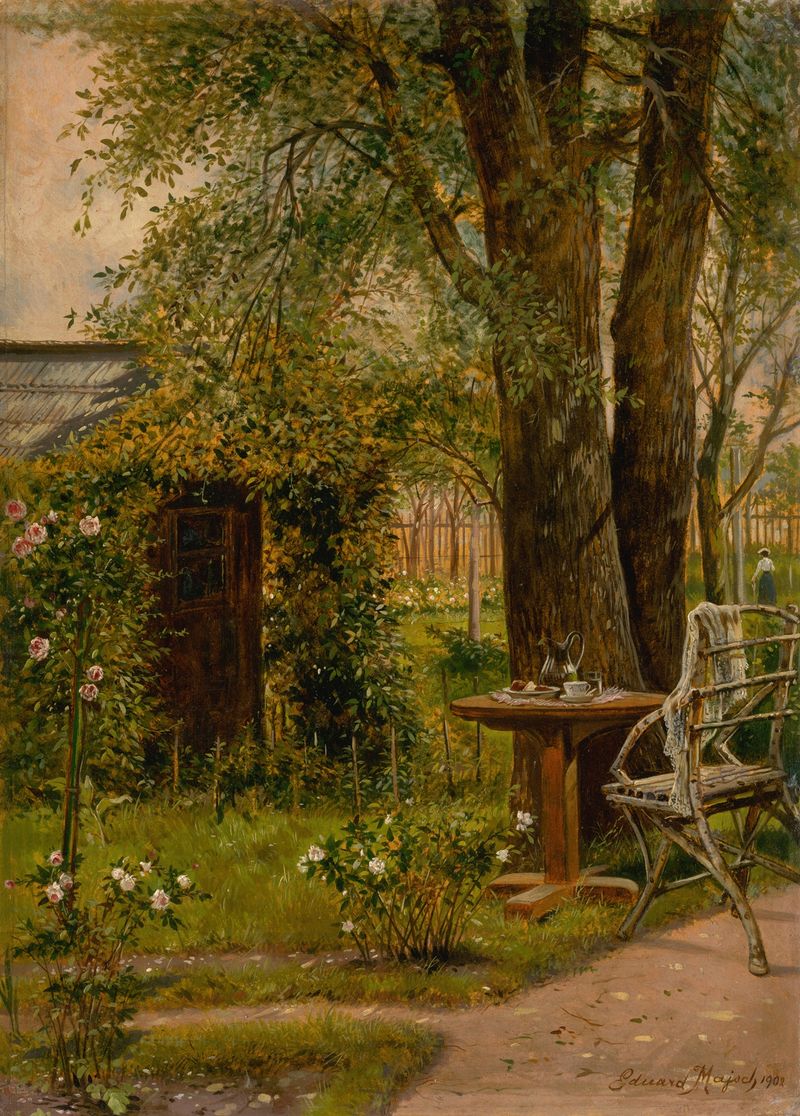
Garden with a Table
Eduard Majsch
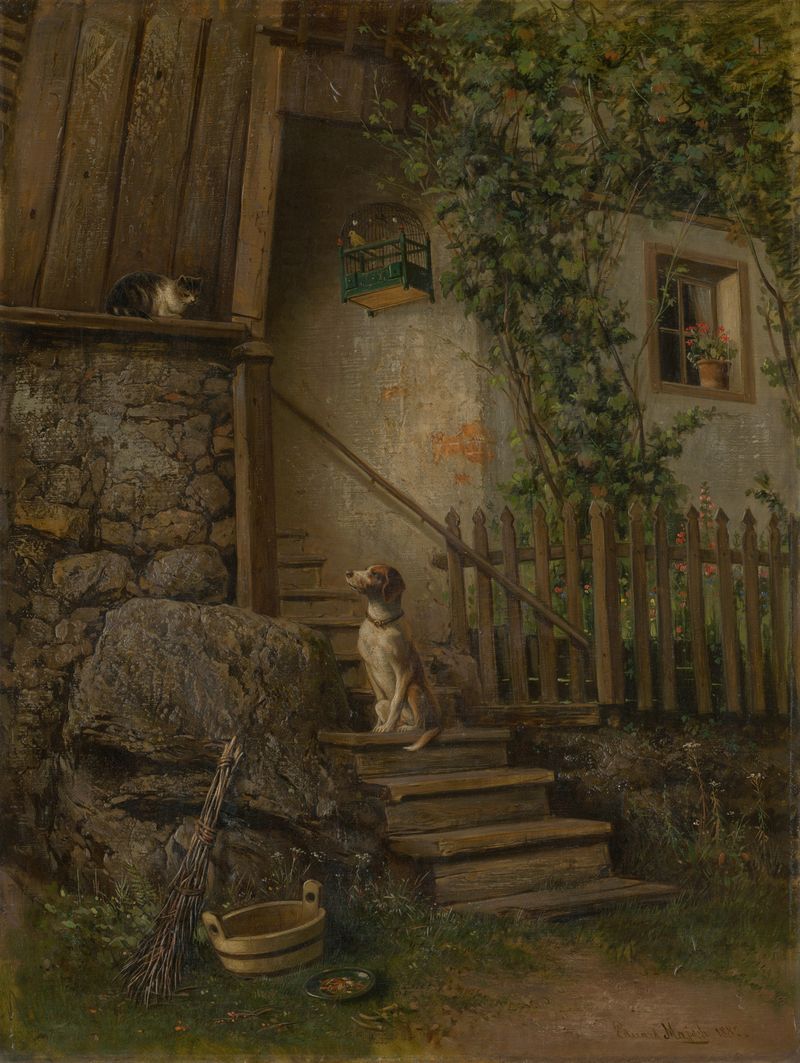
On the Porch (Dog and Cat)
Eduard Majsch
View Of Bratislava
Eduard Majsch
Mill
Eduard Majsch
Night Watch in the Old Town
Eduard Majsch
Sunset and Tree Shade
Eduard Majsch
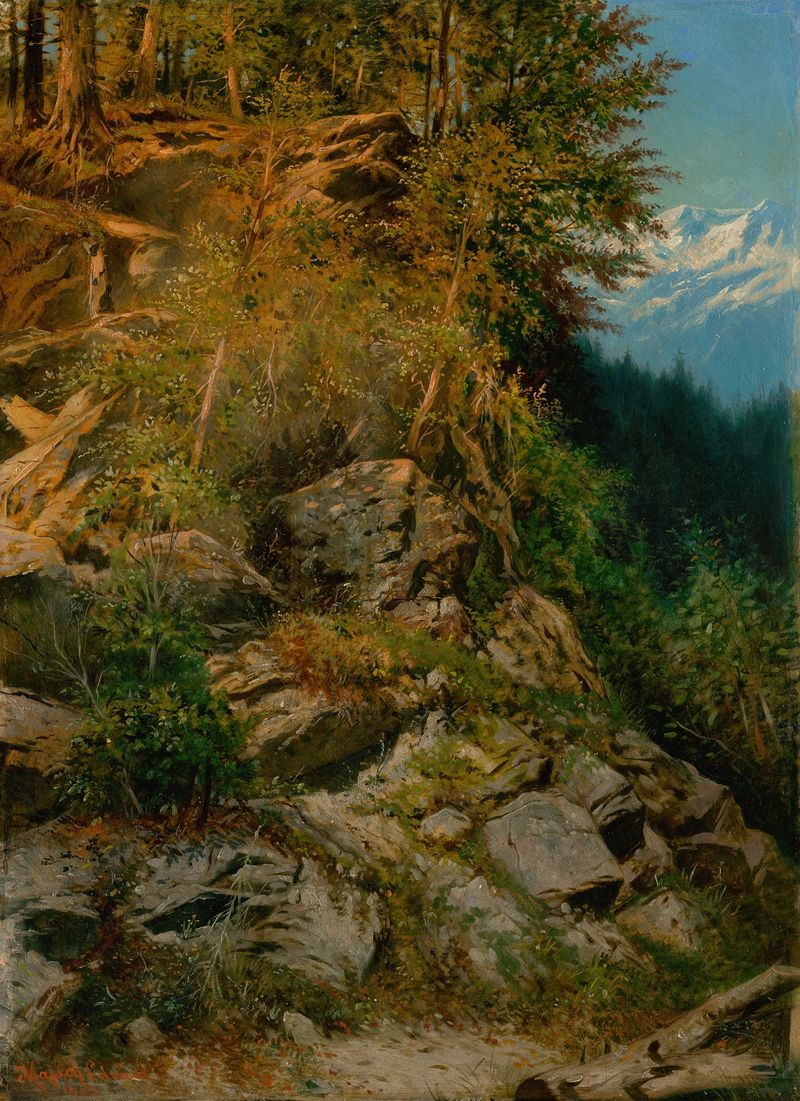
Rocky Hillside in a Mountain Landscape
Eduard Majsch
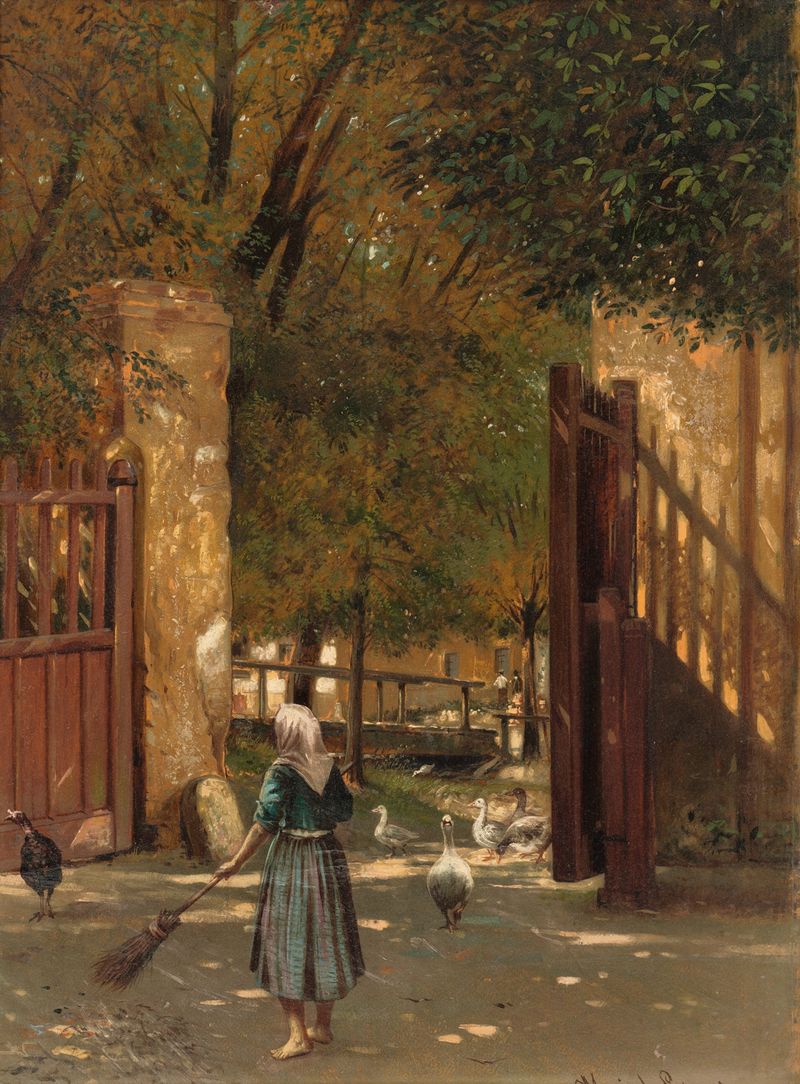
Sweeping the Courtyard
Eduard Majsch





