
View in Venice — History & Facts
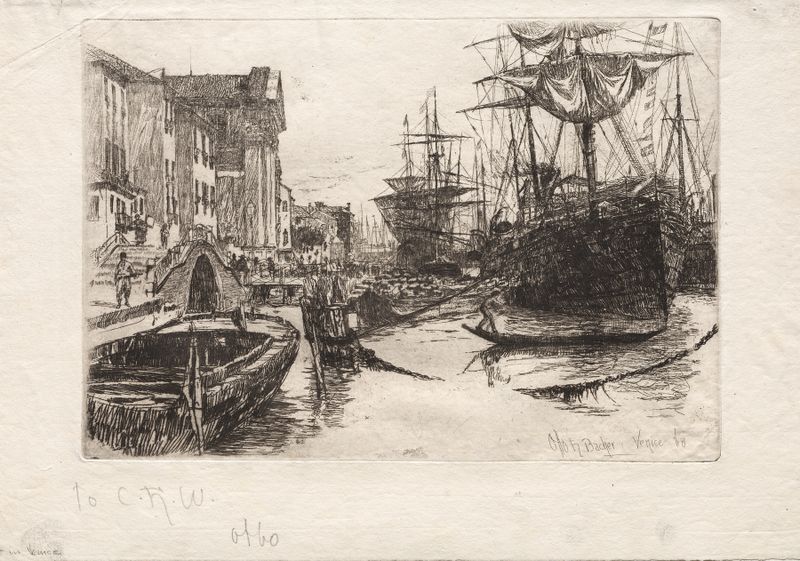
Could a single brushstroke hold eternity? In the stillness of View in Venice, the silence resonates, inviting the viewer to linger in a moment that feels both ephemeral and eternal. Look to the left, where the soft golden light bathes the intricate architecture of the Venetian buildings in a warm embrace. Notice how Bacher masterfully captures the reflections in the tranquil water, each wave a gentle whisper rather than a tumultuous roar. The vibrant blues contrast beautifully with the earthy tones, while the delicate brushwork brings life to the quiet scene, drawing your eye towards the distant horizon where sky meets water. As you explore the painting further, notice the subtle tension between the bustling life that could be happening just beyond the canvas and the peaceful solitude of the moment depicted.
The stillness of the water amplifies the sense of anticipation; every ripple could herald the arrival of a boat or an unseen passerby. Here, the stark quietude serves not only to showcase the serene beauty of Venice but also to evoke a sense of longing and introspection, reflecting the artist's own emotions. In 1880, Bacher found himself in Venice, immersed in an artistic landscape that embraced both tradition and modernity. During this period, the city was a nexus for artists exploring light and color, and the artist sought to capture its enchanting essence.
His approach was shaped by the changing tides of the art world, straddling the realms of impressionism and realism, as he skillfully crafted a view that remains timeless.
More Artworks by Otto Henry Bacher
Browse all →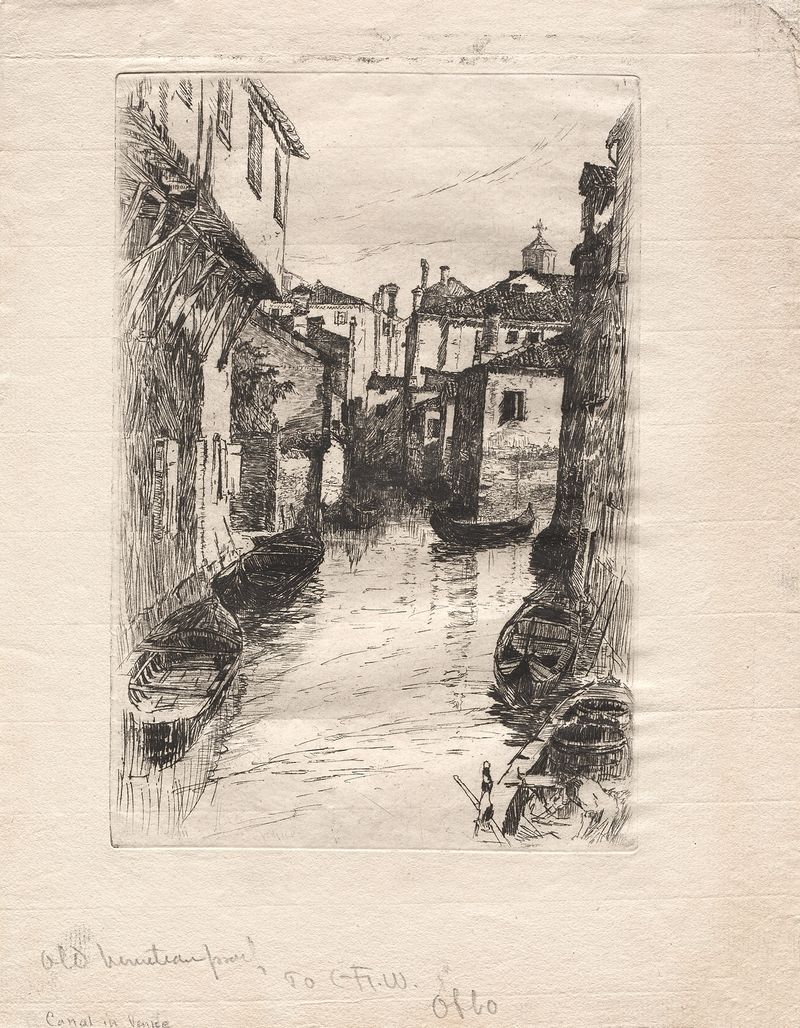
Canal in Venice
Otto Henry Bacher
View in Venice
Otto Henry Bacher
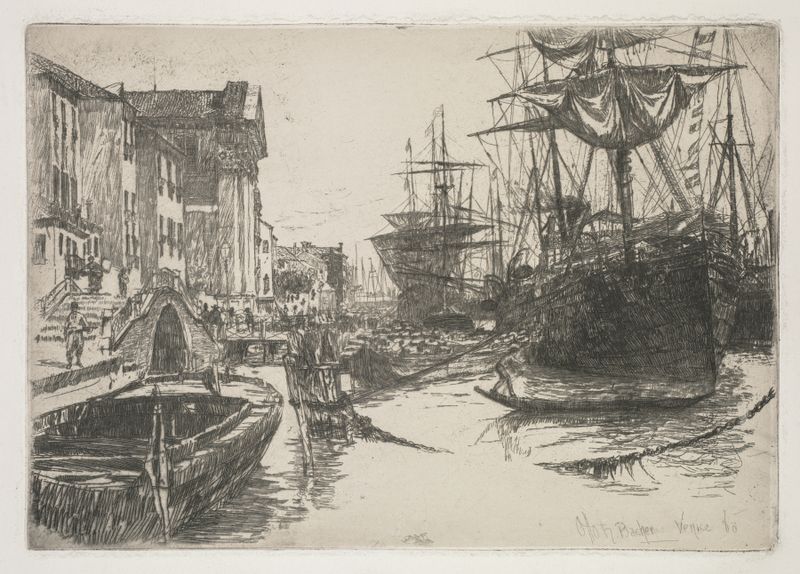
Fondamenta della Zattere
Otto Henry Bacher
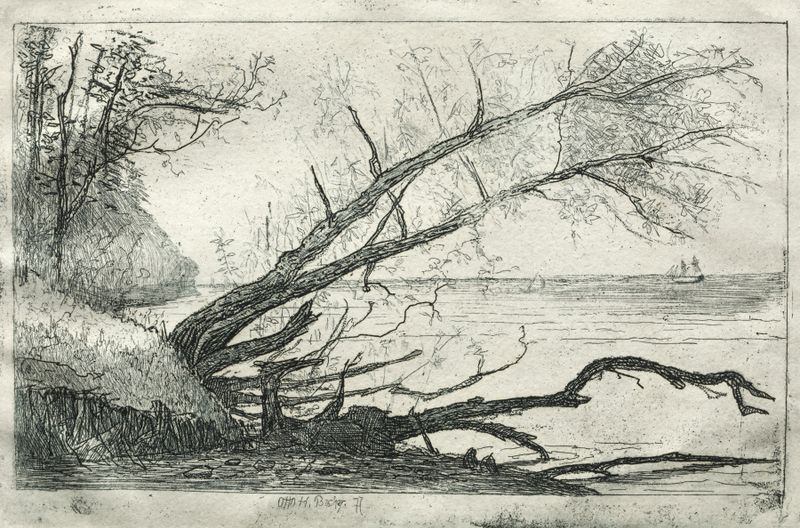
Old Sycamore
Otto Henry Bacher
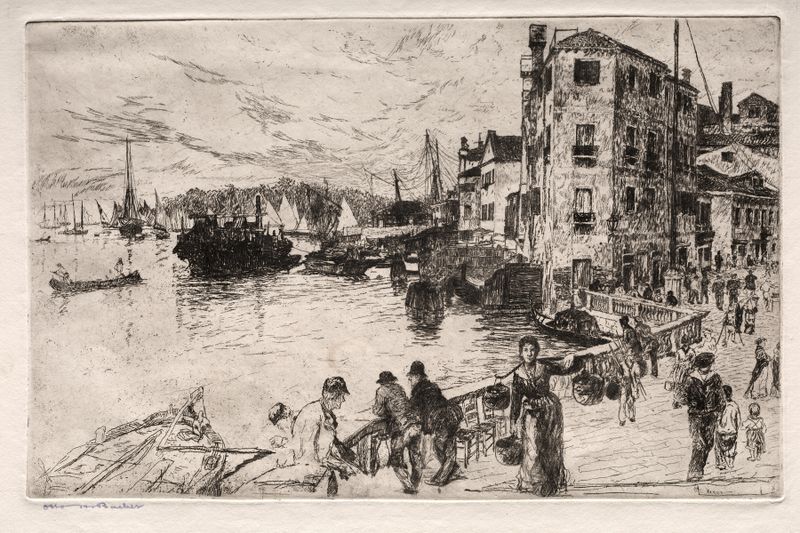
Castello Quarters, Riva
Otto Henry Bacher
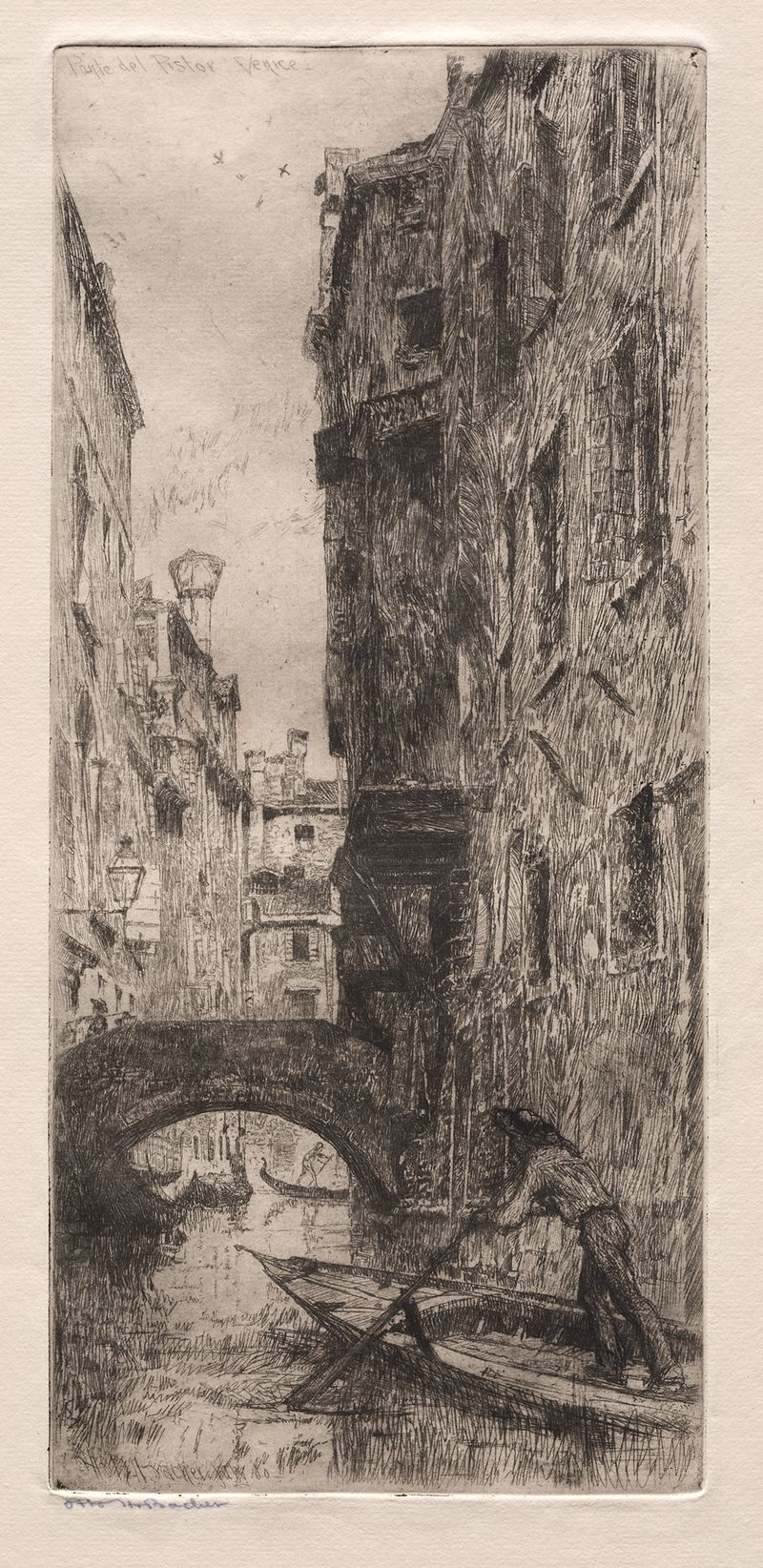
Ponte del Pistor, Venice
Otto Henry Bacher
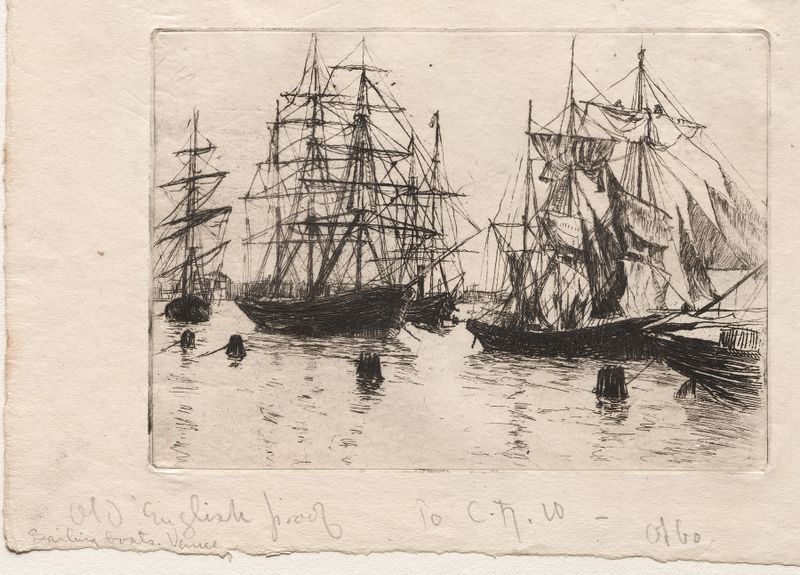
Sailing Boats, Venice
Otto Henry Bacher
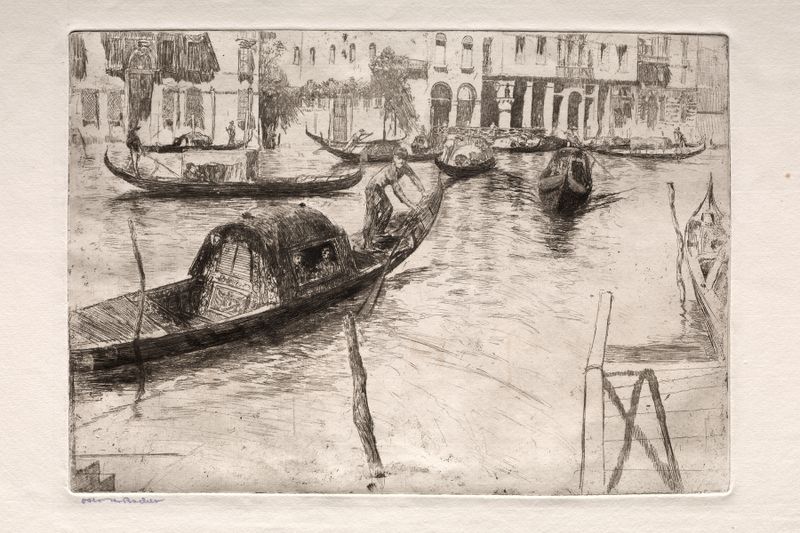
Traghetto San Felice
Otto Henry Bacher
St. Clair Street, Cleveland
Otto Henry Bacher
Church of the Holy Sepulchre, Jerusalem
Otto Henry Bacher





