
View of Kom Ombo — History & Facts
In the delicate interplay of light and shadow, a world unfolds where the past whispers its secrets through ancient ruins. Here, the shadows are not merely dark spaces; they hold stories, echoing the grandeur of a civilization long gone. The viewer is invited to contemplate the weight of history resting quietly upon the sunlit sands. Look towards the horizon where the soft golden hues meet the muted blues of the sky.
The layered architecture of the temple captures immediate attention, with its majestic columns standing proud against the backdrop of a tranquil Nile. Notice how the play of light dances upon the stone surfaces, accentuating the intricate carvings and soft curves, evoking a sense of reverence. The warm palette radiates warmth, while the shadows deepen the sense of mystery, suggesting untold narratives waiting to be unearthed. Delve deeper into the artwork, and one begins to see a tension between permanence and transience.
The vibrant light symbolizes life, yet it contrasts starkly with the dark shadows that represent loss and memory. This duality hints at the passage of time—how civilizations rise and fall, leaving behind only echoes in the dust. Each shadow, each flicker of light serves as a reminder of the fleeting nature of human achievement, juxtaposed against the enduring beauty of the landscape. In 1838, David Roberts created this breathtaking piece during his travels in Egypt, a period marked by a growing fascination with the exotic and the ancient.
As he sketched and painted the majestic ruins, he was part of a movement that sought to document the wonders of the world, paving the way for Romanticism's embrace of grand landscapes. Amidst a backdrop of cultural exploration, his work encapsulated the spirit of discovery that defined a generation captivated by the mysteries of the past.
More Artworks by David Roberts
Browse all →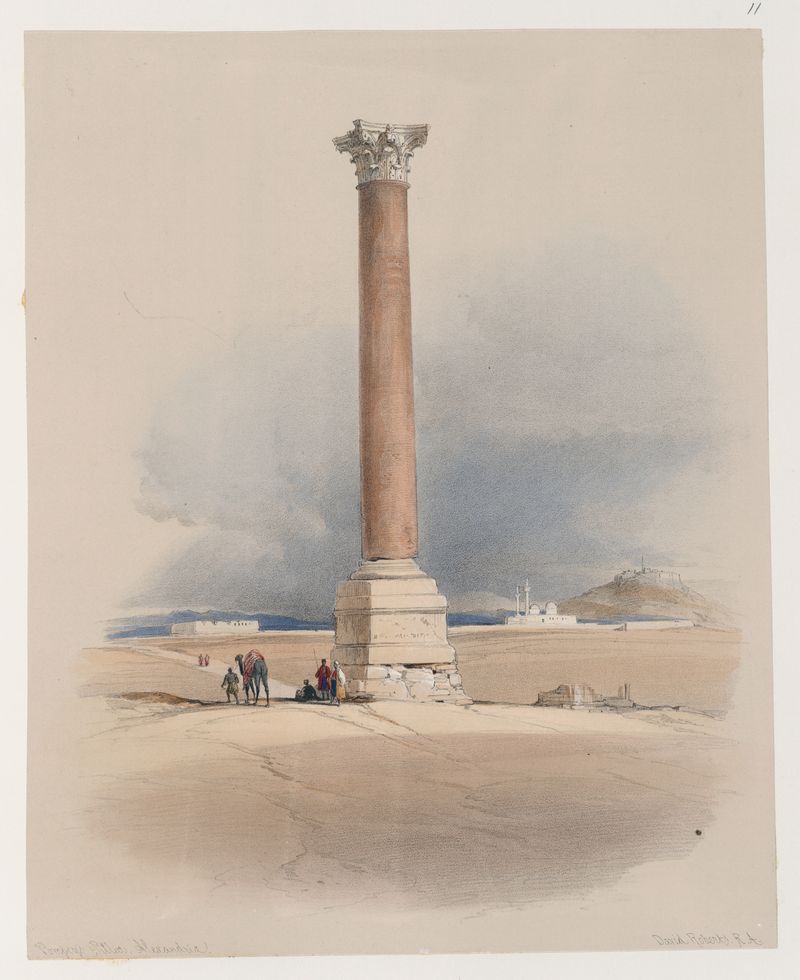
Pompey’s Pillar, Alexandria.
David Roberts

Approach to the Fortress of Ibrim.
David Roberts

Karnac [Karnak]. Nov. 29th, 1838.
David Roberts
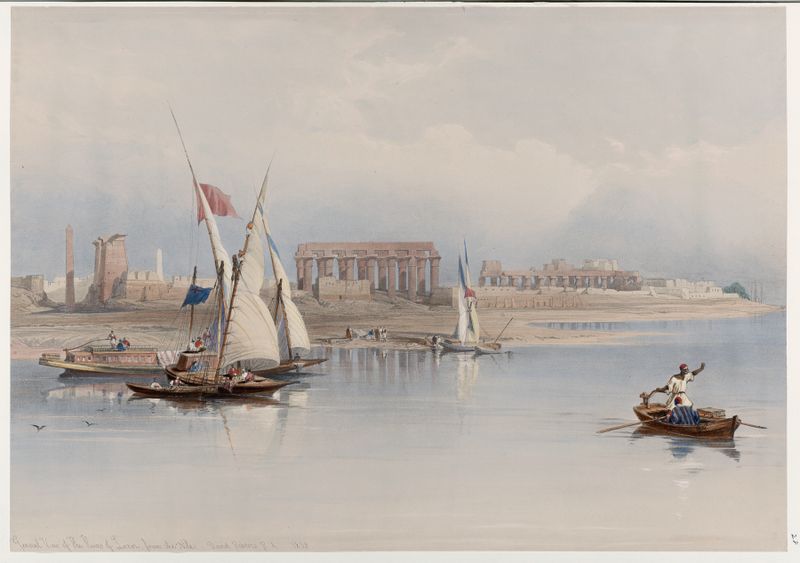
General view of the ruins of Luxor, from the Nile. 1838.
David Roberts

Statues of Memnon at Thebes, during the inundation.
David Roberts

Entrance to the tombs of the kings of Thebes. Bab-el-Malouk [Bîbân al-Mulûk].
David Roberts

The Fortress of the Alhambra, Granada
David Roberts
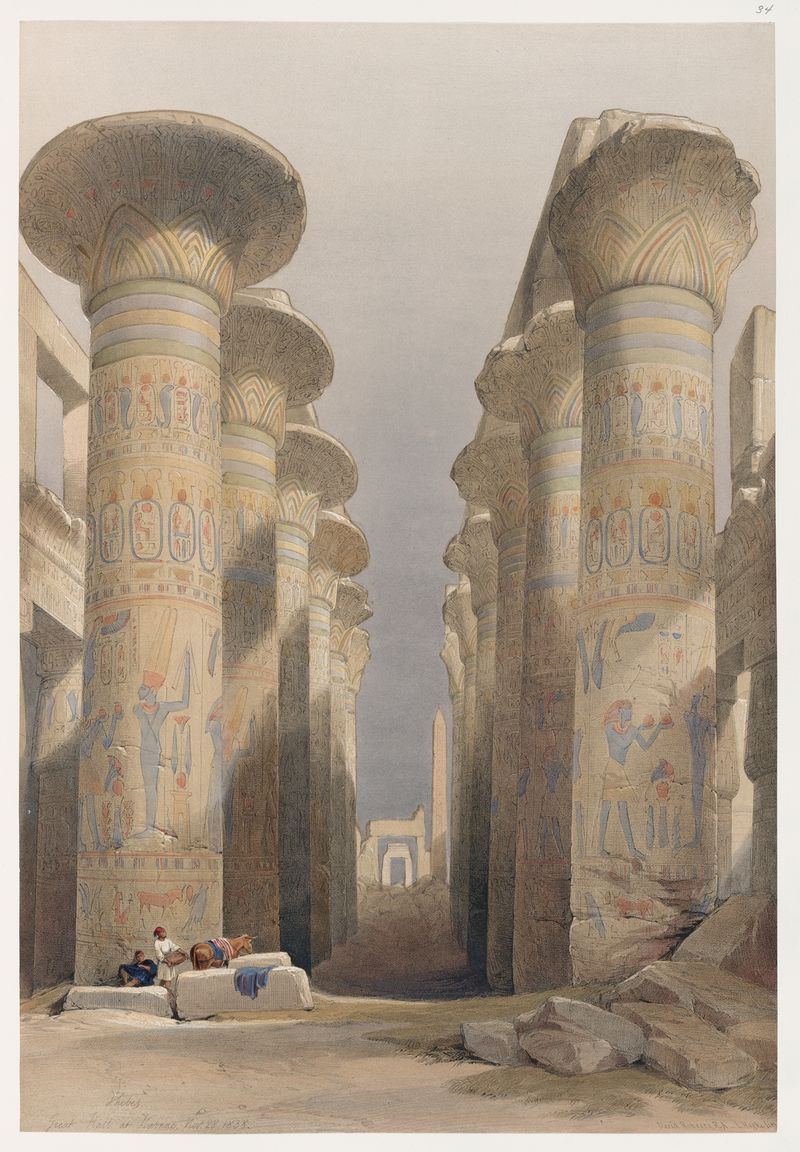
Thebes. Great Hall at Karnak. Nov. 28, 1838.
David Roberts
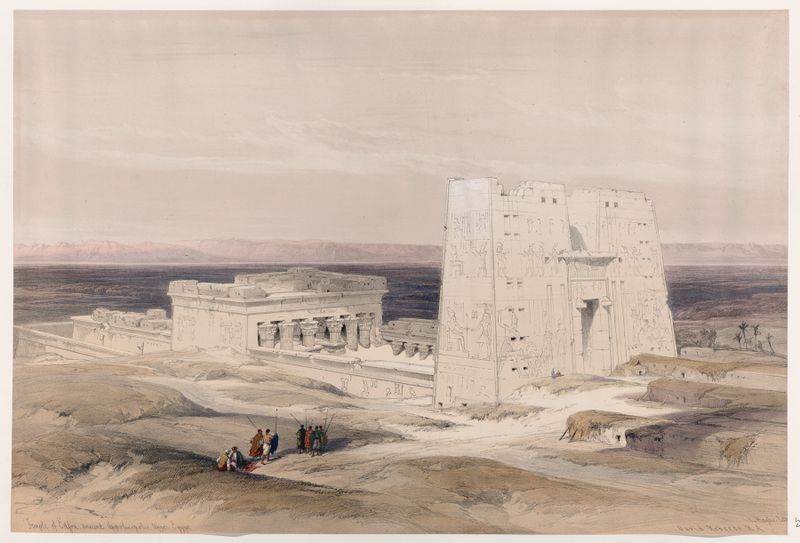
Temple of Edfou [Idfû], ancient Appolinopolis, Upper Egypt.
David Roberts

Temple of Kalabshee [Kalabsha, Kalâbishah], Nubia. Nov. 1838.
David Roberts





