
View of Paris — History & Facts
This sentiment resonates deeply within the ethereal expanse of the canvas. In View of Paris, the city unfolds like a whispered secret, inviting the observer to explore its delicate layers of emptiness and possibility. Look to the horizon where soft pastel hues dance together, suggesting the early morning light as it begins to kiss the rooftops of Paris. The delicate brushwork captures the fluidity of the clouds, merging seamlessly with the muted colors of the buildings below.
Focus on the subtle variations in tone; the pale yellows, serene blues, and gentle pinks blend into one another, evoking a sense of tranquility that envelops the city. Each stroke breathes life into the scene, while simultaneously allowing for an overwhelming sense of solitude that permeates the air. Yet, within this serene panorama lies a tension between presence and absence. The streets are eerily still, devoid of human figures, amplifying the feeling of isolation amid urban splendor.
This emptiness invites the viewer to ponder the relationship between the bustling life that usually fills these spaces and the serene void captured in this moment. The artist’s choice to depict Paris in such a quiet state highlights the beauty found in loneliness, allowing one to reflect on the contrasts between bustling vibrancy and stillness. In 1900, Frank Myers Boggs was immersed in the vibrant art scene of Paris, having moved there years earlier to escape the constraints of American Impressionism. Living in a city teeming with innovation and artistic fervor, he experienced the transition of the art world in a time of rapid change.
This painting reflects not only his personal artistic evolution but also the shifting dynamics of urban life, as the world began to grapple with modernity and its alienating effects.
More Artworks by Frank Myers Boggs
Browse all →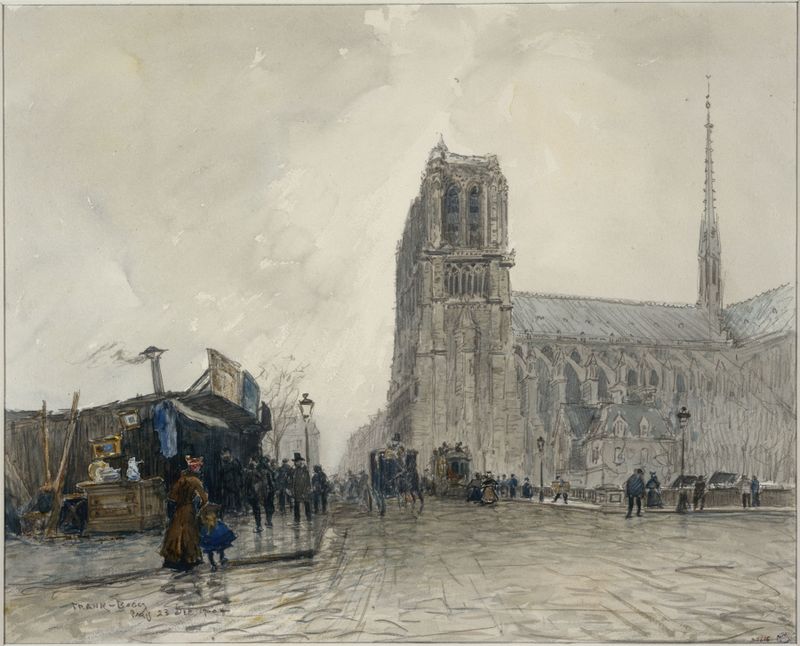
Notre-Dame vue du Pont au Double
Frank Myers Boggs
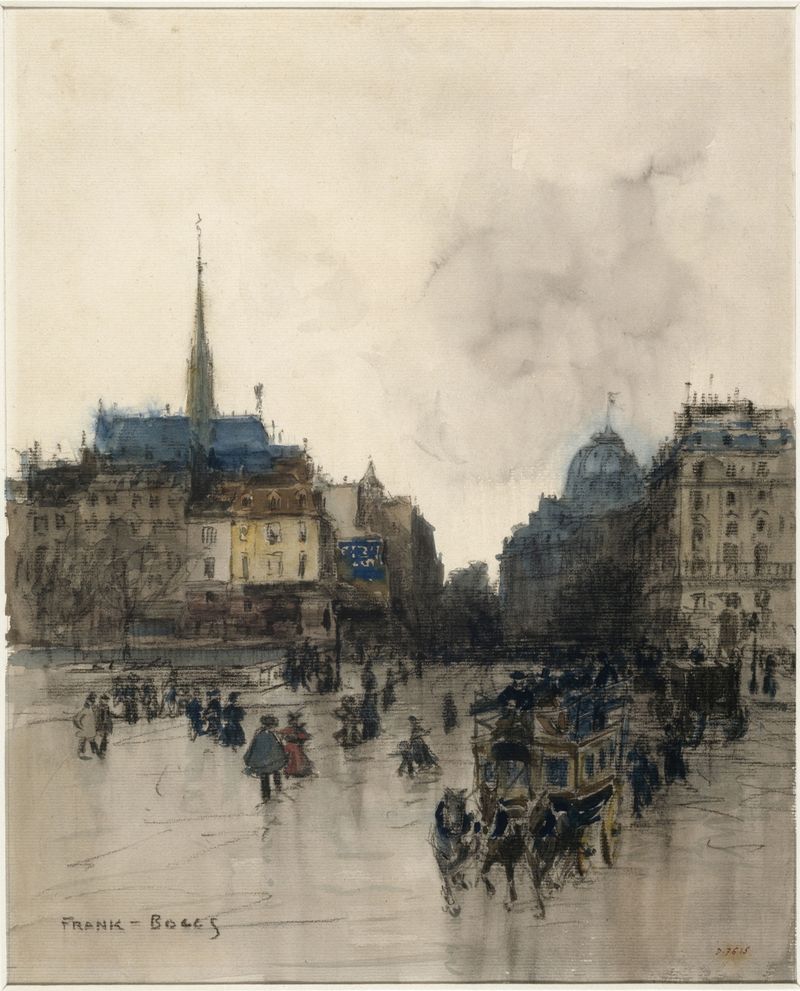
Le pont Saint-Michel
Frank Myers Boggs
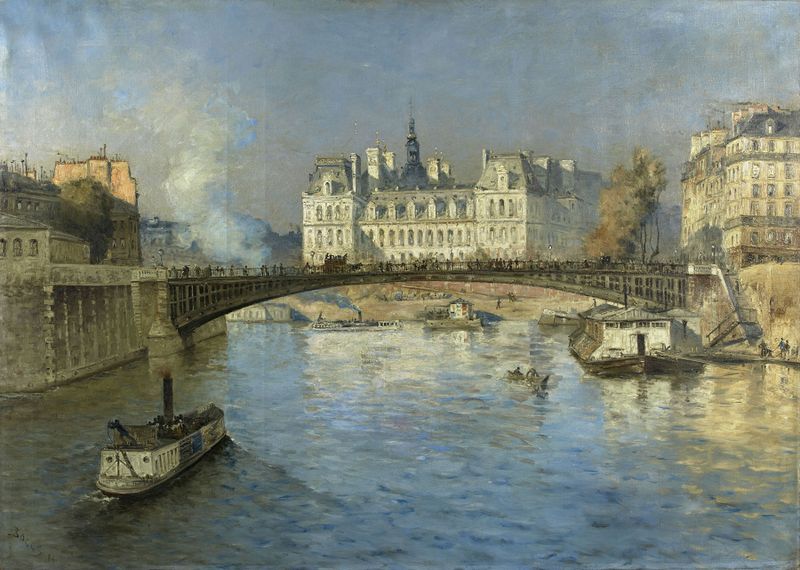
Paris, la Seine et l’Hôtel de Ville
Frank Myers Boggs
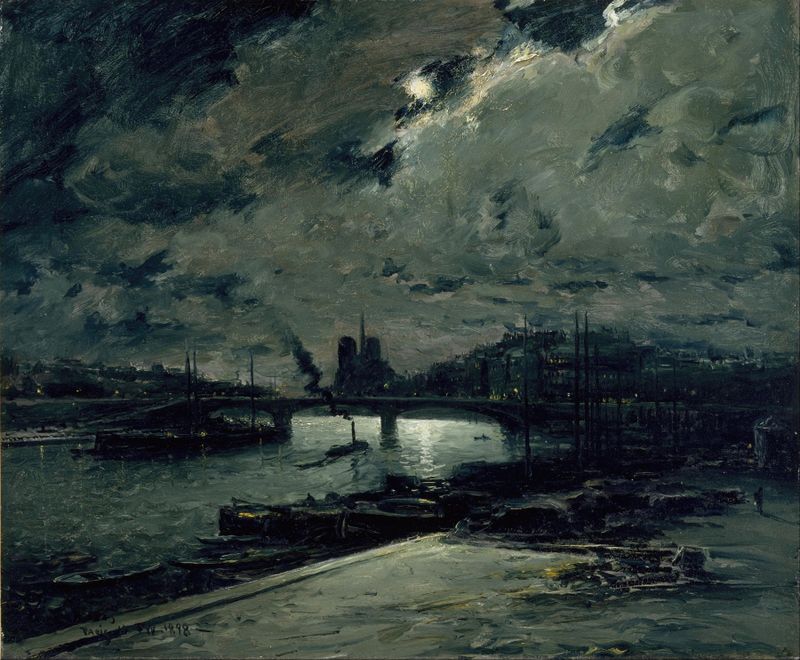
Quai de la Seine, Paris, au Clair de Lune
Frank Myers Boggs
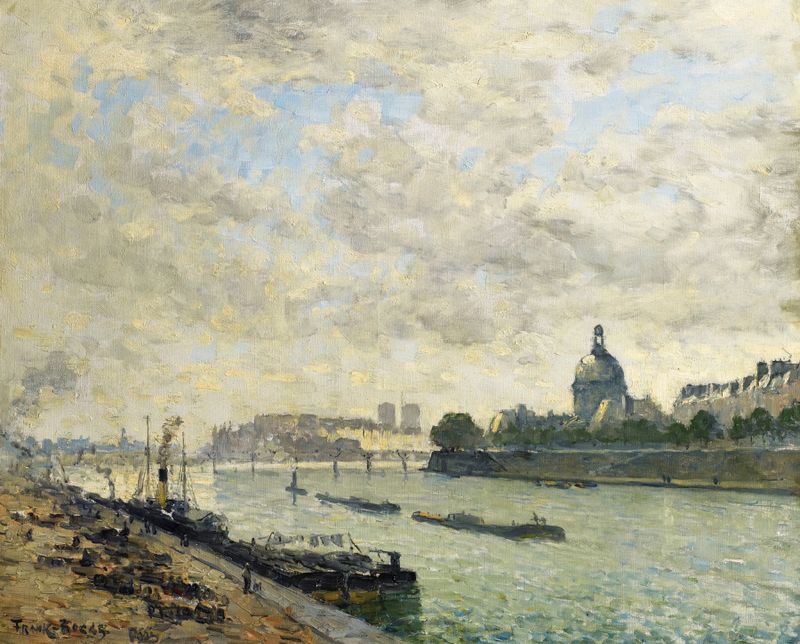
Les quais de Seine à Paris
Frank Myers Boggs
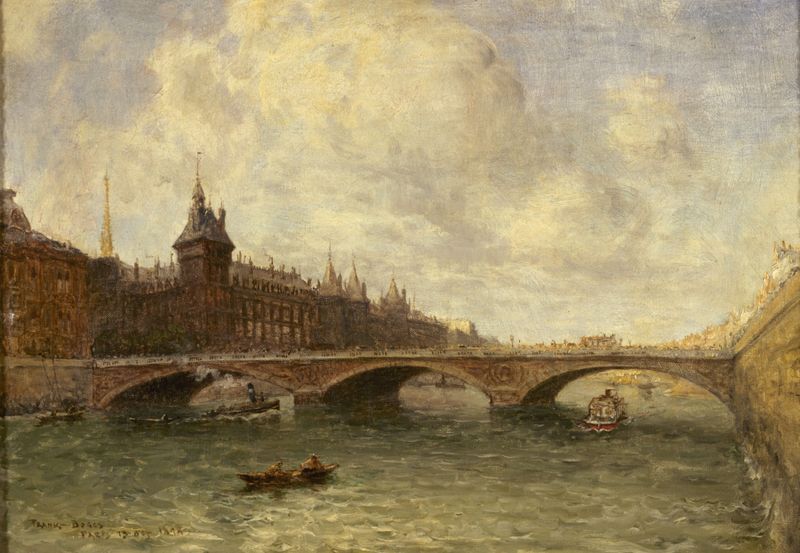
Le pont au change et le quai de l’horloge
Frank Myers Boggs
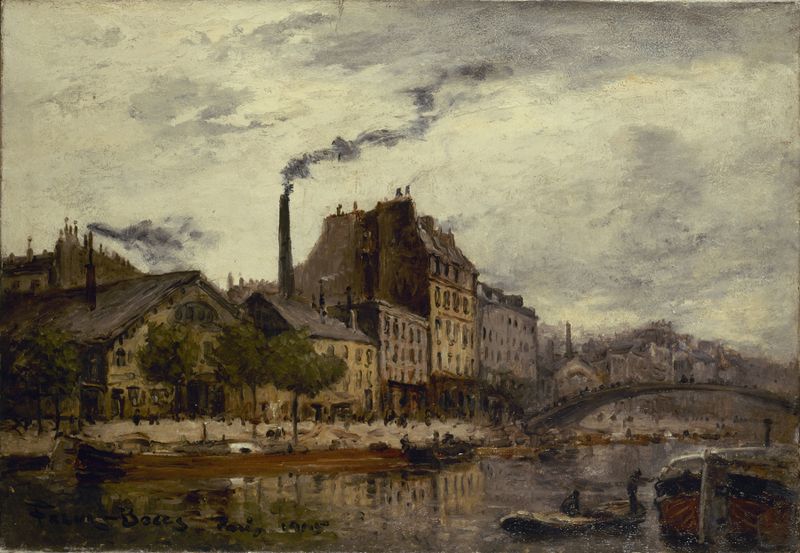
La démolition de l’ancien pont de la Tournelle
Frank Myers Boggs
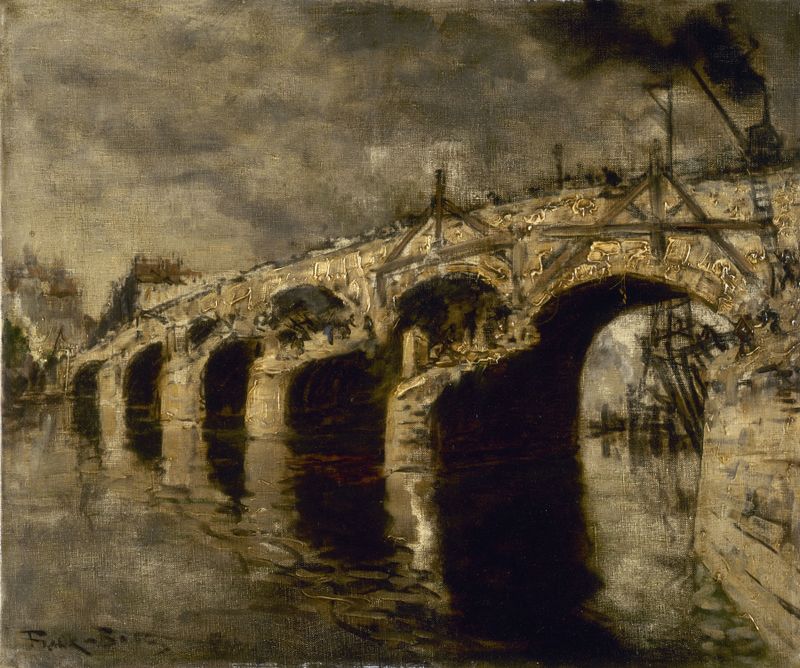
La démolition de l’ancien pont de la Tournelle
Frank Myers Boggs

La tour Saint-Jacques
Frank Myers Boggs
Le Moulin de la Galette
Frank Myers Boggs





