View of the Łazienki Park with the statue of Tancred and Clorinda — History & Facts
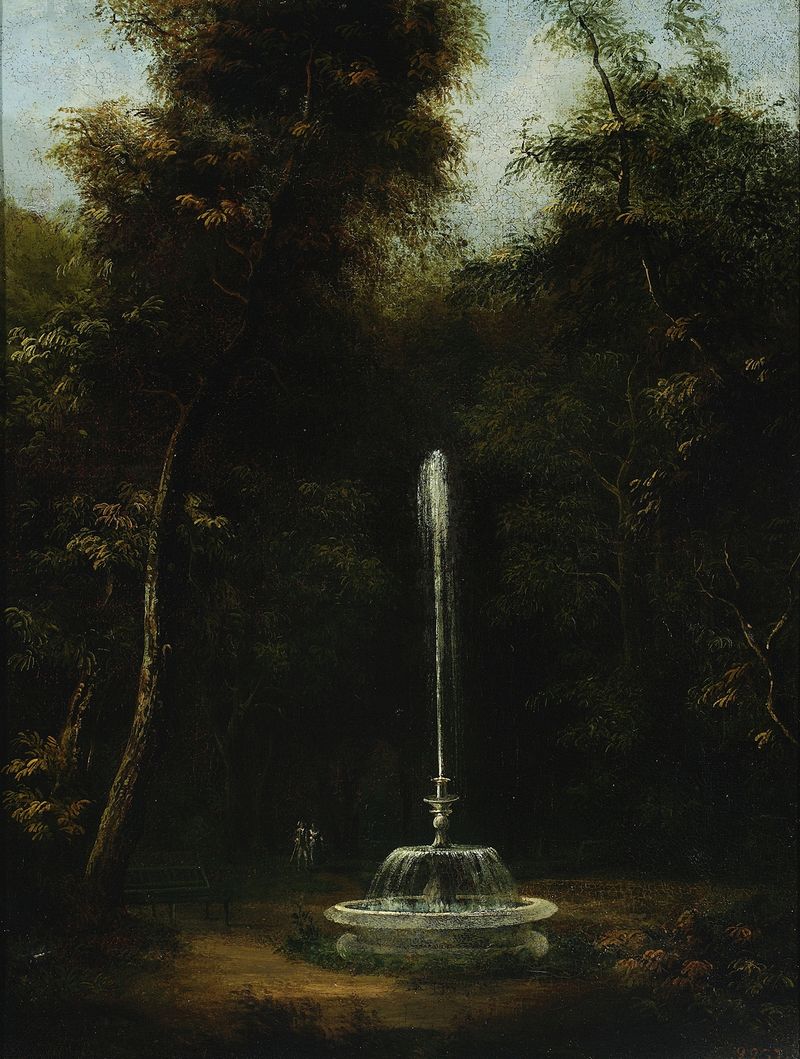
Could a single brushstroke hold eternity? In View of the Łazienki Park with the statue of Tancred and Clorinda, the answer whispers through the gentle curves of the landscape and the profound longing captured in the figures’ gazes. Here, desire intertwines with nature, inviting us to explore the depths of emotion nestled within each stroke. To appreciate the essence of this composition, focus on the statue at the center where Tancred and Clorinda stand frozen in a moment of passionate unity. Notice how the artist emphasizes their connection through the delicate interplay of light and shadow; sunlight bathes their forms, highlighting the intricate details of their attire.
Surrounding them, the lush greenery and serene ponds draw the eye outward, creating a harmonious balance between the lovers and the enveloping nature, a celebration of love amidst tranquility. Yet, the scene pulsates with unspoken narratives. The juxtaposition of the statue’s firm resolve against the ephemeral beauty of the park suggests a tension between permanence and transience. The lush foliage hints at life’s cycles, a reminder that even the most fervent desires must eventually yield to time.
The gentle ripples on the water’s surface speak to the fleeting moments that shape our existence, while the figures embody a yearning that transcends their stone form. In 1790, Kazimierz Wojniakowski painted this piece during a period when Poland was undergoing significant political tumult. The art world was shifting, embracing Romantic ideals that celebrated emotion and nature. Wojniakowski, influenced by his contemporaries and the changing tides of his homeland, sought to immortalize his vision of love and longing, capturing a moment that resonates deeply through time.