
View of the Gulf of Naples with the Palace of Queen Joanna — History & Facts
What first catches the eye in View of the Gulf of Naples with the Palace of Queen Joanna is the way the quiet grandeur of history meets the everyday rhythms of the bay. The ruined palace, softened by time and overgrowth, anchors the left edge of the scene, its weathered arches gazing out over the water. Below, a group gathers at the shore, some in conversation, others preparing boats—a gentle choreography that draws the viewer into the life of the place.
The sails, caught in the evening light, slip across the calm surface, their white triangles mirrored in the blue and gold of the bay. Far in the distance, the unmistakable silhouette of Vesuvius presides, its slopes tinted by the last warmth of the sun, reminding us of the deep past that shapes every stone and shoreline here. Painted by Albert Flamm and dated by 1906, this work belongs to a long tradition of landscape painting that flourished as travel and tourism opened the Mediterranean to northern European eyes. Such views were often sought by collectors eager for a window onto the storied South, and artists responded with images that balanced topographical accuracy with atmospheric effect.
The Dorotheum collection, where this painting is documented, preserves a glimpse of that era’s fascination with both the picturesque and the historic. History has kept few traces of this specific canvas’s journey, but its mood and detail invite us to linger, following the light as it slips from palace wall to distant volcano, and to imagine the stories that unfold along these shores.
More Artworks by Albert Flamm

A View Of The Gulf Of Naples From Posilippo
Albert Flamm
A view of the Gulf of Naples from Posilippo
Albert Flamm
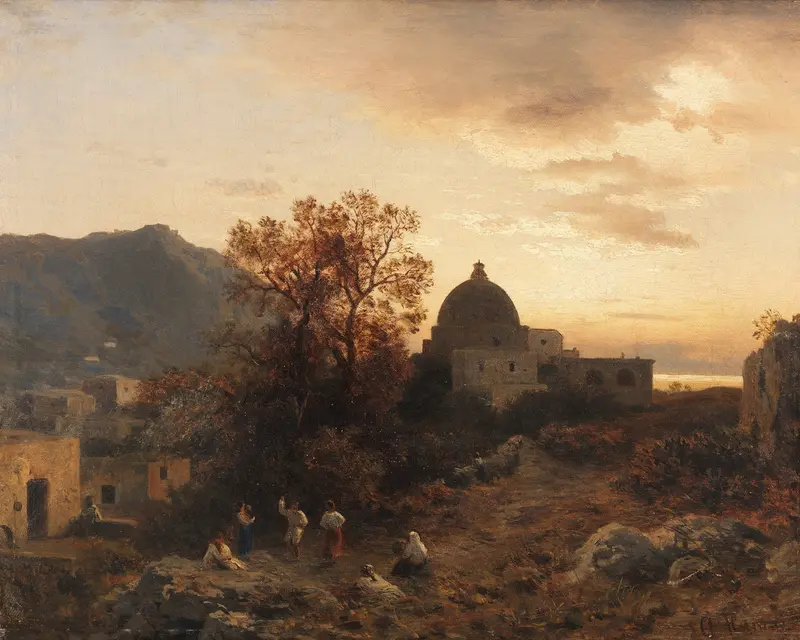
Abendstimmung an der italienischen Küste mit tanzenden Figuren
Albert Flamm
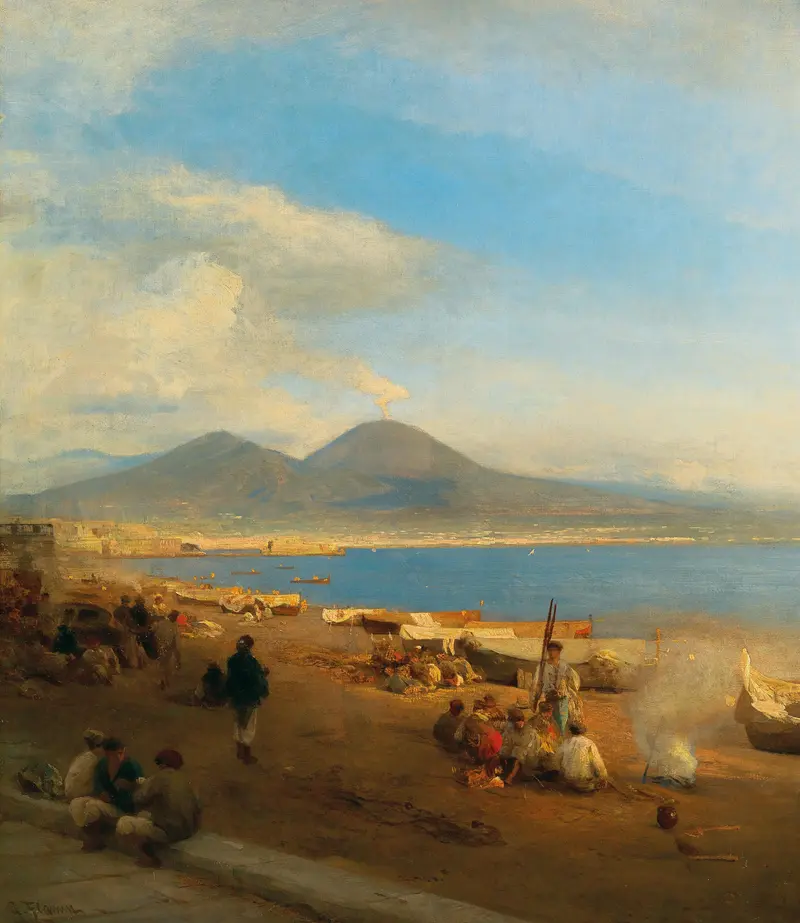
A View Of The Gulf Of Naples From Posilippo
Albert Flamm
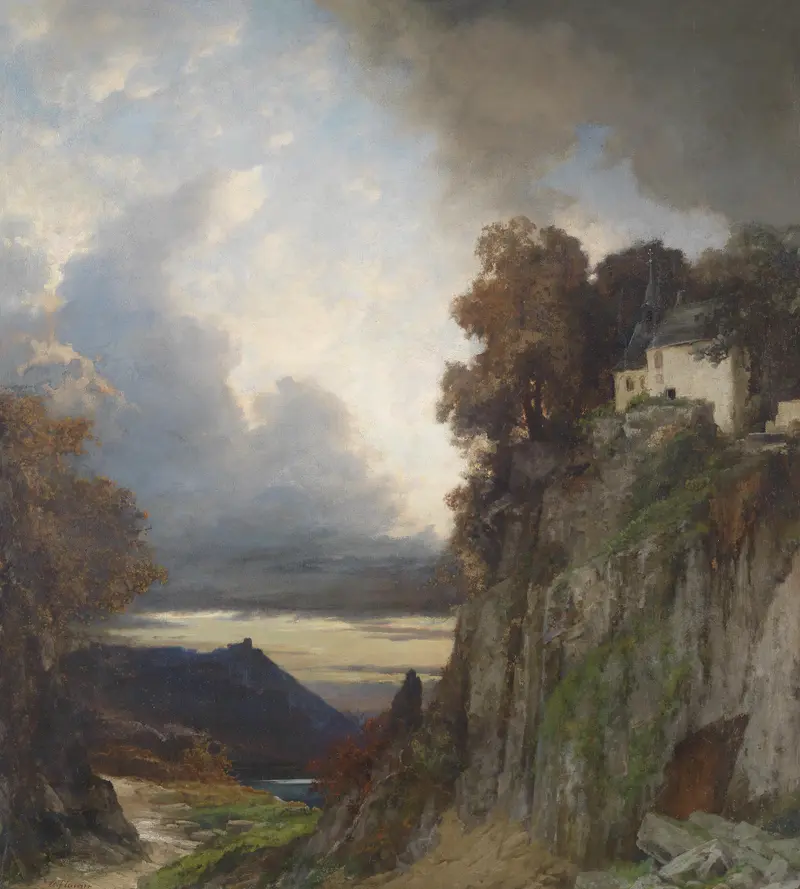
Abendstimmung am Rhein
Albert Flamm
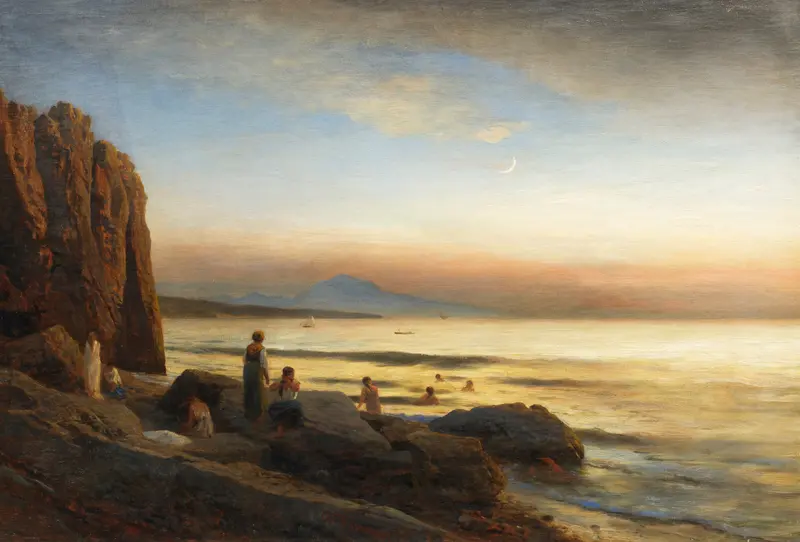
Badende Frauen am Golf von Neapel
Albert Flamm
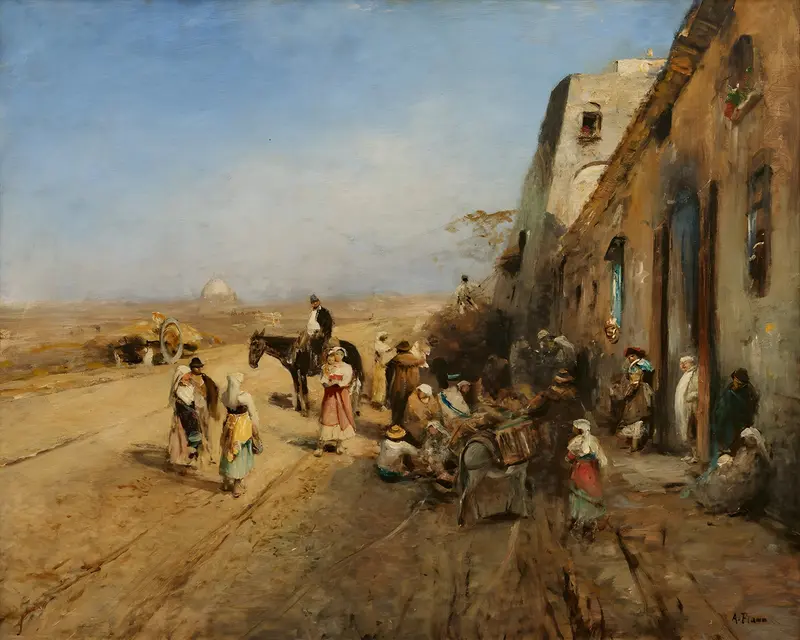
Italian Street Scene in front of a Tavern
Albert Flamm
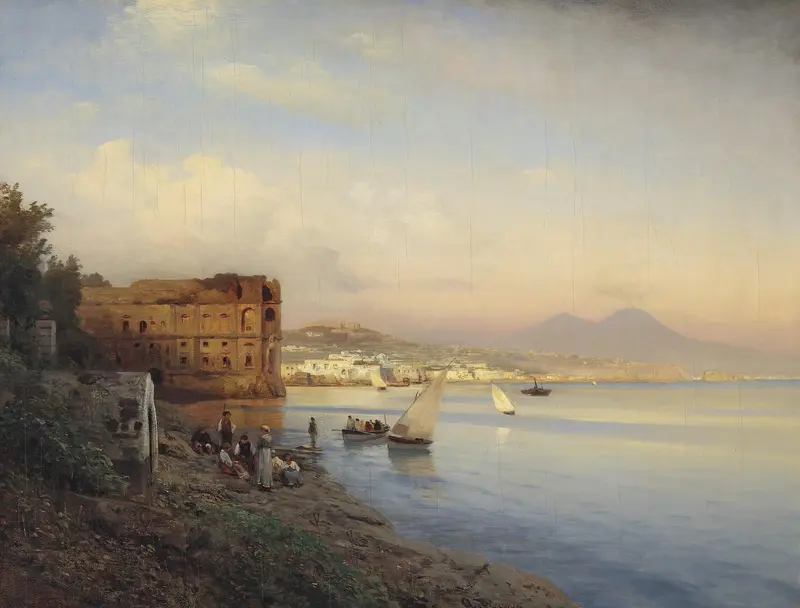
Blick auf die Bucht von Neapel
Albert Flamm
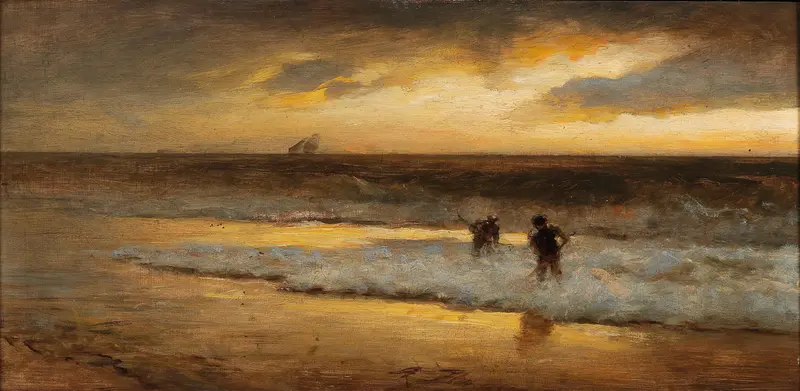
Crab Fishermen On The Beach
Albert Flamm
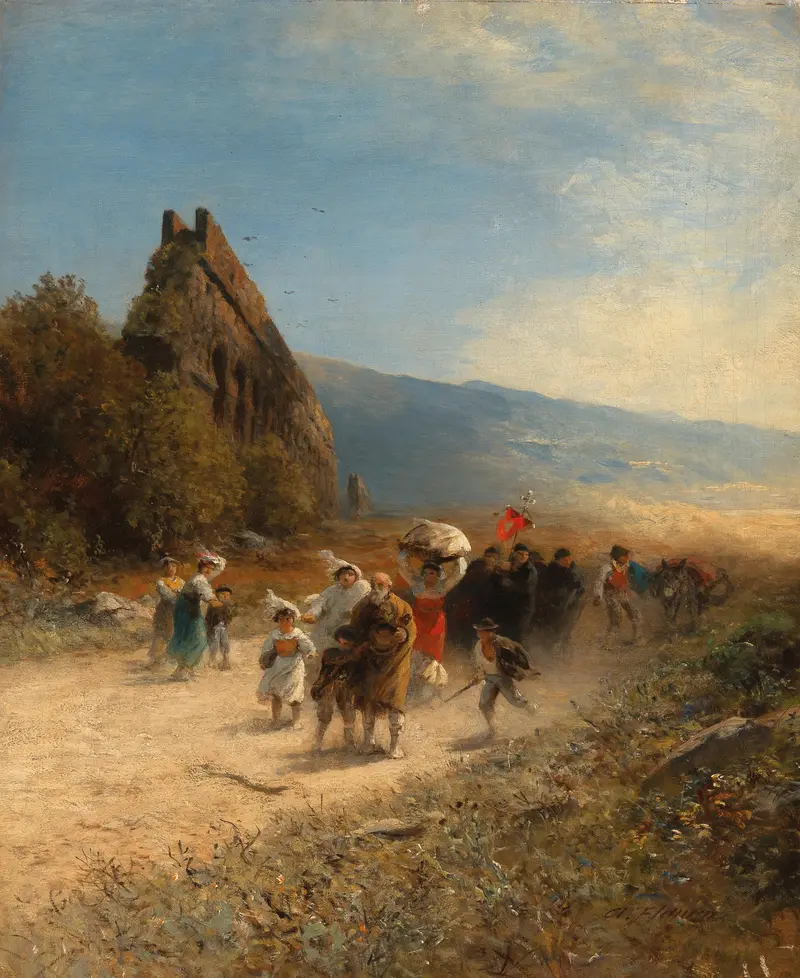
A Procession in the Roman Campagna
Albert Flamm
More Landscape Art

The Starry Night
Vincent van Gogh

View of Delft
Johannes Vermeer

Water Lilies
Claude Monet

The Grand Canal, Venice, looking north-west from the Ca' Corner to the Ca' Contarini degli Scrigni, with the campanile of Santa Maria della Carità
Canaletto

Windsor Castle
Canaletto

The Grand Canal looking North-East from the Palazzo Dolfin-Manin to the Rialto Bridge
Canaletto