View of the Main — History & Facts
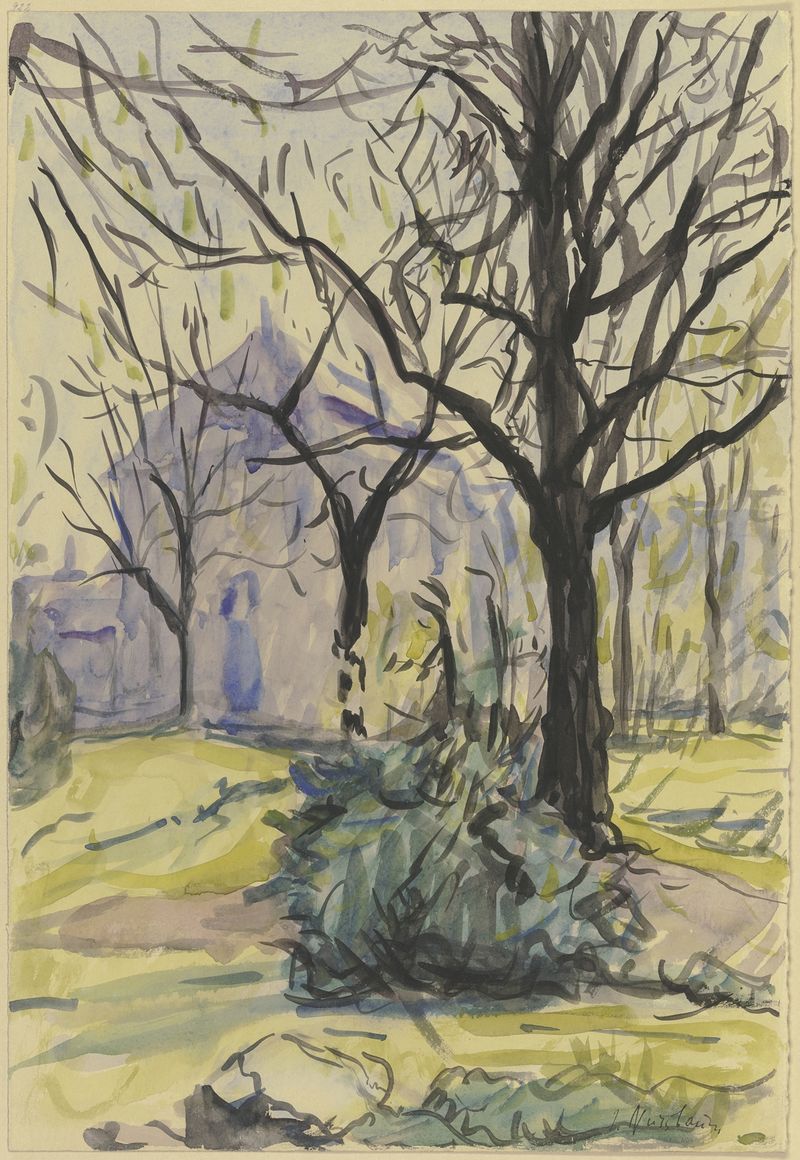
Where does light end, and longing begin? This question hangs in the air as you gaze at the vibrant hues and serene composition of the landscape before you. Look to the left at the gentle curve of the river, winding like a soft ribbon through the verdant earth. The light dances on the water's surface, a symphony of blues and greens that draws your focus. Notice how the artist employs a palette of bold colors to evoke both warmth and depth, contrasting the bright sky with the deep, cool tones below.
The brushwork is fluid yet deliberate, infusing the scene with an almost ethereal quality that invites contemplation. The interplay of light and shadow reveals an emotional undercurrent; the luminous reflections on the river suggest hope and possibility, while the darker patches of land speak to the weight of solitude. In the distance, the delicate outlines of trees create a sense of both tranquility and yearning, embodying the tension between nature's beauty and the human desire to connect deeply with it. Each element, from the vibrant greenery to the serene waterway, speaks of a longing to find solace in the natural world. In 1923, Jakob Nussbaum painted this work during a period of personal reflection and change in Germany, where the effects of World War I were still palpable.
As an artist navigating a complex art scene marked by the rise of modernism, he sought to convey emotional depth through color and composition, aiming to connect viewers not just with the landscape, but with their own inner worlds.