Winterlandschaft, Unterengadin — History & Facts
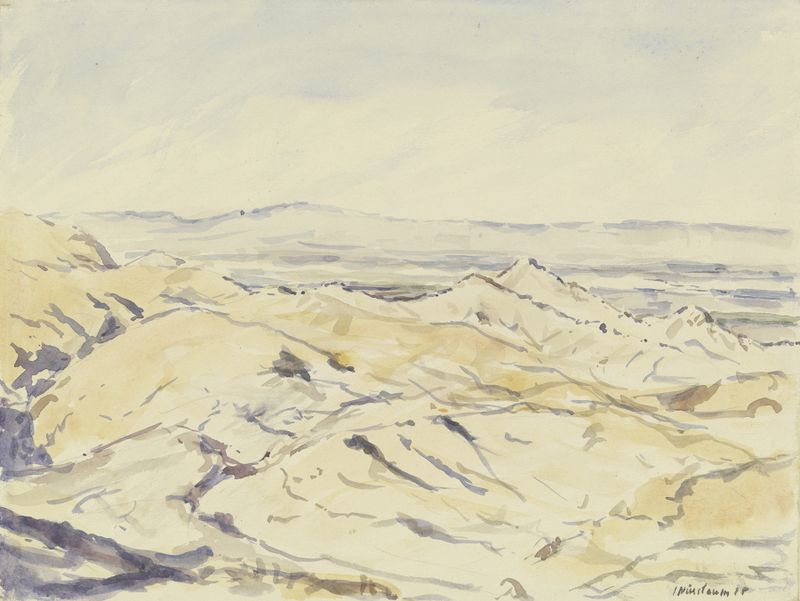
In Winterlandschaft, Unterengadin, a haunting emptiness resonates through the chill of the landscape, inviting contemplation of solitude in nature. Look to the center of the canvas, where swirling shades of white and icy blue converge, forming a treacherous expanse of snow and shadow. The starkness of the scene is pierced only by the distant silhouette of jagged mountains, their peaks shrouded in a misty veil. Nussbaum’s brushwork dances between soft, fluid strokes and sharp, abrupt lines, enhancing the sense of isolation.
The muted palette evokes the stillness of winter, while subtle hints of warmth flicker in the background, suggesting the hidden life beneath the frozen surface. Yet, within this frigid tableau lies a poignant tension. The viewer may discern a quiet struggle between serenity and desolation, where the white landscape, while beautiful, is laden with unspoken narratives of abandonment and yearning. The absence of human presence amplifies the weight of the silence, inviting an exploration of what lies beyond the surface—a profound reflection on the emptiness that can exist even in the most picturesque settings. In 1930, Nussbaum created this piece during a time marked by political and economic upheaval in Europe.
Living in Switzerland, he immersed himself in the natural beauty surrounding him, yet his works often reflect a deeper melancholy. Amidst the rise of modernism and shifting artistic tides, this painting stands as an introspective moment, capturing a duality of beauty and isolation that pervades the artist's oeuvre.