View to the Quirinal from the Villa Malta, Rome — History & Facts
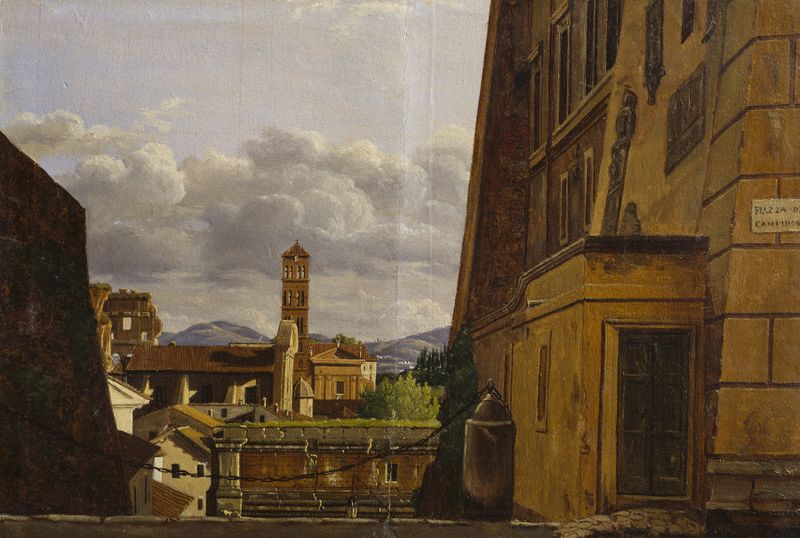
In the stillness of a moment, we are confronted by the stark contrast of tranquility and turmoil in the heart of Rome. Focus on the lush greenery that drapes the foreground, each leaf meticulously rendered, a testament to the artist's skill. Notice how the light illuminates the distant Quirinal Palace, casting an almost ethereal glow upon its façade. The gentle curves of the landscape lead the eye, guiding us from the vibrant foliage to the architectural elegance that stands defiantly against the horizon.
The harmonious palette of greens and soft blues, punctuated by warm sunlight, invites contemplation while simultaneously cloaking a deeper unrest. Beyond the surface beauty lies an intricate tapestry of historical context. The serene setting belies the political upheaval that loomed in the background of Söderberg's life. The juxtaposition of the natural splendor and the man-made structure hints at the tensions between nature's timelessness and the transient nature of human aspirations.
The elegant lines of the palace may evoke stability, yet they also whisper of the revolutionary fervor that brewed during the late 19th and early 20th centuries, a reminder that even the most picturesque vistas can harbor an undercurrent of discord. In this unmarked moment, Söderberg captured the essence of a city on the brink of change, likely painted during his time in Italy when modernism began to challenge traditional artistic norms. Influenced by the rich artistic heritage that surrounded him, he sought to reconcile the beauty of the landscape with the complexity of human experience, embodying the struggle between progress and preservation inherent to that era.