Village avec une église — History & Facts
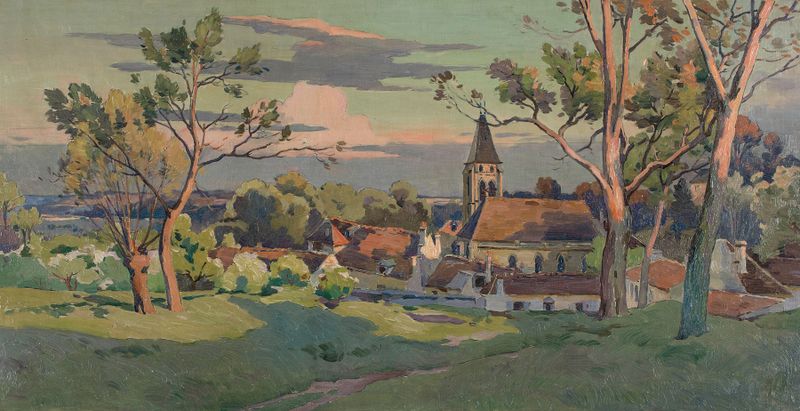
The delicate interplay of vibrant hues in this painting whispers of a deeper illusion, a world that feels both familiar and dreamlike. Look to the center where a quaint church stands, its steeple reaching skyward among the lush greenery. Notice the subtle strokes of blue and green that blend together, creating an ethereal atmosphere. The light rests gently on the rooftops, illuminating the textured surfaces with a warmth that invites contemplation.
The composition’s harmony draws you in, balanced by the rhythmic lines of the landscape and the gentle embrace of nature surrounding the village. Beneath the tranquil exterior, a tension brews between reality and the idealized vision of pastoral life. The distant mountains loom in the background, suggesting a boundary between the serene village and the unknown beyond. The painter’s choice of color feels both nostalgic and deceptive; it evokes a longing for an idyllic existence while hinting at the complexities that lie beneath this surface.
Each brushstroke captures the essence of tranquility yet invites the viewer to question what lies beyond the idyllic façade. In 1902, the artist created this work during a period of great transformation in the world of art. Schmitt was exploring post-impressionist techniques, merging traditional landscapes with a modern sensibility. Living in France, he was influenced by the burgeoning art movements of his time, which sought to capture the essence of emotion and experience.
This painting reflects both a personal and collective search for beauty amid change.