village avec une église — History & Facts
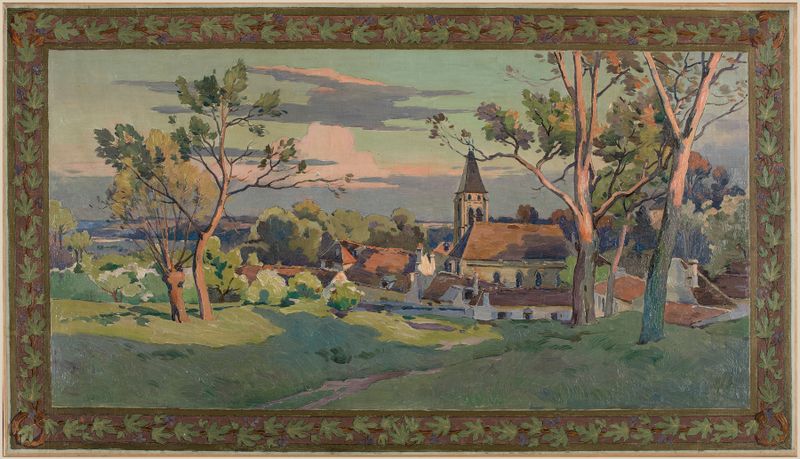
In village avec une église, the tranquility of a rural landscape beckons us to ponder the legacies of both the land and its people. As we gaze upon this serene scene, we are invited to reflect on the interwoven threads of history and memory that shape our existence. Look to the left at the quaint village nestled against the backdrop of rolling hills. The church, with its stark steeple reaching skyward, draws our attention, symbolizing both faith and community.
Notice how soft, muted colors blend seamlessly with brushstrokes that evoke a gentle breeze, while dappled sunlight casts playful shadows across the thatched rooftops. The composition balances elements of nature and architecture, illustrating a harmonious coexistence that feels both timeless and fleeting. The emotional weight of this artwork lies in the contrasts it presents—the permanence of the church against the transient beauty of the surrounding landscape. Each brushstroke captures not only the physicality of the scene but also the echoes of lives lived and stories untold.
The painting resonates with a sense of nostalgia, urging us to consider what legacies we inherit from the past and how they shape our present. In 1902, Paul Léon Felix Schmitt created this piece during a pivotal period in the French art world, as Impressionism influenced artists to explore the interplay of light and form. Living in a time when the world was rapidly modernizing, Schmitt’s focus on rural life served as a counterpoint, honoring traditions that might soon fade into obscurity. This artwork stands as both a celebration of that legacy and a quiet reminder of the beauty woven into the fabric of everyday life.