
Vue de Paris depuis Vanves — History & Facts
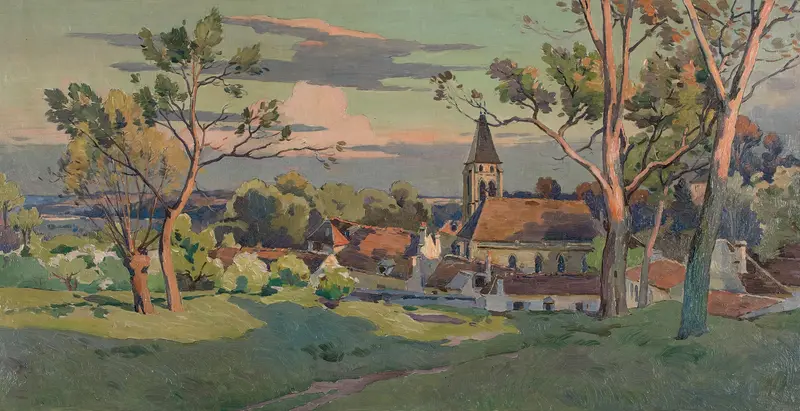
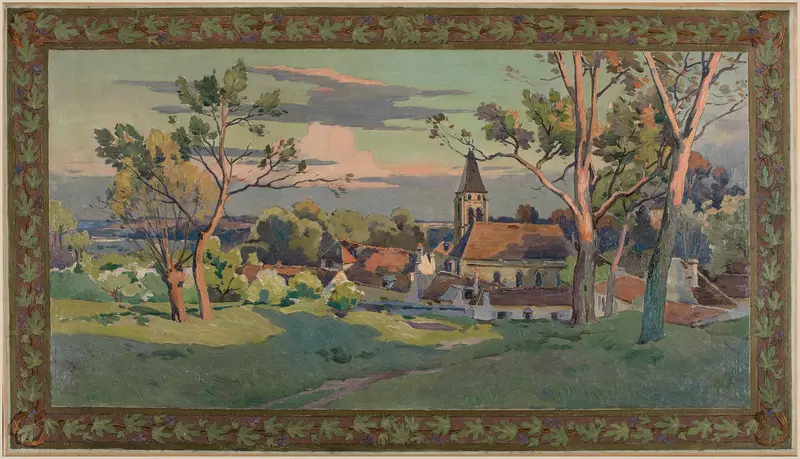
In Vue de Paris depuis Vanves, the artist conjures an illusion that invites viewers to step into a world of memory and perception. The vibrant hues and delicate forms blur the lines between reality and the dreamscape, crafting a poignant dialogue between the two. Look to the center of the canvas where the Parisian skyline emerges, its iconic silhouettes mingling with the soft blues and greens of the surrounding landscape. Notice how the light dances across the rooftops, illuminating the delicate details of the architecture.
The composition draws the eye naturally from the foreground, where the gentle undulations of the fields lead to the urban heart, creating a sense of continuity and connection between the pastoral and the metropolitan. Beneath the surface, contrasts abound: the tranquility of the foreground against the bustling city in the distance embodies a tension between peace and chaos. The use of light and shadow evokes a transient moment, as if the scene exists within a fleeting breath—here one moment, gone the next. Each element, from the distant towers to the delicate brushwork of the fields, resonates with the theme of illusion, suggesting that what we perceive is merely a sliver of a larger truth. In 1902, while creating this piece, the artist found himself in a Paris at the peak of its artistic renaissance.
He was deeply involved in the vibrant avant-garde movements, influenced by the rapid changes in modern life and technology. It was a time of exploration and experimentation, both for him and the artistic community, as they sought to capture the essence of a city undergoing constant transformation.
More Artworks by Paul Léon Felix Schmitt
More Landscape Art

Starry Night
Vincent van Gogh

View of Delft
Johannes Vermeer

Water Lilies
Claude Monet

The Grand Canal, Venice, looking north-west from the Ca' Corner to the Ca' Contarini degli Scrigni, with the campanile of Santa Maria della Carità
Canaletto

Windsor Castle
Canaletto

The Grand Canal looking North-East from the Palazzo Dolfin-Manin to the Rialto Bridge
Canaletto