
Vue composite des monuments parisiens — History & Facts
In the midst of a bustling city, the monuments stand tall, their silent strength betraying the whispers of time. Each line and color evokes a profound sense of place, yet beneath the beauty lurks a tension that resonates with the viewer. Look to the center where the Eiffel Tower pierces the sky, its iron latticework robust against the painted clouds. The surrounding buildings, lovingly rendered in soft pastels, cradle this monumental structure, while splashes of sunlight dance upon their surfaces.
Notice how the warm tones of the sunset mirror the fleeting nature of beauty, highlighting the contrast between the permanence of the stone and the ephemeral quality of light. In the foreground, tiny figures navigate the space, their movement almost imperceptible, suggesting both life and solitude amidst a monumental backdrop. Shadows stretch long and thin, hinting at the passage of time and the echoes of abandonment, as if each monument carries the weight of forgotten stories and betrayed dreams. The play of light and shadow speaks to the complexity of human experience — joy, loss, and the bittersweet memories woven into the fabric of the city. Domenico Ferri created Vue composite des monuments parisiens in 1836, a period marked by significant political upheaval in France.
The artist, who was influenced by Romanticism, sought to capture the ever-changing Parisian landscape as it emerged from the turmoil of the July Revolution. During this time, the artistic community was exploring new ways to convey emotion and identity, and Ferri’s work reflects this dynamic interplay of culture and history.
More Artworks by Domenico Ferri
Browse all →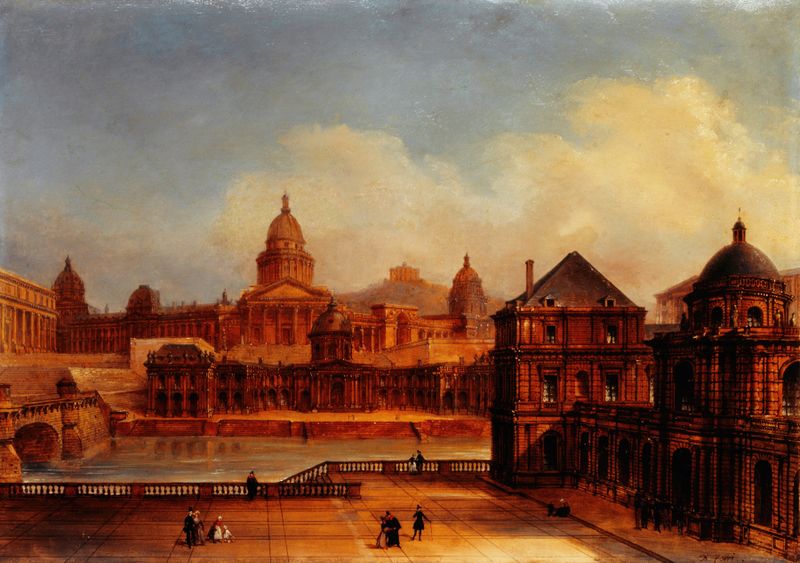
More Architecture Art
Browse all →
The statue of Liberty
Frédéric Auguste Bartholdi

View of Houses in Delft, Known as ‘The Little Street’
Johannes Vermeer

View of Houses in Delft, Known as ‘The Little Street’
Johannes Vermeer

The Cathedral in Rouen. The portal, Grey Weather
Claude Monet

The yellow house
Vincent van Gogh

The Church in Auvers-sur-Oise, View from the Chevet
Vincent van Gogh