Vue composite des monuments parisiens — History & Facts
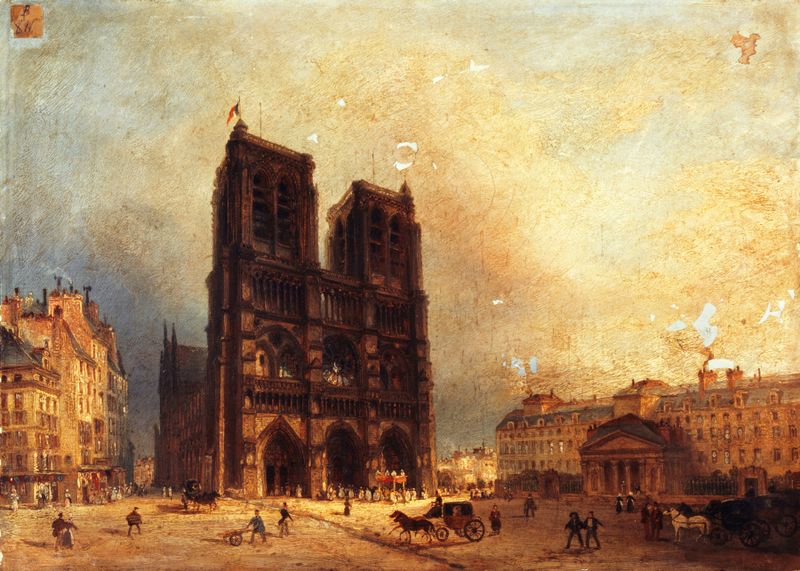
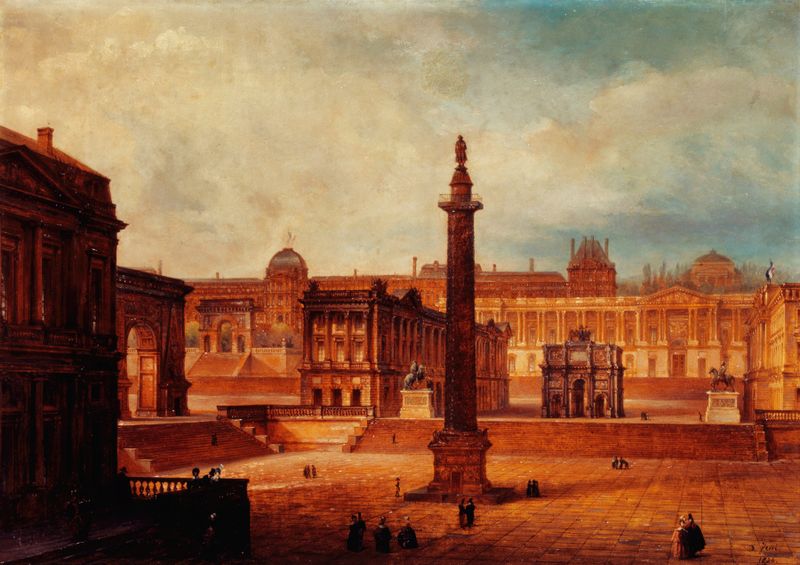
When did color learn to lie? In the hands of a master, hues can stir the heart and deceive the eye, crafting a world that oscillates between reality and pure imagination. Look closely at the sweeping panorama in Vue composite des monuments parisiens. Your gaze will first be drawn to the vibrant play of blues and greens, where the Seine glimmers like a jewel beneath the dappled sunlight. Notice the meticulously rendered silhouettes of iconic structures that rise against the sky, each monument a testament to human achievement.
Ferri’s use of light expertly highlights the grandeur of Paris, breathing life into the city as it sprawls across the canvas. Yet, beneath the surface brilliance lies a subtle tension. The vividness of the colors belies an underlying nostalgia for a rapidly changing world, as the industrial age began to reshape the landscape. The architectural harmony of the city contrasts sharply with the chaos of urban life, inviting viewers to reflect on what progress may cost.
Hidden in the details of the bustling streets are hints of the vibrant lives that animate this scene, each stroke of the brush encapsulating personal stories intertwined with the city’s grand narrative. Domenico Ferri painted this piece in 1836, during a period of transition for Paris, marked by the aftermath of the July Revolution. As he captured the essence of the city, France was navigating a delicate balance between tradition and modernity. Ferri, an Italian artist residing in Paris, found inspiration in the architectural splendor surrounding him, reflecting both the pride and the uncertainty of his time through his vivid portrayal of the Parisian skyline.