Vue de Montmartre — History & Facts
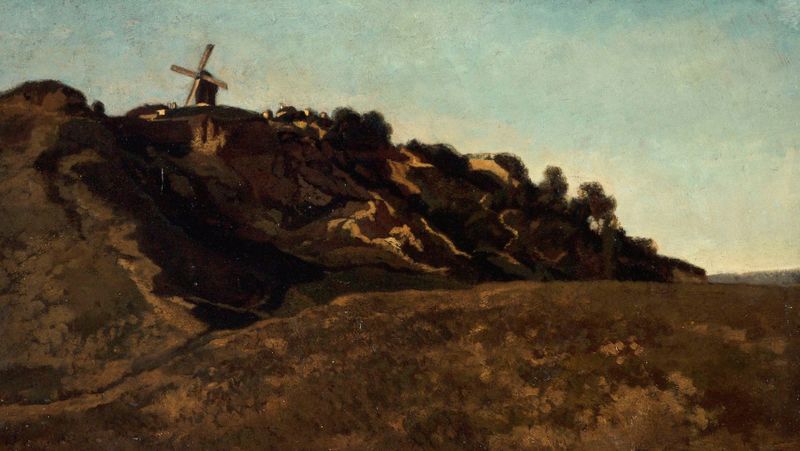
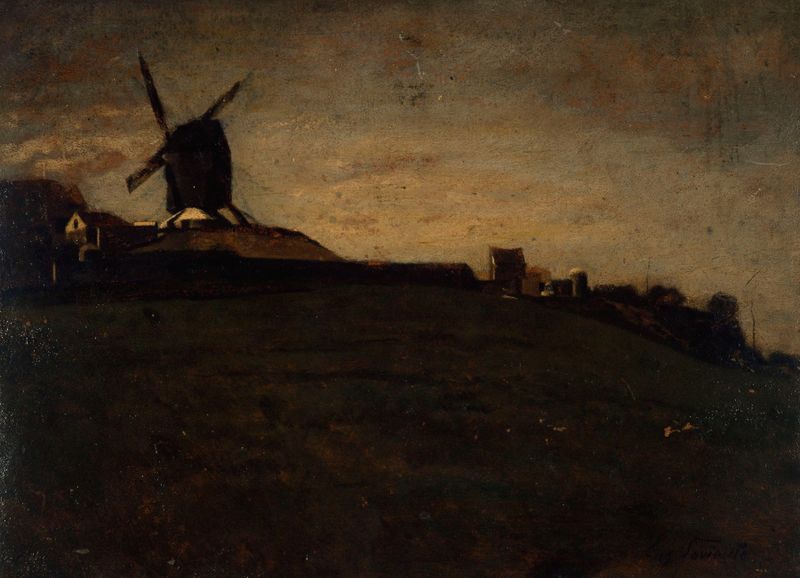
In the heart of Montmartre, destiny weaves its intricate tapestry through the laced streets and whispering trees, urging us to pause and reflect on life's fleeting moments. Each stroke captures a world that might slip through our fingers, emphasizing how art immortalizes what the passage of time seeks to erase. Focus first on the luminous sky, where soft pastels blend seamlessly, offering a gentle contrast to the vibrancy of bustling life below. The careful arrangement of rooftops directs your gaze through an inviting pathway, leading the eye towards the horizon, where the last light of day meets the fading shadows.
Notice the delicate balance of light and shadow that Lavieill masterfully orchestrates, allowing each element—be it the tiny figures milling about or the outlined architecture—to resonate with a palpable sense of tranquility and connection. Within this landscape, there lies an undercurrent of change and nostalgia. The serene depiction of daily life bespeaks a moment in time before the tumult of the modern world; it subtly evokes the tension between the present and the inevitable transformations that loom. The warm colors and gentle brushwork evoke a sense of longing, as if the scene itself is a reminder of the dreams and aspirations tied to this beloved locale, representing both reminiscence and the possibility of renewal. Created in 1848, during a period of artistic and social upheaval, the painting reflects Lavieill's engagement with the burgeoning Impressionist movement, which sought to depict modern life and its transitory nature.
Living in Paris, he was surrounded by revolutionary fervor, yet he chose to capture the quieter moments that often slipped through the chaos. This choice not only highlighted his artistic sensibilities but also placed him within the evolving dialogue of art that sought to preserve the essence of life as it ebbed and flowed.