Vue de Montmartre — History & Facts
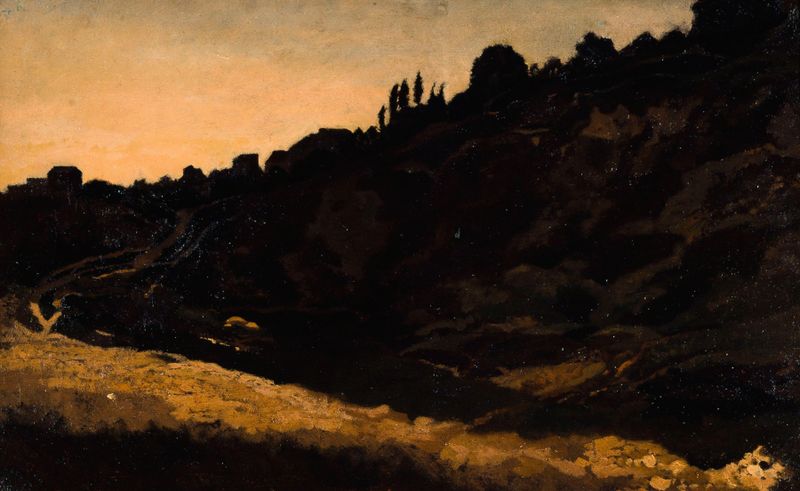
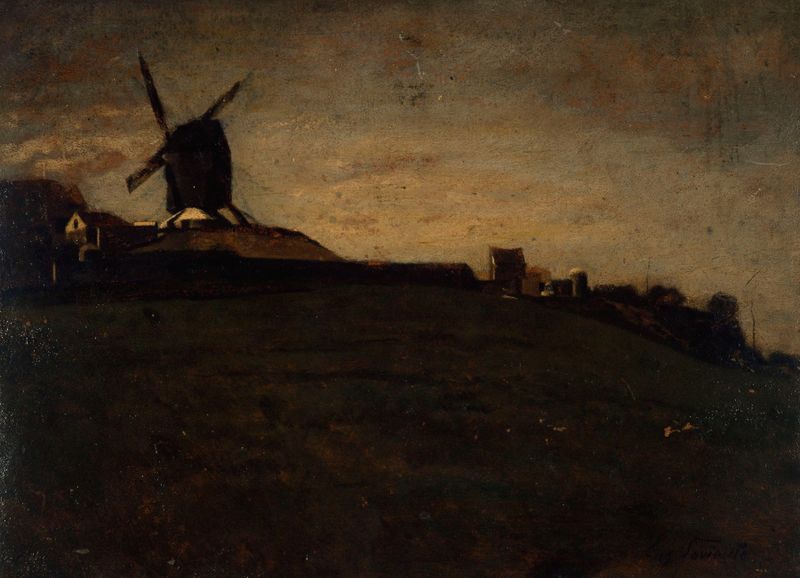
Is this a mirror — or a memory? The landscape unfolds like a whisper, evoking a sense of nostalgia that beckons the viewer to step closer, to feel the pull of the past. Look to the left, where the gentle curves of Montmartre rise against a soft blue sky. The brushstrokes pulse with life, capturing the warmth of a late afternoon sun that bathes the rooftops in golden hues. The distant spires stand as sentinels, their delicate outlines softened by the atmospheric perspective, inviting us to wander through the scene.
Notice how the vibrant greenery sprinkles itself throughout the foreground, a vivid reminder of nature's embrace amidst the urban tableau. Yet, amid this tranquil beauty, there lies a tension between the lively vibrancy of the village and the looming shadows of change. The interplay of light and shadow hints at an underlying melancholy, suggesting that this idyllic view may soon fade into memory. The warmth of the colors contrasts with the coolness of the shadows, echoing the duality of joy and longing inherent in our experience of place.
Each detail serves as a testament to the passage of time, illustrating a world that is at once full of life and on the brink of transformation. Eugène Lavieill completed this piece in 1848, a tumultuous year in France marked by revolution and the quest for social change. As a member of the emerging Realist movement, he sought to depict the everyday life around him, capturing fleeting moments that resonate with emotional depth. This work reflects not only the picturesque landscape of Montmartre but also the artist’s own longing for a simpler, more harmonious existence amidst the chaos of his time.