
Vue de Rudesheim et du Joanisberg prise de Bingen — History & Facts
Could beauty survive in a century of chaos? The question lingers in the serene landscape captured by the artist, offering a glimpse of solace amid tumultuous times. Focus on the hazy hills in the background, where the gentle undulations of the earth embrace the soft light that bathes the scene. Notice how the verdant fields in the foreground emerge with a vibrant palette, each stroke revealing the luscious textures of nature. The winding river elegantly snakes through the landscape, drawing the eye toward the horizon with an inviting serenity that contrasts the distant, craggy peaks.
This careful composition harmonizes color and form, inviting contemplation and connection to the landscape's beauty. At first glance, the painting exudes tranquility, yet beneath its surface lies a poignant tension—a longing for peace in a world often marked by strife. The juxtaposition of the peaceful river against the looming hills speaks to the fragility of serenity. Hidden details, such as the faint outlines of structures nestled within the landscape, suggest the human presence and its array of emotions, from hope to despair, echoing the complexities of existence in an era of uncertainty. Created during a period of artistic transition in the early 19th century, Bleuler produced this work in Germany, where Romantic ideals flourished.
The world was witnessing the aftermath of the Napoleonic Wars, which shaped not only political landscapes but also fueled a desire for nature's beauty as a refuge from chaos. This painting stands as a testament to the artist's yearning for harmony amidst the turbulence, capturing a moment that transcends time.
More Artworks by Johann Ludwig Bleuler
Browse all →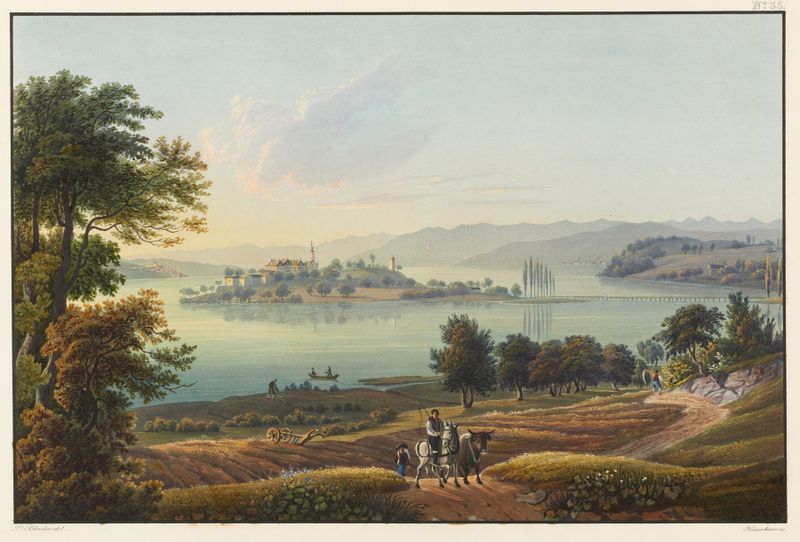
Vue de l’Jsle de Meynau dans le lac de Constance
Johann Ludwig Bleuler
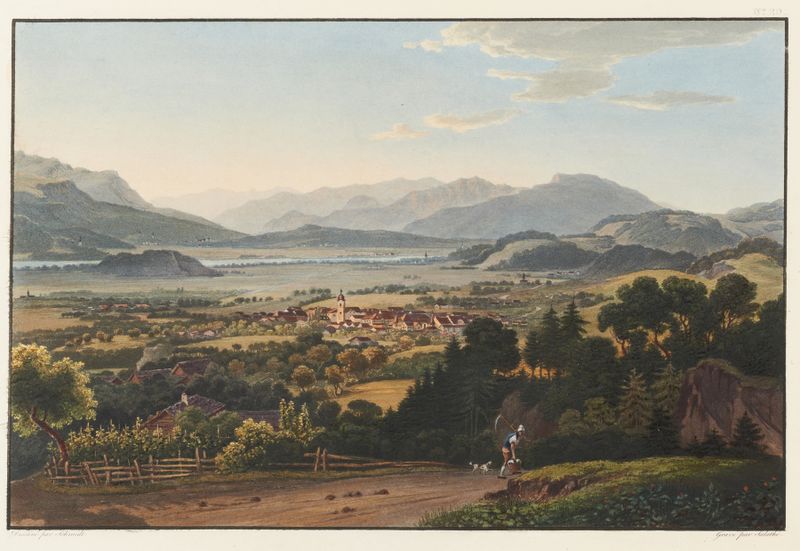
La petite ville d’Altstatten dans la valée du Rhin, Canton de St. Gall
Johann Ludwig Bleuler
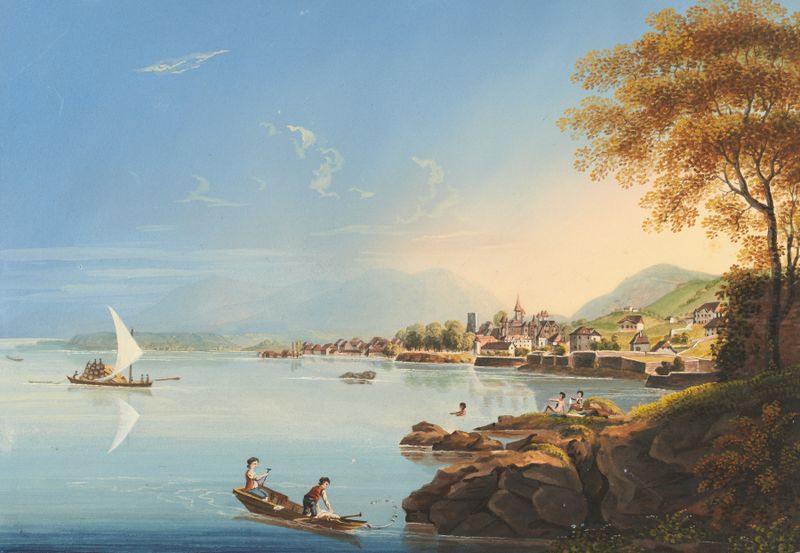
Vue de la ville de Neuchatel en Suisse
Johann Ludwig Bleuler
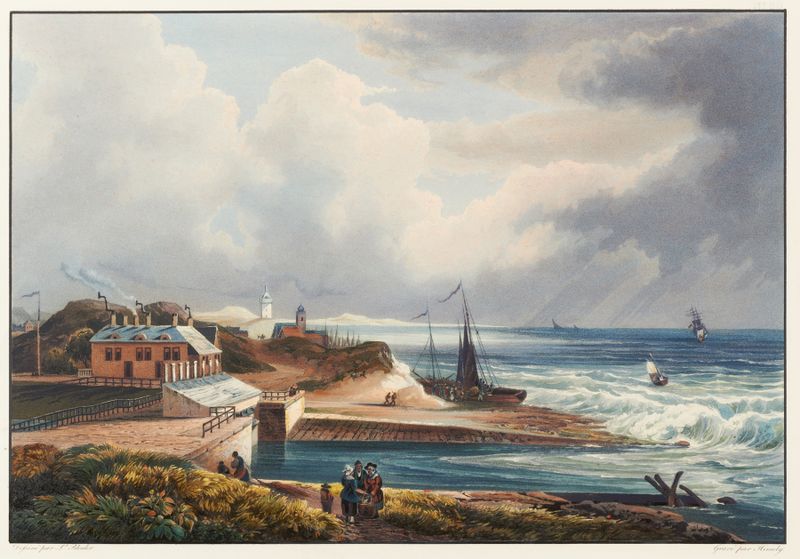
Vue de Katwyk et de l’embochure du Rhin, dans la Mer du Nord
Johann Ludwig Bleuler
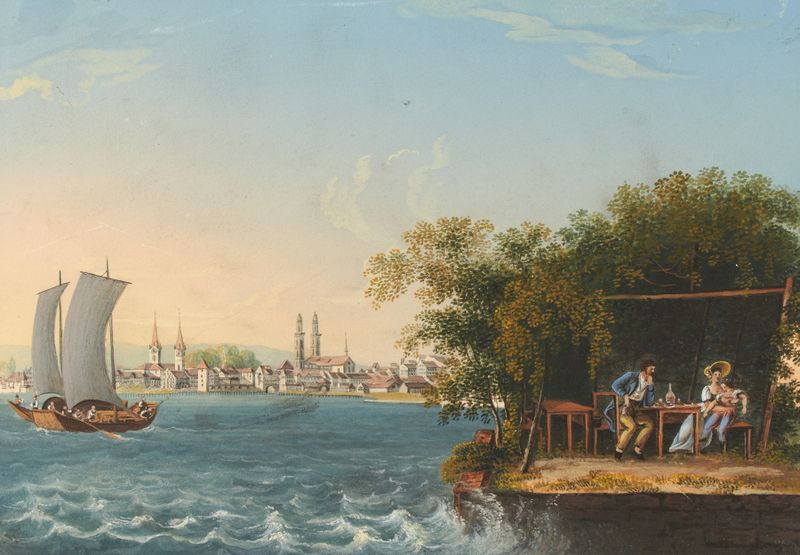
Vue de la ville de Zurich
Johann Ludwig Bleuler
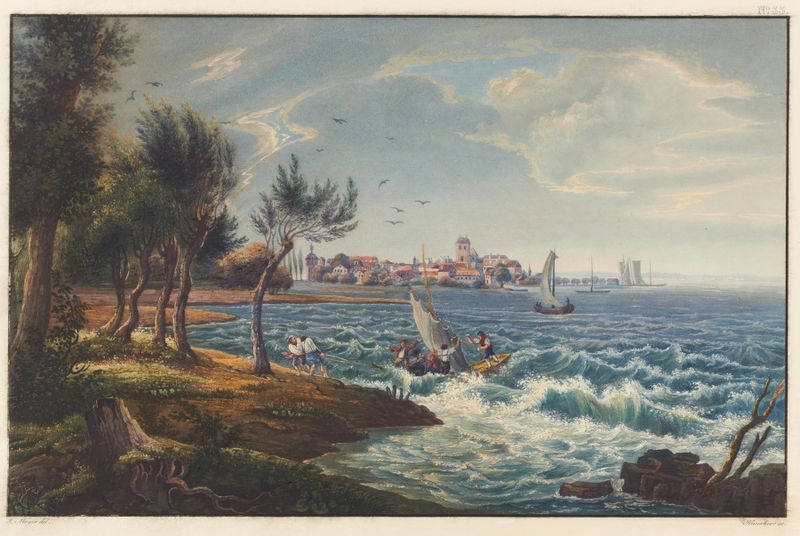
Vue de la ville d’Arbon et du lac de Constance
Johann Ludwig Bleuler
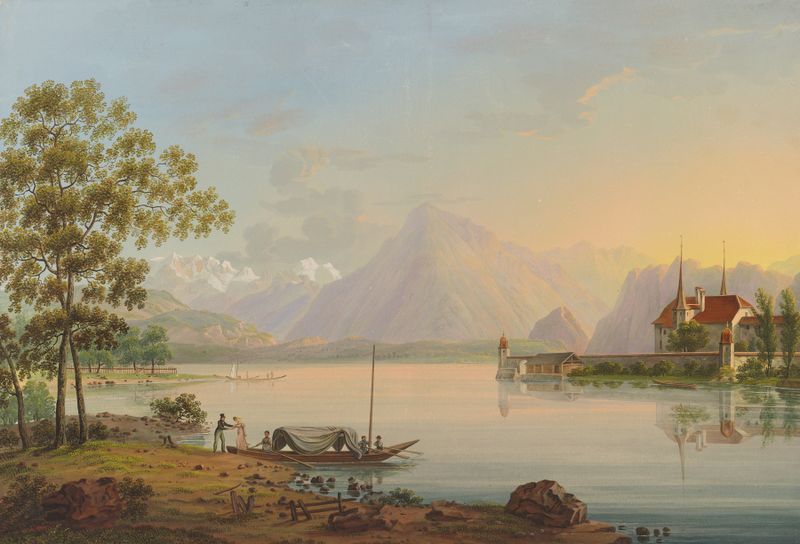
Thoun am Thounersee
Johann Ludwig Bleuler
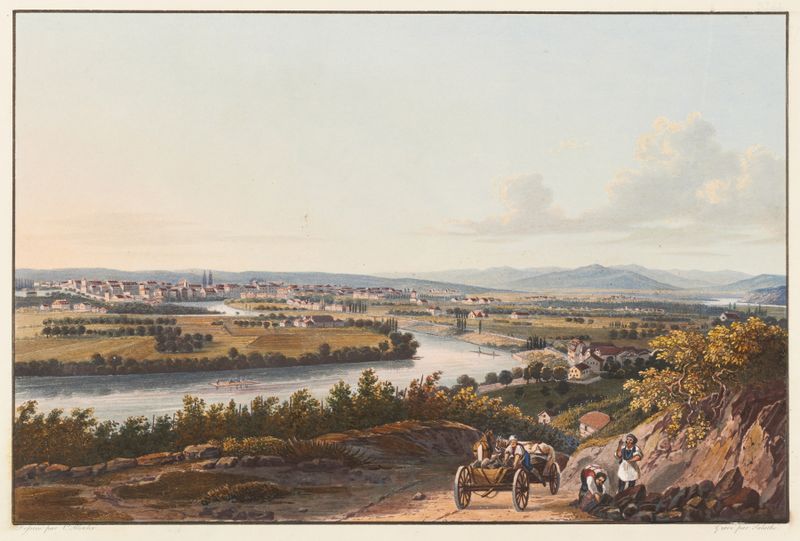
Vue de la ville de Bâle et de ses environs
Johann Ludwig Bleuler
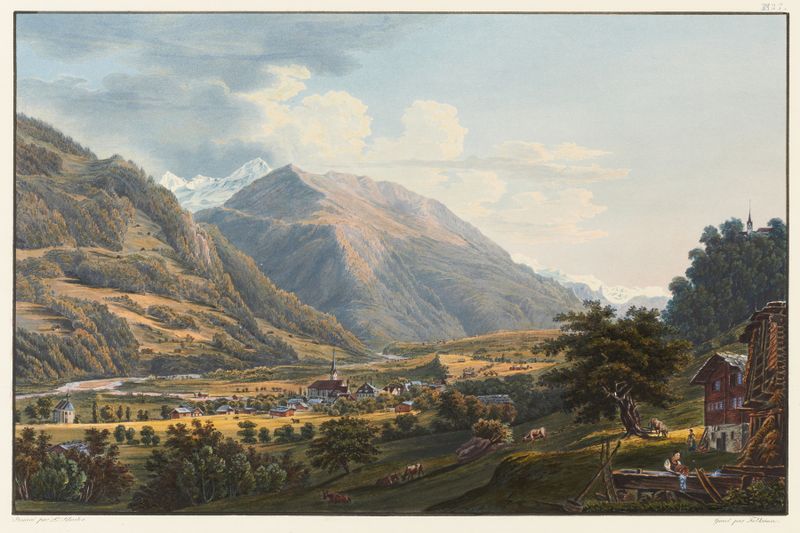
Vue du village de Trons, historique au sujet de la confederation du Canton des Grisons
Johann Ludwig Bleuler
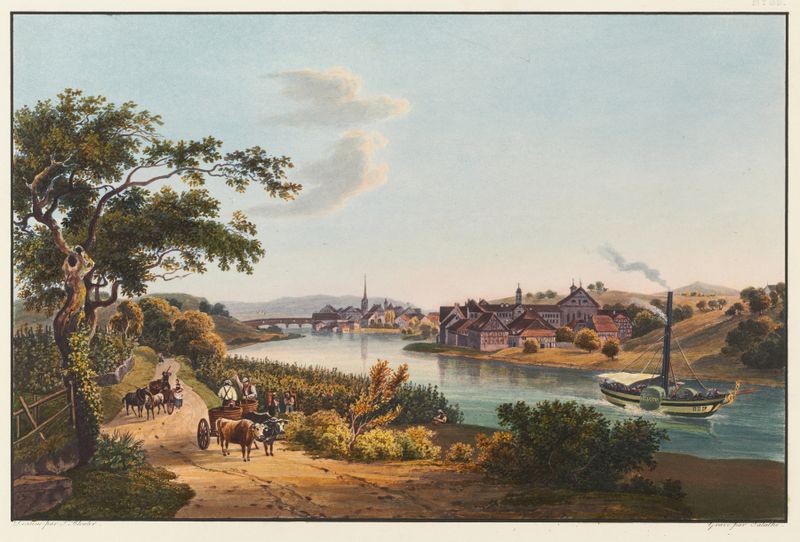
Vue de la ville de Diessenhofen et du Couvent de Catherinenthal
Johann Ludwig Bleuler





