
Vue de village — History & Facts
Could beauty survive in a century of chaos? In an era marked by trembling anxieties and upheavals, the delicate charm of rural life whispers a poignant truth, urging us to seek solace in nature’s embrace. Look to the left at the gentle undulations of the countryside, where soft greens and warm earth tones merge harmoniously. The sky looms overhead, painted in soft hues of blue and white, as dappled light filters through reaching branches, creating an interplay of shadow and brilliance. Notice how the brushstrokes vary, some smooth and fluid while others are more expressive and deliberate, capturing the essence of a serene village, yet hinting at an underlying tension that stirs beneath the surface. The juxtaposition of tranquility and foreboding becomes apparent as you explore the details—lively, blooming foliage stands resilient against the encroaching darkness at the horizon.
Each element in Vue de village echoes a yearning for peace amid uncertainty, suggesting that fear, like the stormy clouds looming overhead, is an ever-present force. The quiet houses huddle together, embodying both a sense of community and an instinctive caution, reflecting the complexities of human emotion in a world fraught with unpredictability. Gustave Loiseau created this work during a time of personal and societal upheaval, likely around the early 20th century. Living in France, he was influenced by the Impressionist movement, which sought to capture the fleeting beauty of life.
As Europe braced itself for the impending turmoil of World War I, artists like Loiseau turned to pastoral scenes as a means of escaping and commenting on the chaos surrounding them. This painting serves both as a refuge and a reminder of beauty’s fragility amidst the storm.
More Artworks by Gustave Loiseau
Browse all →
Rue de village en Normandie
Gustave Loiseau
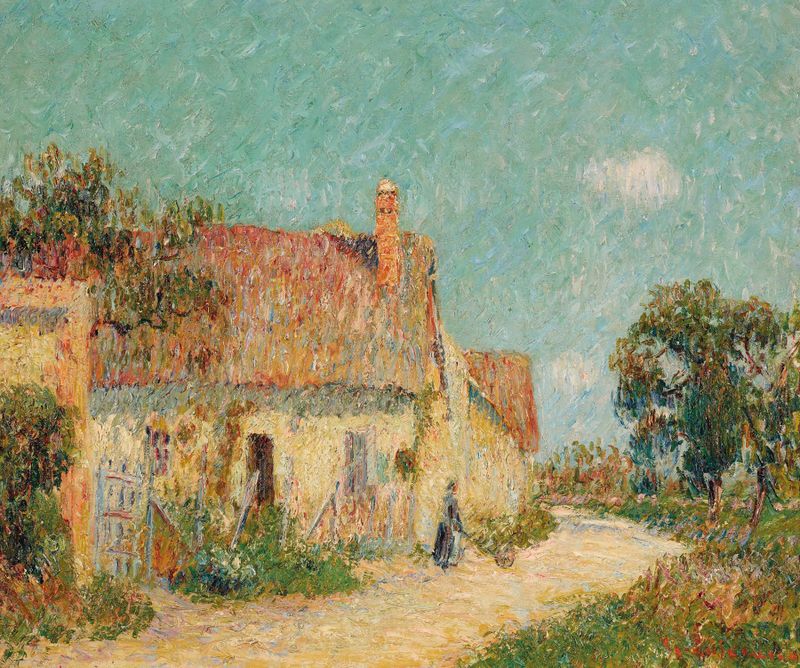
Chaumière en Normandie
Gustave Loiseau

Paysage d’Hiver à Chaponval
Gustave Loiseau
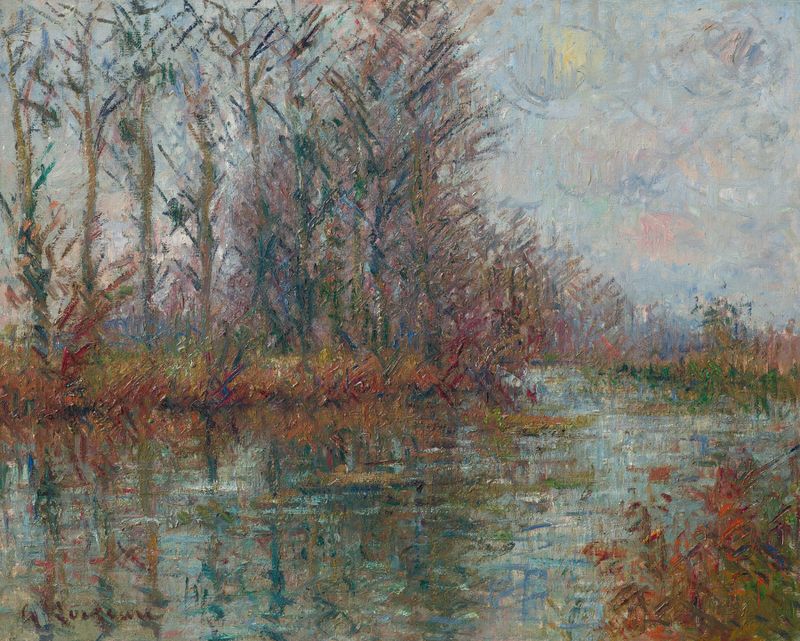
Tournant de rivière, L’Eure
Gustave Loiseau

Pont Marie, Paris
Gustave Loiseau

Le Bras De Mer
Gustave Loiseau

Le Pont Suspendu À Triel
Gustave Loiseau

Bord de la rivière
Gustave Loiseau
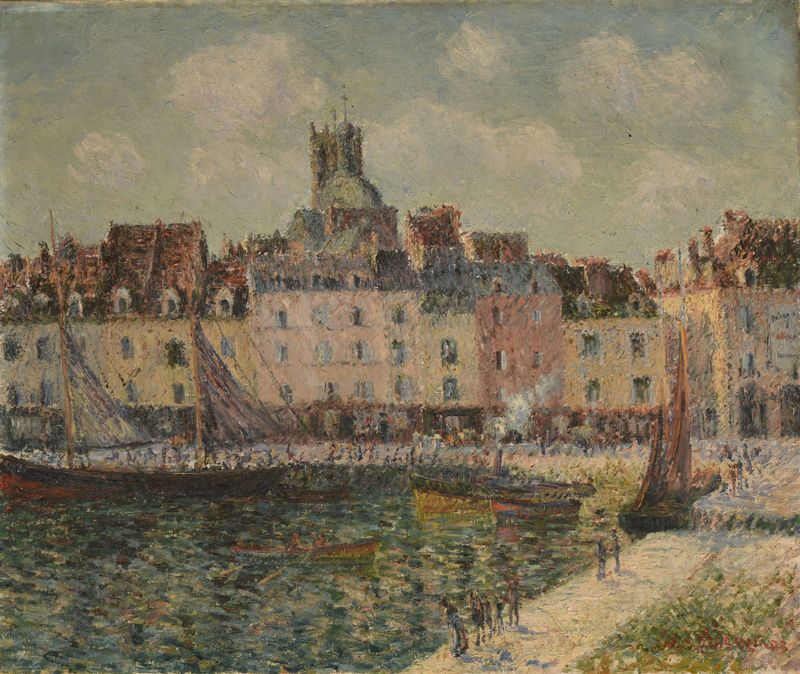
Le Quai Duquesne à Dieppe
Gustave Loiseau

Rocher la Teignouse, Cap Fréhel
Gustave Loiseau





