Vue des environs de Florence — History & Facts
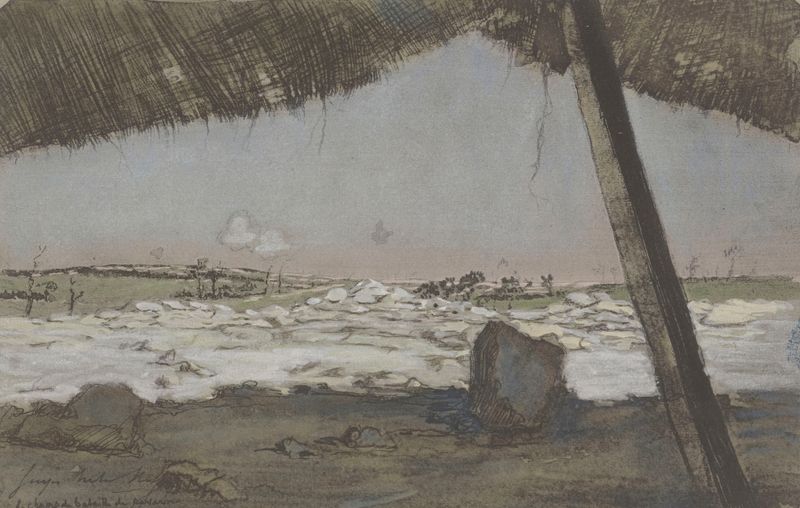
What secret hides in the quiet of the canvas? The stillness of Vue des environs de Florence invites contemplation, suggesting that beneath its serene surface lies a world of illusion waiting to be unraveled. Look to the left, where the soft undulations of the Tuscan landscape unfold, bathed in a gentle glow. The delicate brushwork captures the playful dance of light across fields, while the muted greens and ochres breathe life into the composition. Notice how the winding paths lead the eye deeper into the scene, creating an illusion of infinite space, as if inviting the viewer to step into the pastoral calm.
The idyllic portrayal of the surrounding hills juxtaposes with the faint shadows that linger, hinting at the complexity beneath the tranquil exterior. Delve into the contrasts presented: the harmony of nature against the lurking mystery of distant shapes, perhaps suggesting unseen narratives or histories woven through the landscape. The interplay of light and shadow may symbolize the duality of reality and perception, encouraging a deeper reflection on what is visible versus what remains hidden. Every brushstroke serves not just to depict, but to evoke—whispering secrets of the Florentine countryside that resonate with the viewer's own memories and dreams. Created during a period of exploration in the late 19th century, Georges Hugo painted this piece while navigating his artistic evolution.
As an artist based in France, he was influenced by the Impressionists and their focus on light and atmosphere, seeking to capture a moment that transcended time. The world was shifting, and as he rendered this picturesque view, he found a balance between tradition and innovation, revealing his personal connection to the landscape while contributing to the narrative of an era defined by transformation.