
Vue du Bourg de Schwitz — History & Facts
In the stillness of a moment, the passage of time is both fleeting and eternal, captured in a tranquil landscape. Focus on the gentle slopes of the hills, where the quaint village nestles against an expansive sky. Your gaze will be drawn to the subtle interplay of earthy tones and wisps of white clouds—a delicate dance that invites contemplation. Notice how the artist employs soft brushstrokes, allowing the emerald green of the fields to blend seamlessly with the muted browns of wooden structures, creating a harmonious yet poignant atmosphere. As you delve deeper, consider the contrast between the vibrant life of the village and the serene backdrop of nature.
The scattered dwellings, each painted with a gentle light, suggest the presence of unseen lives, while the lofty mountains loom like silent sentinels, timeless and unyielding. This juxtaposition reflects not only the beauty of this idyllic scene but also the inevitable passage of time, reminding us that joy and solitude coexist in the natural world. Created during a period of artistic exploration and regional pride, the work reflects the growing interest in landscape painting in the early 19th century. Though the exact date remains unknown, Biedermann's choice to depict the village of Schwitz speaks to a personal connection to the land and a desire to celebrate its beauty.
In this era, artists were increasingly exploring the emotional resonance of the landscape, paving the way for future generations to do the same.
More Artworks by Johann Jakob Biedermann
Browse all →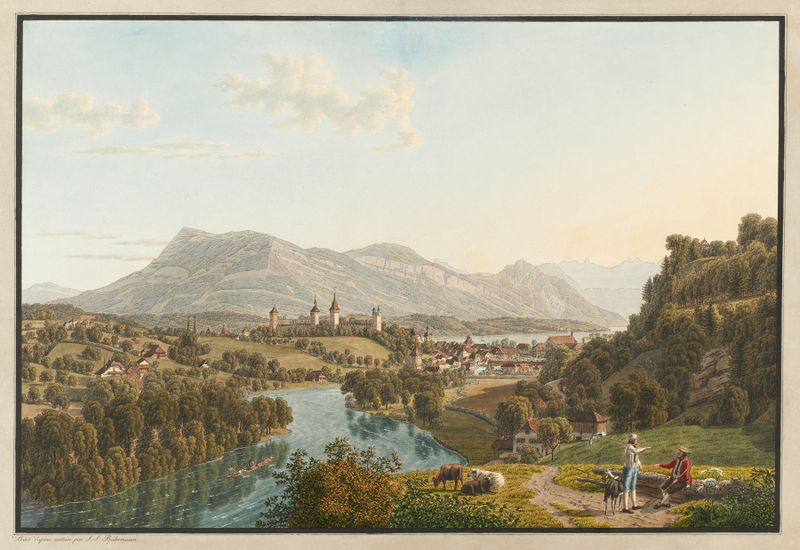
Luzern, von Nordwesten
Johann Jakob Biedermann

Sankt Gallen, von Norden
Johann Jakob Biedermann

Le Glacier nommé Rosenlaui, à côté du Wetterhorn
Johann Jakob Biedermann

Gottstatt, Kloster, von Nordwesten
Johann Jakob Biedermann
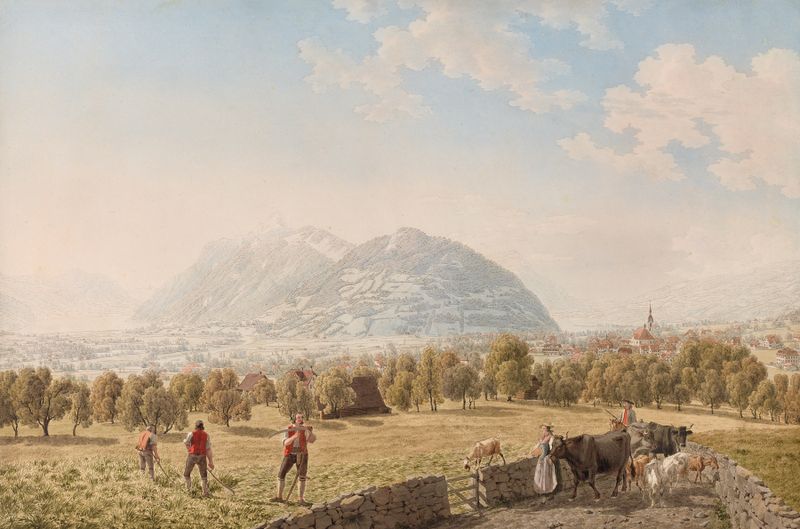
Schwyz, von Osten
Johann Jakob Biedermann

Twann und Bielersee von Nordosten
Johann Jakob Biedermann

Luzern, von Nordwesten
Johann Jakob Biedermann

Luzern, von Südwesten
Johann Jakob Biedermann
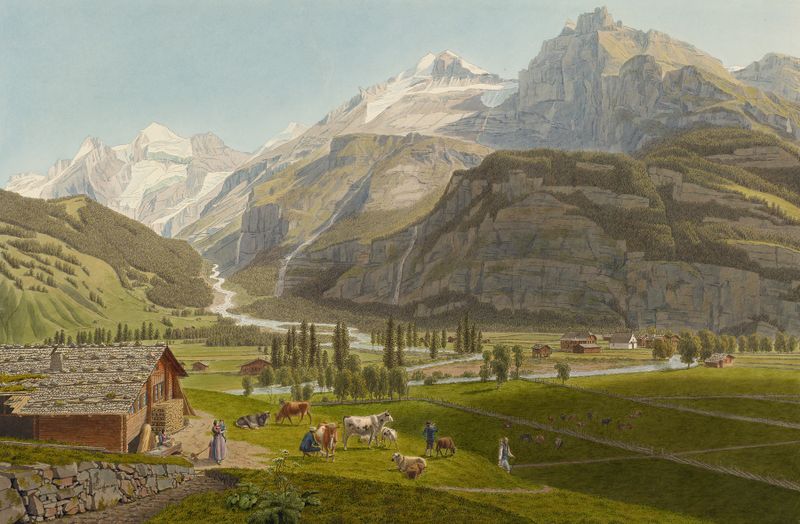
Kandersteg und das Kandertal, von Norden
Johann Jakob Biedermann

Schaffhausen, von Westen
Johann Jakob Biedermann





