
Waltham Abbey, Essex — History & Facts
Did the painter know this moment would outlive them? In the stillness of Waltham Abbey, Essex, the passage of time is captured with an unsettling clarity, a truth rendered in the delicate strokes of the brush. Look to the horizon where the abbey stands, dignified and serene against a backdrop of softly blended blues and greens. Notice how the light caresses the ancient stone, illuminating intricate details that reveal both the strength and fragility of the structure. The composition draws the eye to the majestic form of the abbey, framed by the lush landscape, while wisps of clouds hover like whispers in the sky, evoking a sense of quiet contemplation. The emotional tension lies in the juxtaposition of the sturdy abbey and the ephemeral quality of the surrounding nature.
Each stroke conveys a duality: permanence versus transience. The tranquility invites reflection, yet hints at the inevitable decay that time brings. These small yet profound contrasts reflect the artist's understanding of life—the eternal battle between endurance and the fleeting moments that define our existence. In 1840, while living in England, Peter De Wint painted this piece during a period marked by industrial change and social upheaval.
The Romantic movement profoundly influenced his work as he sought to capture the essence of the British landscape, blending realism with an emotional depth that spoke to the heart of his contemporaries. Through this painting, he immortalized a moment, a truth, that continues to resonate today.
More Artworks by Peter De Wint
Browse all →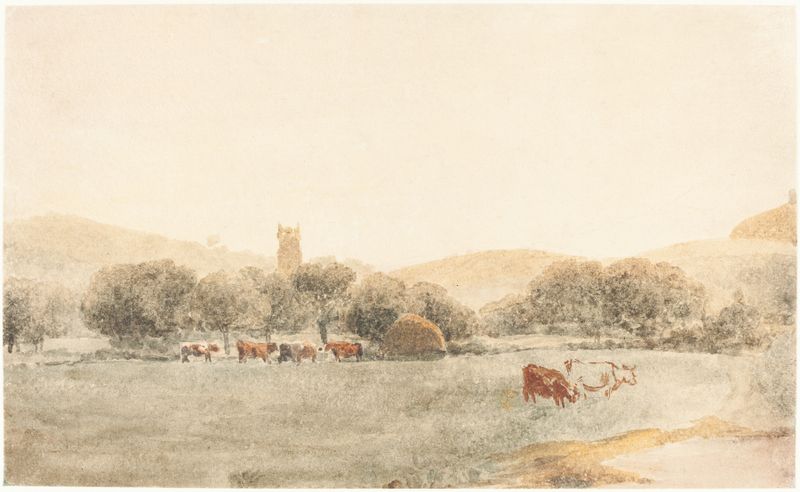
A Meadow with Cattle near Glastonbury
Peter De Wint
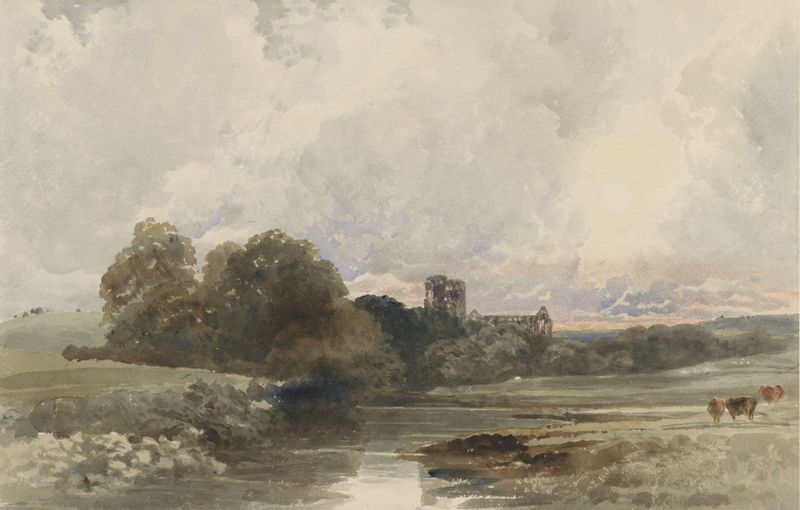
Avondlandschap met de ruïne van Kirkstall Abbey, Yorkshire
Peter De Wint
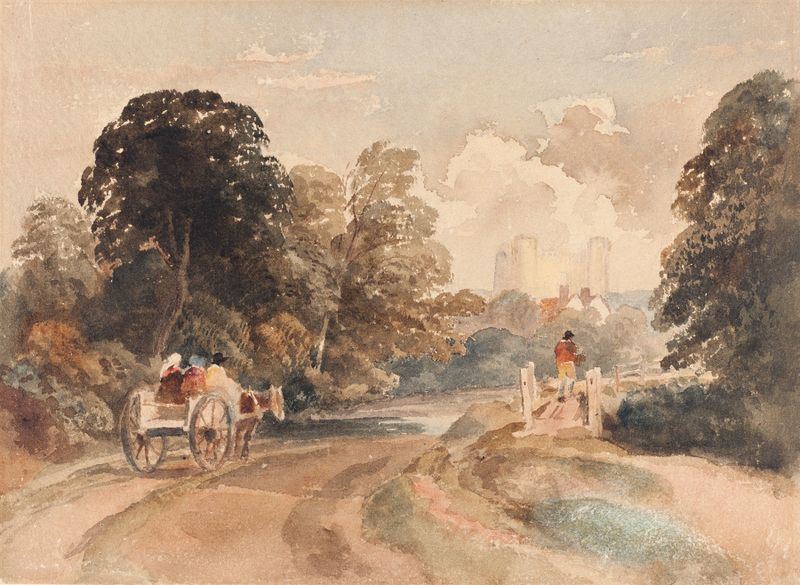
Landscape
Peter De Wint

Welsh Landscape with Cattle
Peter De Wint
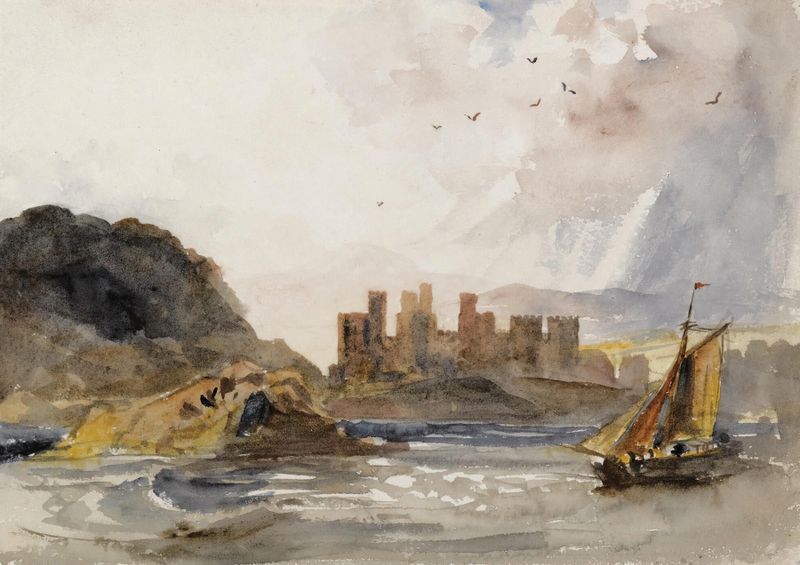
Conway Castle, North Wales
Peter De Wint

Evening on the Foss Dyke near Lincoln
Peter De Wint
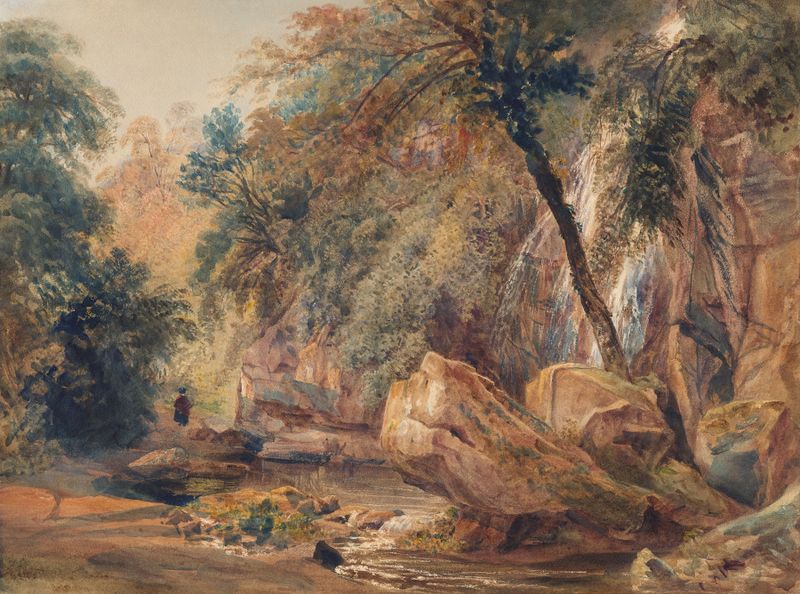
Waterfall in the Dingle at Badger Hall
Peter De Wint

Harvesting
Peter De Wint

Neath Abbey
Peter De Wint

Farmyard at Compton
Peter De Wint





