Wandelaar op de Amstelveense Weg — History & Facts
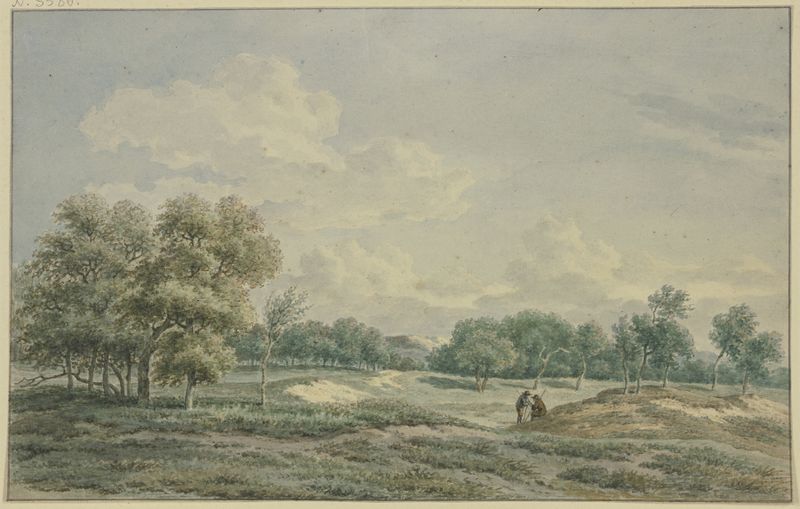
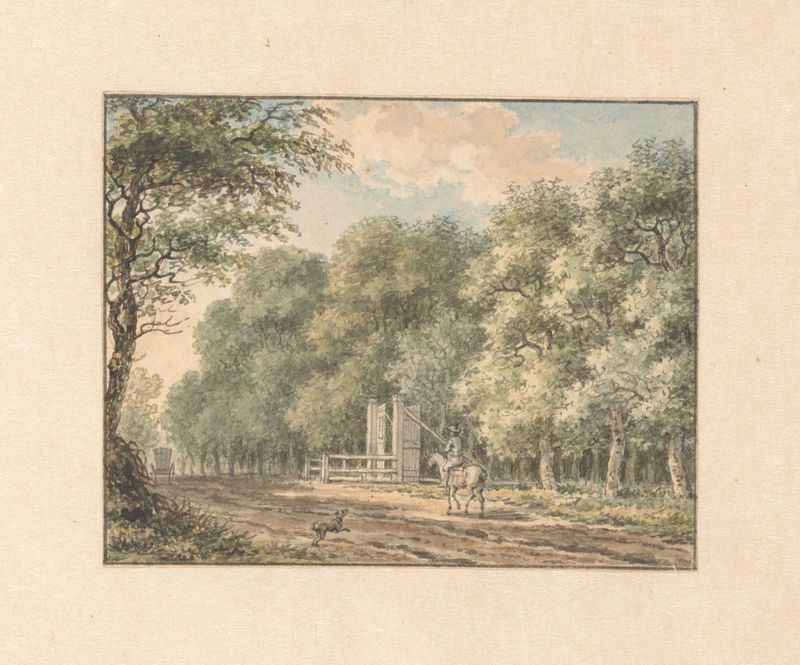
What if beauty was never meant to be finished? The fleeting moment captured in Wandelaar op de Amstelveense Weg invites contemplation on the evolving nature of art and revolution. Look to the left, where a solitary figure strolls along the tree-lined path, dressed in the fashion of the late 18th century. The warm hues of ochre and soft greens envelop the scene, creating a harmonious blend that draws the eye toward the horizon. Notice how the dappled sunlight filters through the leaves, casting intricate shadows on the ground.
The artist's delicate brushwork enhances the sense of movement, as if the very air vibrates with the quiet energy of the walker's thoughts. Within this serene landscape lies an undercurrent of transformation. The figure’s contemplative posture suggests a moment of reflection amid the upheavals of the time—an era where personal freedom and societal change were intertwining threads. The gentle curves of the path symbolize choices and uncertainties, while the surrounding nature embodies both beauty and the impermanence of existence.
Each detail, from the rustling leaves to the distant hills, hints at the vastness of possibilities waiting to unfold. Jan Evert Grave created this piece in 1798, during a time when Europe was buzzing with revolutionary fervor. Living in the Netherlands, he was influenced by both the evolving Romantic ideals and the political shifts brought about by the French Revolution. This painting reflects not only a personal vision but also the broader cultural landscape, capturing the essence of a world on the brink of transformation.