
Washing Day — History & Facts
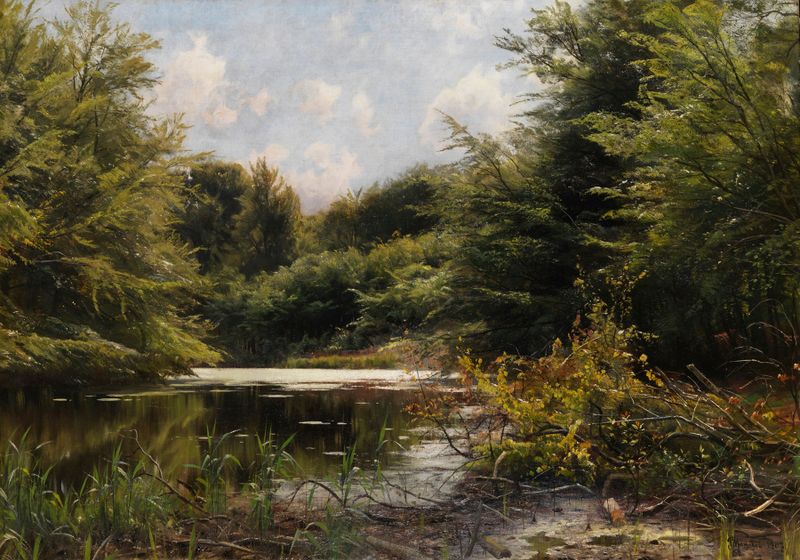
In the stillness of a moment captured on canvas, a forgotten corner of life unfolds, inviting us to witness the intimate reality of daily chores. Here, existence finds beauty amidst the mundane, reflecting the silent spirit of those engaged in their labor. Focus on the figures to the left, where women clad in simple attire are gathered, their bodies bent in purposeful rhythm. Notice how the gentle light filters through the trees, casting dappled shadows on their faces, illuminating their expressions of concentration and camaraderie.
The muted palette of greens and browns enhances the scene's naturalism, while the lush foliage offers a serene backdrop that contrasts with the toil at hand. The careful arrangement of figures draws our eyes across the canvas, akin to the flow of water they work with. Delve deeper, and you'll uncover a blend of resilience and vulnerability in this work. The act of washing, represented here, transcends a mere chore; it becomes a ritual of connection—between the women, with nature, and with their community.
The subtle tension between labor and leisure underscores the balance of life, hinting at the void of personal time often sacrificed for duty. Each detail, from the delicate folds of the fabric to the almost palpable humidity in the air, speaks to the emotions that dwell beneath the surface of everyday life. In 1883, the artist painted this scene amidst a burgeoning exploration of realism in art, showcasing domestic life through a fresh lens. Living in Denmark during a time of social change, he sought to capture moments that resonated with shared experiences.
This piece reflects his commitment to portraying the beauty in simplicity, as he navigated his own journey as an artist in a world increasingly focused on the extraordinary.
More Artworks by Peder Mørk Mønsted
Browse all →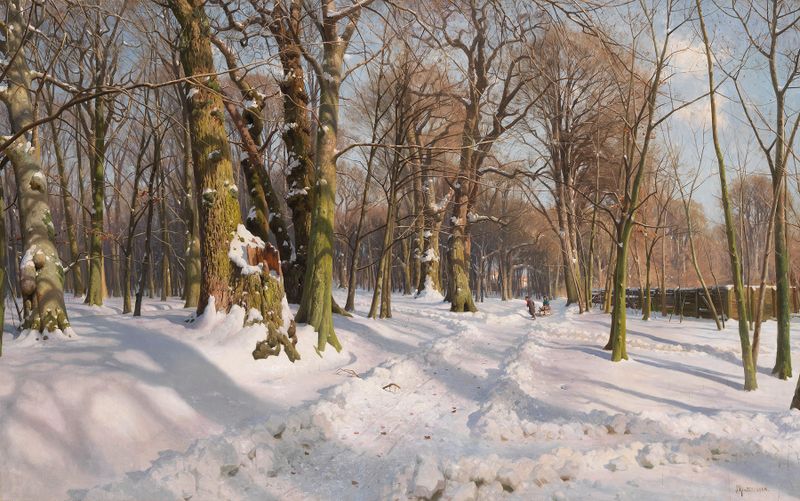
Snowy Forest Path in Sunlight
Peder Mørk Mønsted

Winter Landscape
Peder Mørk Mønsted
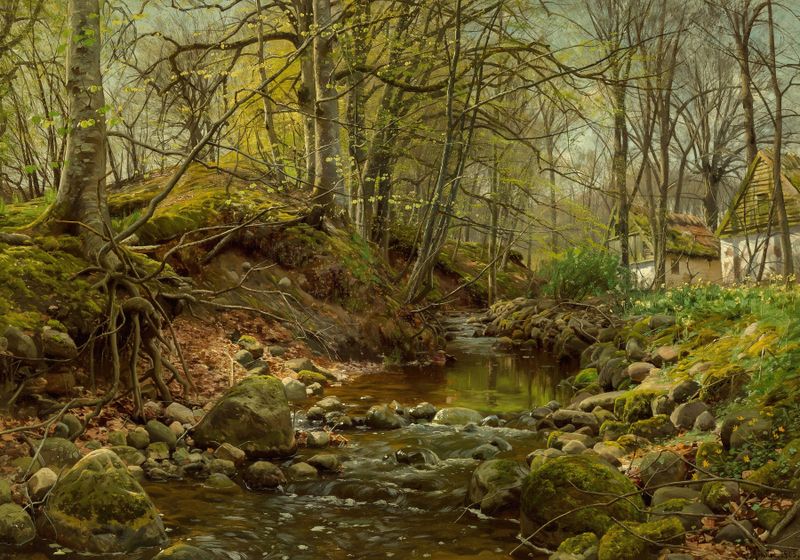
A forest stream
Peder Mørk Mønsted

Forest Stream
Peder Mørk Mønsted

Flußlauf am Waldesrand
Peder Mørk Mønsted

Wooded path by a river
Peder Mørk Mønsted
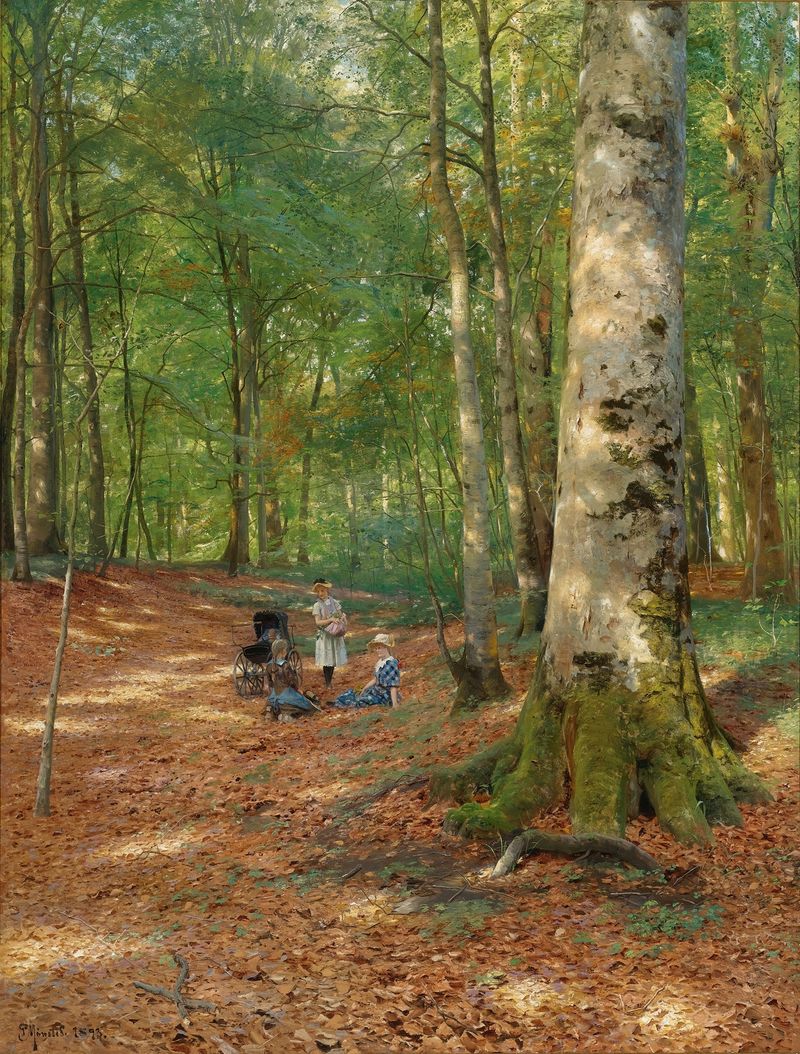
The Woodland Glade
Peder Mørk Mønsted

Summer In Capri
Peder Mørk Mønsted
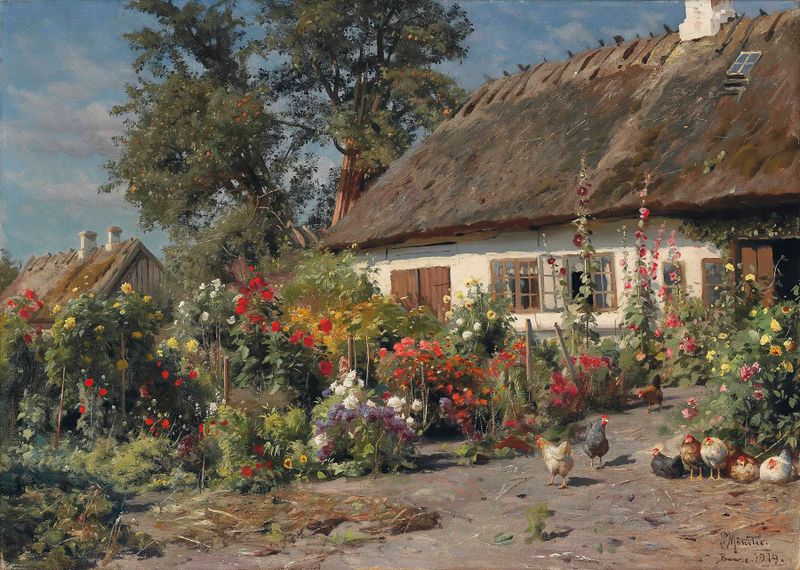
A Cottage Garden With Chickens
Peder Mørk Mønsted
Late summer at Waldteich
Peder Mørk Mønsted





