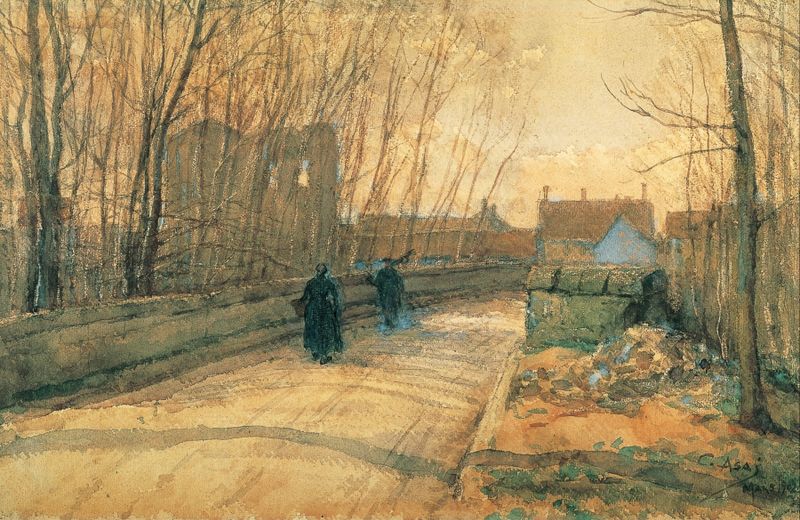
Washing Place in Grez-sur-Loing — History & Facts
Can beauty exist without sorrow? This question lingers in the air like the soft mist hanging over a tranquil scene, where life and its inevitable transience gently intertwine. Look to the foreground, where figures clad in simple garments gather at the water’s edge, their reflections dancing upon the surface. The artist masterfully captures the play of light—notice how the sunlight filters through the trees, casting dappled shadows that create a serene yet fragile atmosphere. The muted palette of greens and browns enhances the sense of stillness, inviting contemplation on the simple task of washing that transcends mere necessity. Yet, beneath this calm exterior lies a poignant tension.
The act of washing, a mundane chore, becomes a meditation on mortality, a reminder of life’s impermanence. Observe the way the water glistens, hinting at both purity and the inevitable passage of time. The figures appear immersed in their task, yet there’s a shared sense of solitude—each individual absorbed in their own thoughts, contemplating the layers of existence that connect them. In 1901, Asai Chū painted this piece in Grez-sur-Loing, a small village known for attracting artists seeking solace and inspiration.
During this period, Chū was exploring the synthesis of Western techniques with traditional Japanese aesthetics, and his work reflected a growing appreciation for the subtleties of daily life. Surrounded by the whispers of nature and the echoes of artistic experimentation, he created a work that captures not just a moment, but the essence of human experience itself.