
Watering Place at Marly — History & Facts
In the quiet embrace of this idyllic landscape, one can sense the underlying tension of unspoken betrayals. Sisley captures a moment that belies the pastoral serenity, urging us to look beyond the tranquil façade. Focus on the gentle ripples in the water, where shades of blue meet the soft greens and browns of the surrounding foliage. The brushwork, fluid yet deliberate, draws the viewer's eye to the figures in the distance, seemingly engaged in a routine task.
The light filters delicately through the trees, creating an interplay of shadow and illumination that hints at deeper emotional currents beneath the surface harmony of the scene. There’s a palpable contrast between the vivid colors of nature and the muted expressions of the workers. Their gestures, though simple, carry a weight of expectation and unfulfilled dreams, suggesting that the act of tending to the land may mask deeper conflicts. The serene environment juxtaposed with the figures’ quiet labor showcases the tension between pastoral beauty and the struggles that often lie hidden within. Painted in 1875 in a rural setting near Paris, the artist was immersed in the Impressionist movement, which sought to capture the ephemeral qualities of light and atmosphere.
During this time, Sisley was facing personal hardships, grappling with financial difficulties and the pressures of artistic recognition. These circumstances contributed to the layered emotions reflected in his work, creating a poignant commentary on both the beauty and fragility of existence.
More Artworks by Alfred Sisley
Browse all →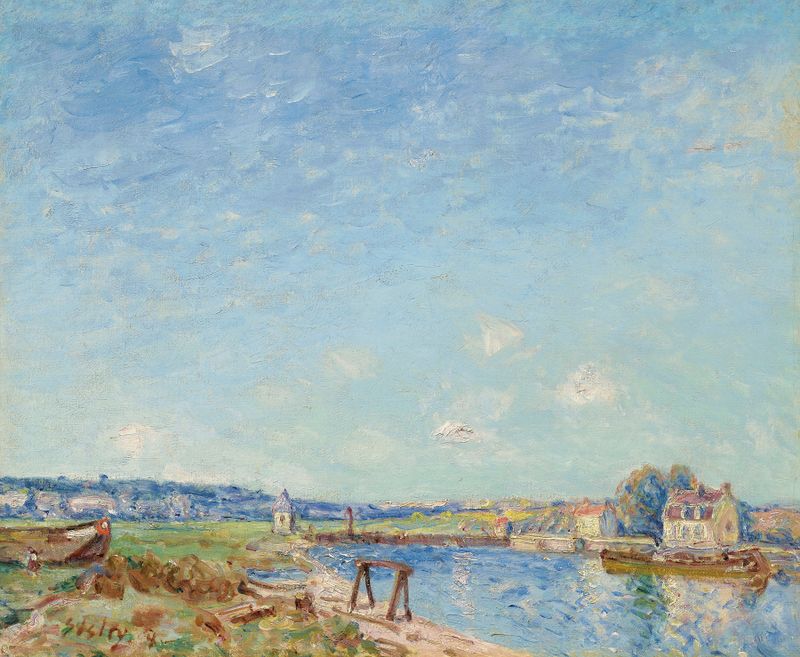
Le Loing à Saint-Mammès
Alfred Sisley
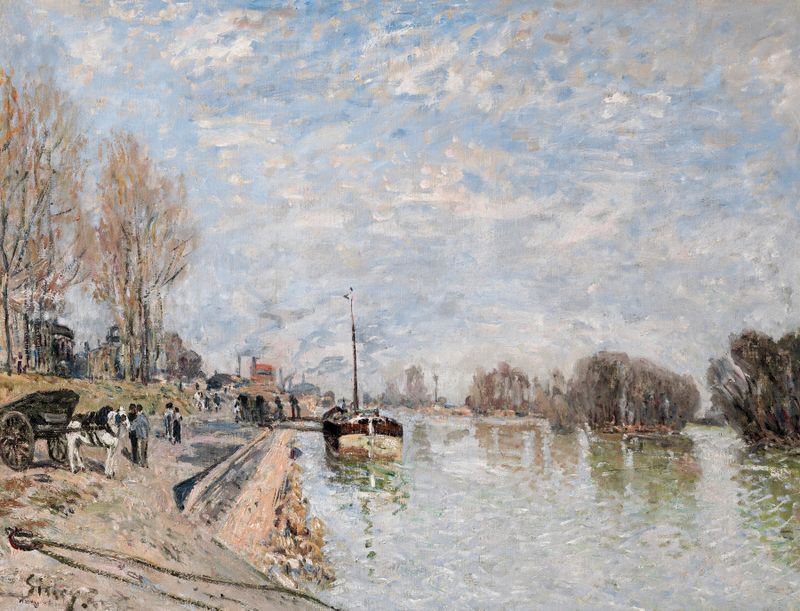
La Seine à Suresnes
Alfred Sisley
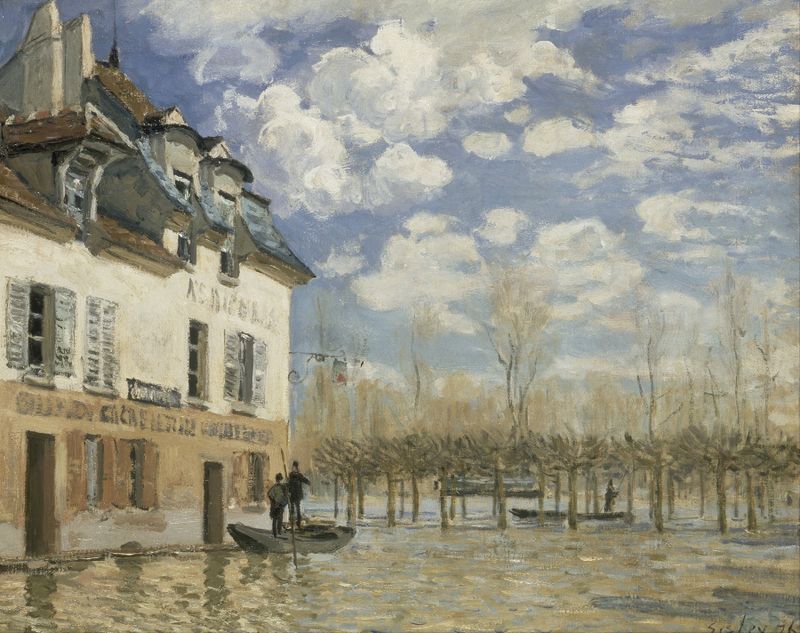
Boat in the Flood at Port Marly
Alfred Sisley
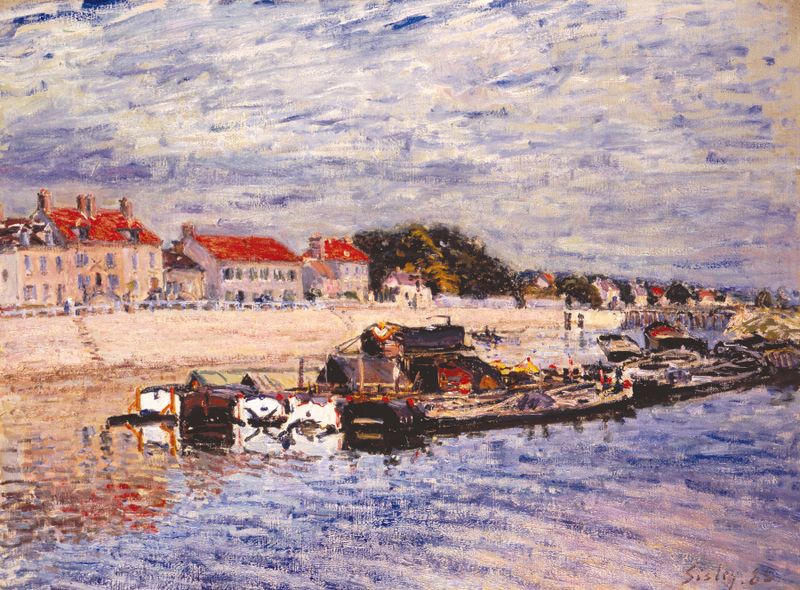
Barges on the Loing at Saint-Mammès
Alfred Sisley

L’allée des peupliers au bord du Loing
Alfred Sisley

Molesey Weir, Hampton Court
Alfred Sisley
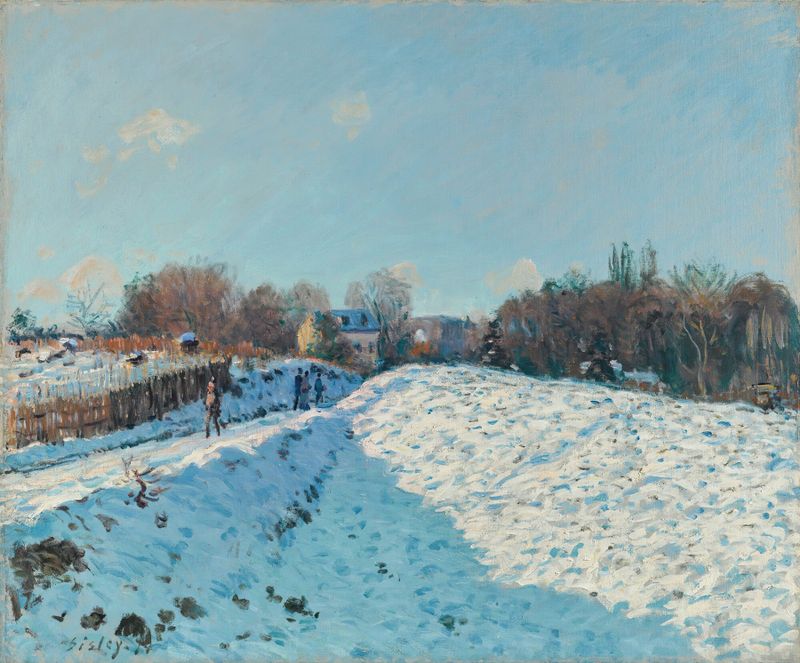
Effet De Neige À Louveciennes
Alfred Sisley
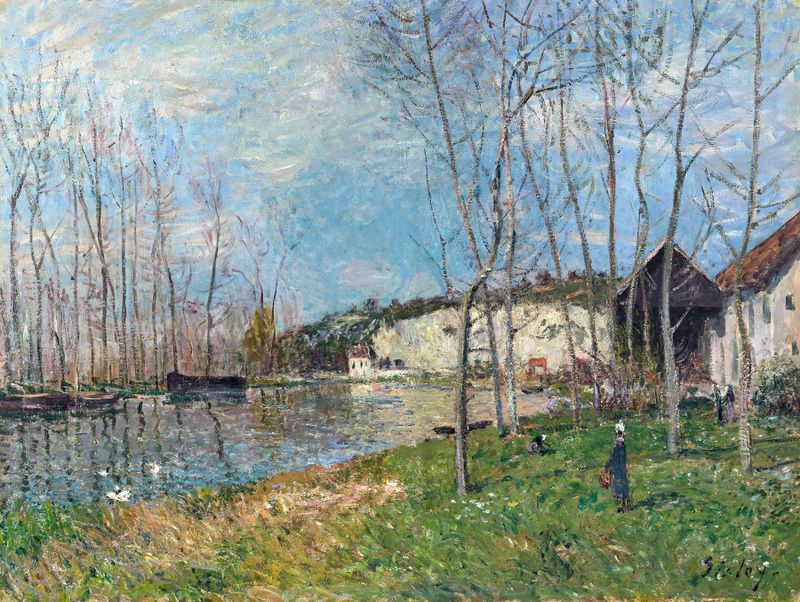
Printemps au bord du Loing
Alfred Sisley
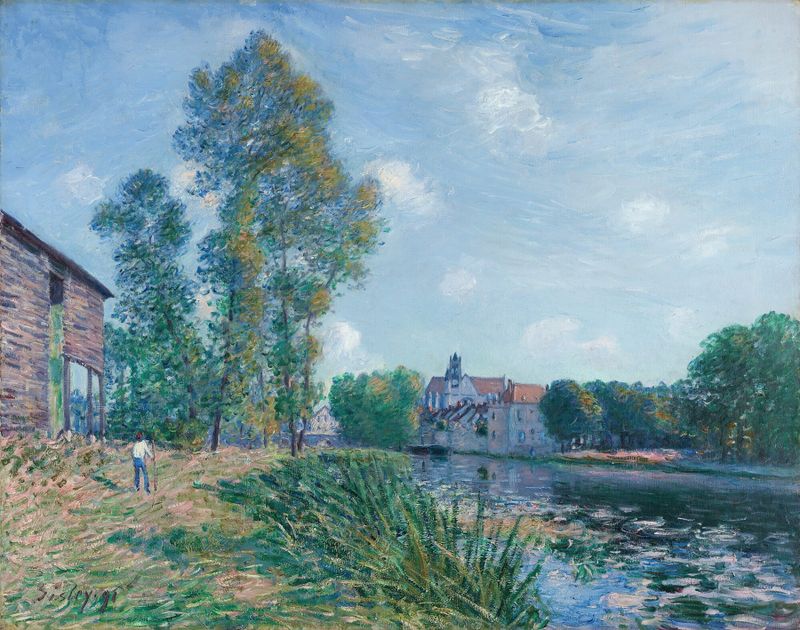
Le Loing À Moret, En Été
Alfred Sisley
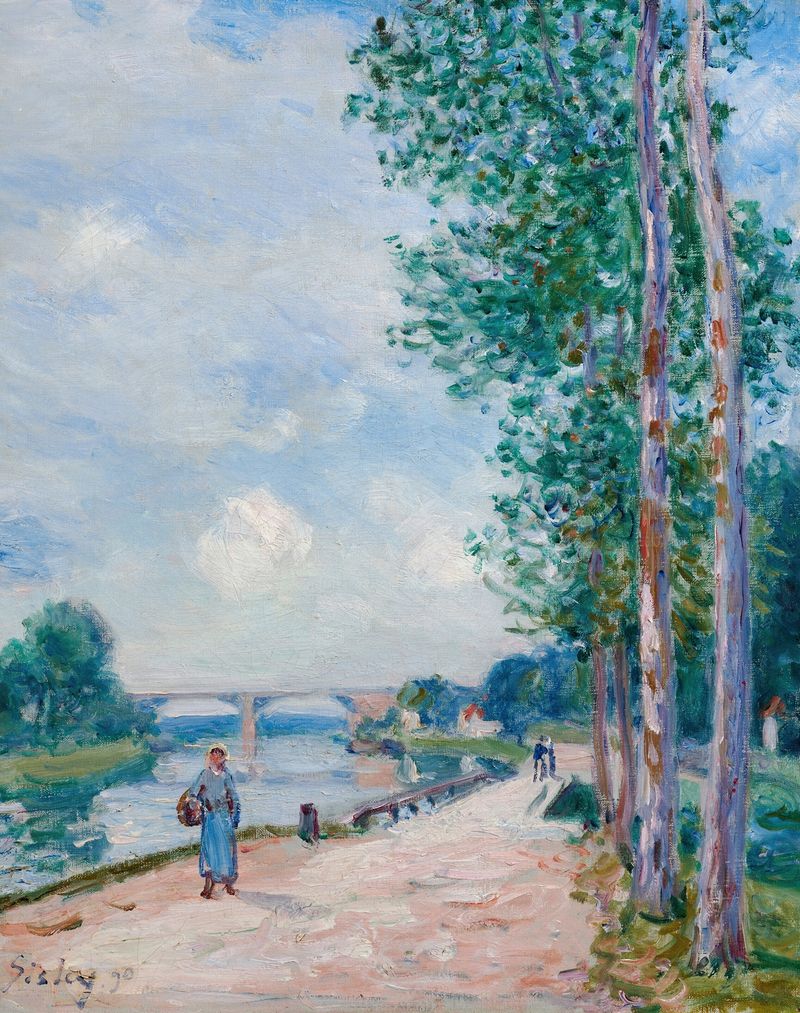
Les bords du Loing près de Moret
Alfred Sisley





