
Watermolen en dorpskerk — History & Facts
In the ebb and flow of time, it captures the longing for connection and the quiet pulse of village life. Look to the left at the watermill, its tranquil presence grounded amidst nature’s embrace, with softly flowing water reflecting flecks of sunlight. Notice how the artist employs a muted palette, where earthy browns and verdant greens intermingle, creating an atmosphere that invites you into the scene. The church steeple rises like a sentinel in the background, drawing your gaze upward, while the gentle ripple of the stream evokes a sense of continuity and comfort. Yet, beneath this idyllic surface lies a profound tension between the natural and the manmade.
The steady flow of the water hints at the persistence of time, contrasting with the steadfastness of the church, a symbol of both community and faith. The juxtaposition of the two structures reflects a deeper desire for stability in a world always in flux. Each brushstroke seems to speak of the yearning for peace and belonging, quietly resonating with the viewer’s own search for meaning. In 1777, Hendrik Meijer painted this scene in the Netherlands, a time when the country was experiencing a shift in artistic expression, embracing landscapes that harmonized human existence with nature.
The Dutch Republic was enjoying its Golden Age, yet social changes loomed on the horizon. This artwork, born from that complex interplay of tradition and change, serves as a testament to the artist’s desire to depict the serenity of everyday life while subtly acknowledging the undercurrents of transformation in society.
More Artworks by Hendrik Meijer
Browse all →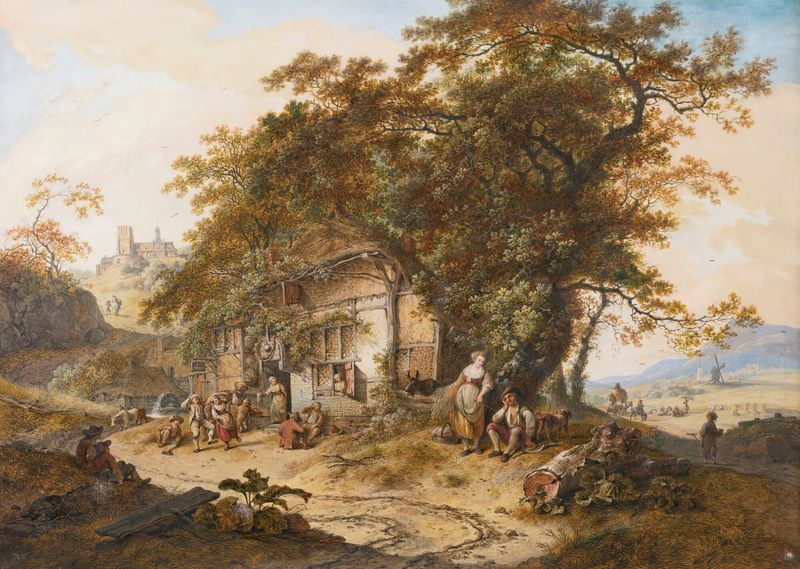
Extensive Landscape With Peasants Resting Before A Tavern, Others Harvesting In The Distance, And A Church On A Hill Behind
Hendrik Meijer
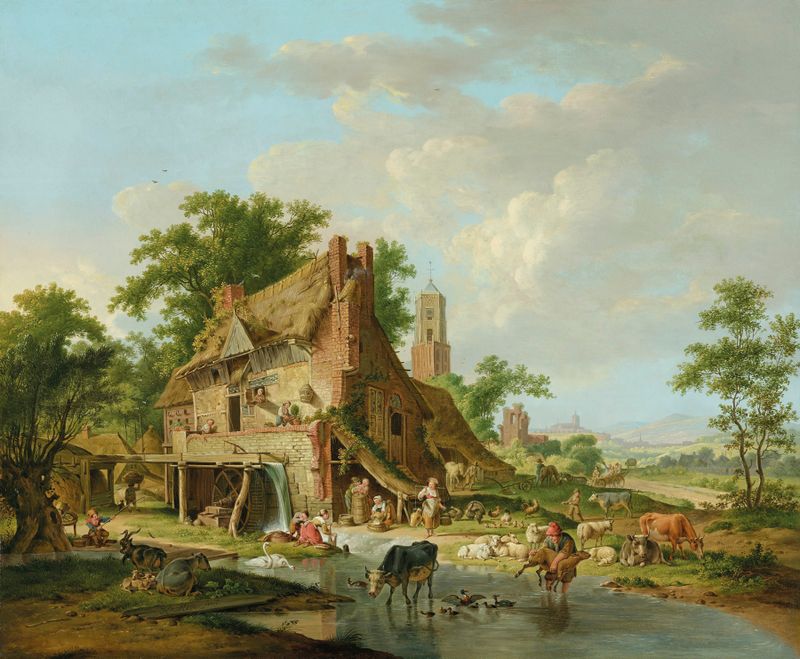
A watermill with farmyard animals and peasants, a landscape beyond
Hendrik Meijer
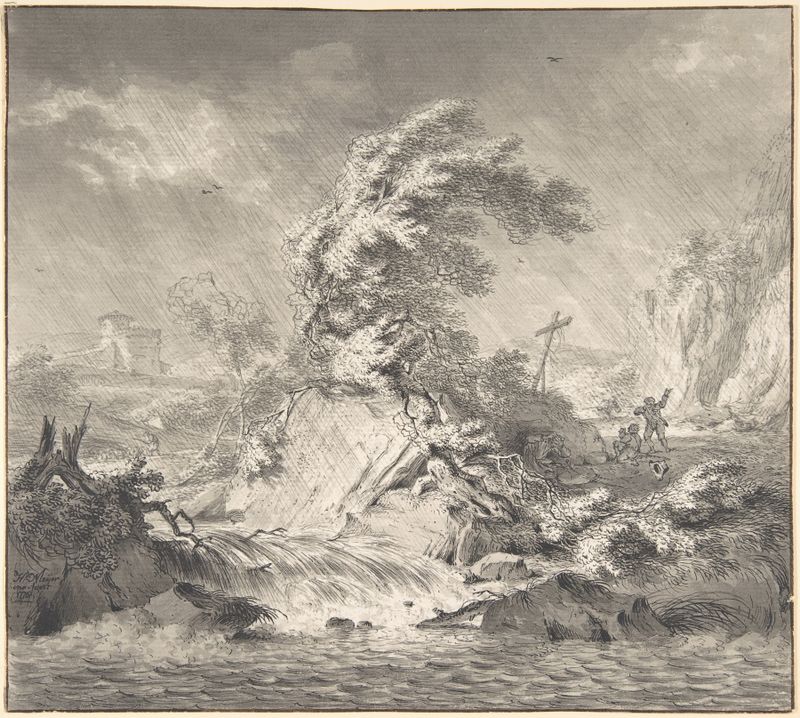
Stormy Landscape
Hendrik Meijer

The Twelve Months
Hendrik Meijer
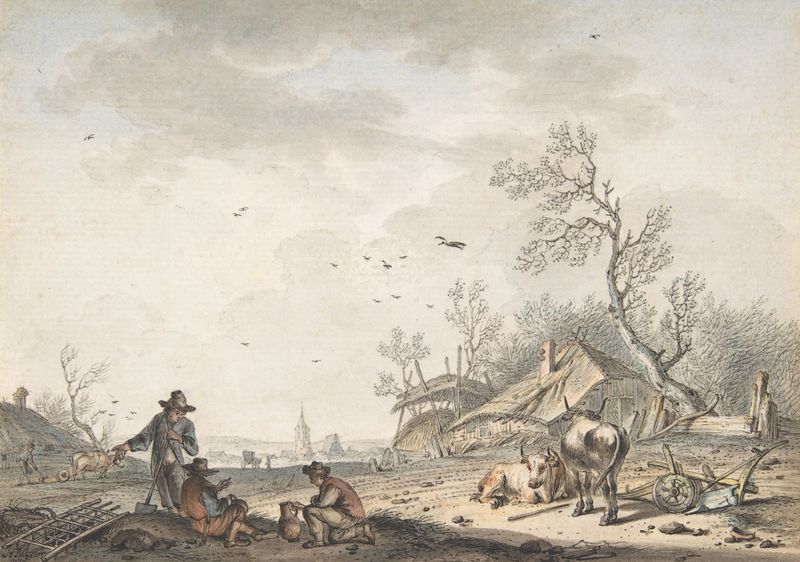
March
Hendrik Meijer
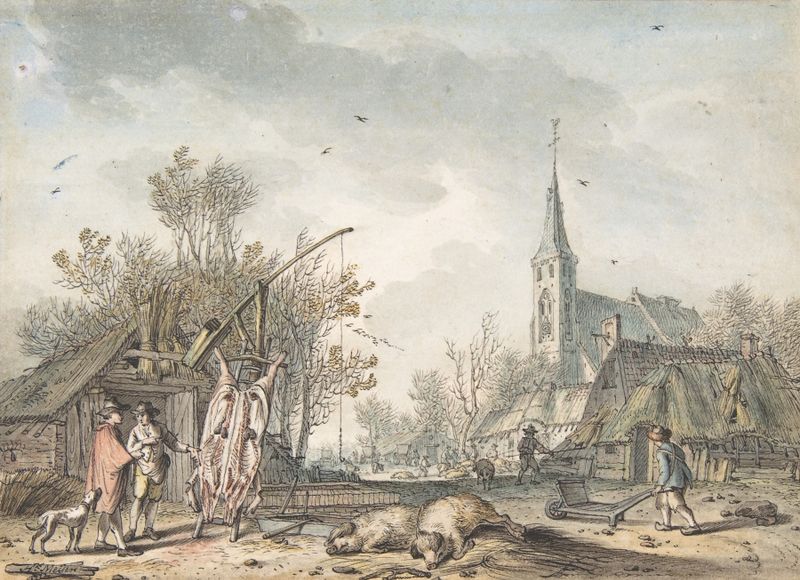
November
Hendrik Meijer

September
Hendrik Meijer

December
Hendrik Meijer
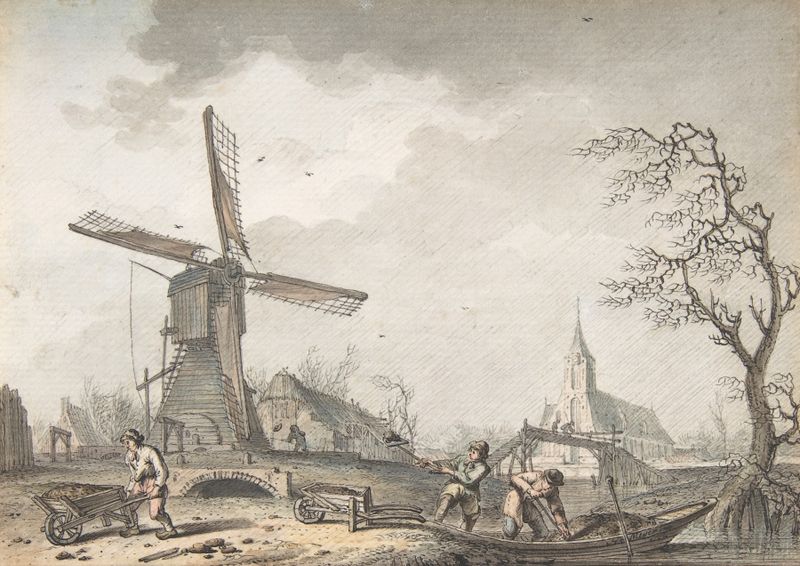
February
Hendrik Meijer
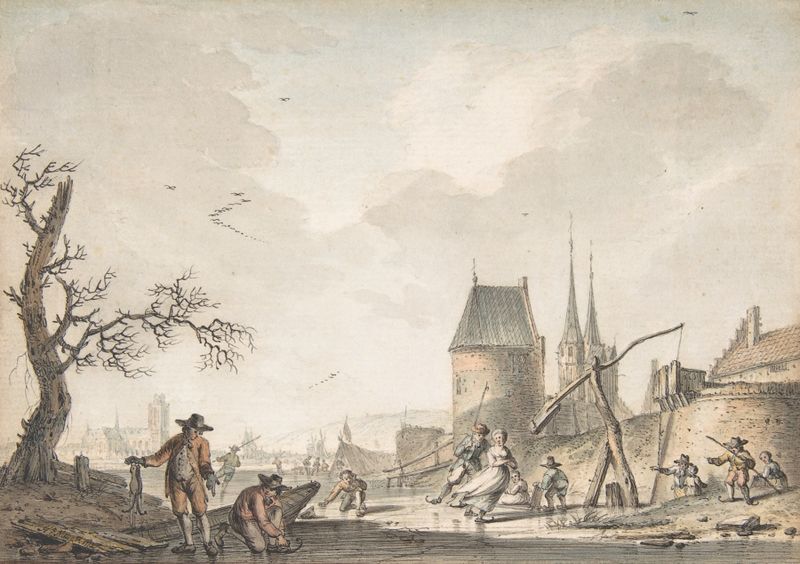
January
Hendrik Meijer





