Weite italienische Gebirgslandschaft mit Olevano — History & Facts
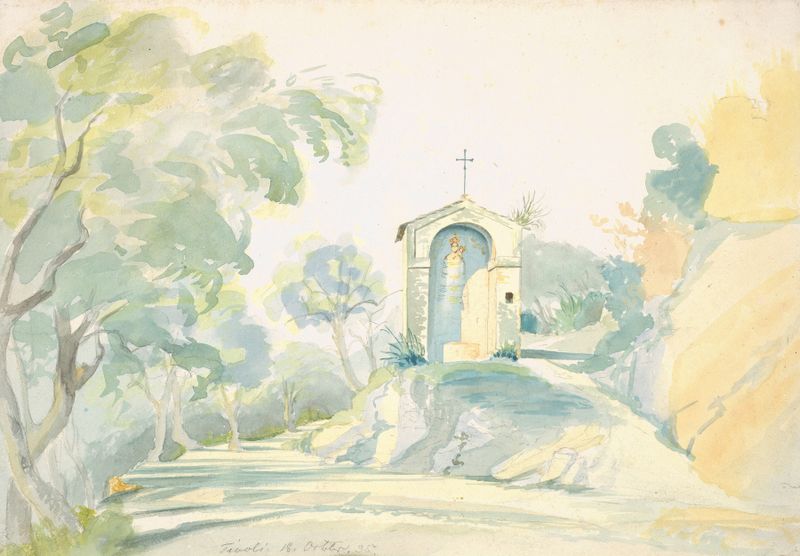
In the quiet embrace of a mountain landscape, light dances across the peaks with an almost ethereal grace, beckoning the viewer to delve deeper into its serene depths. Focus first on the brilliant interplay of light and shadow as it bathes the rugged Italian mountains, creating a layered sense of depth. The sunlit slopes shimmer in warm hues, while the cool shadows recede, offering a harmonious balance. Notice how the artist’s brushstrokes convey both texture and emotion, guiding your gaze through the valleys and towards the distant horizon, where the sky melts into tranquil blues and golds. Yet, beyond the surface beauty, the painting holds a deeper narrative.
The rugged terrain hints at the struggle between man and nature, evoking a sense of solitude amidst grandeur. Each brushstroke resonates with the essence of longing—perhaps a reflection of personal aspirations or the universal quest for peace. The juxtaposition of light and dark embodies the duality of existence; it is a reminder of both the challenges faced and the beauty that emerges from them. In 1850, the artist found inspiration in the Italian countryside, where he sought solace from the rapid industrial changes sweeping across Europe.
This period marked a pivotal moment for landscape painting, with a shift towards capturing natural beauty with a focus on light—an evolution that sought to reveal the world anew as urbanization began to overshadow the pastoral.