
View of Lympne Castle, Kent — History & Facts
Could beauty survive in a century of chaos? This question lingers in the silence of Peter De Wint's View of Lympne Castle, Kent, where the tranquil landscape stands in stark contrast to the tumultuous world outside its borders. Look to the center of the composition, where Lympne Castle rises majestically against the soft, rolling hills. The artist's delicate brushwork captures the play of light across the stone facade, illuminating its weathered texture while shadows dance in the crevices. Surrounding the castle, lush greenery spills across the canvas, interspersed with hints of vibrant wildflowers, underscoring the serenity of the scene.
The palette, dominated by gentle pastels and earthy tones, draws the viewer into this idyllic moment, inviting contemplation. Yet, beneath this peaceful surface lies a tension—an unspoken conflict between nature's beauty and the encroaching madness of the world. The castle, a symbol of enduring strength, stands as a sentinel against time, yet its very existence evokes questions of permanence and fragility. The tranquil scenery, while inviting, hints at the chaos that often accompanies human endeavors, suggesting that serenity is both a refuge and a fleeting illusion. Peter De Wint painted this work during a period when England was grappling with the aftermath of the Napoleonic Wars, a time marked by social upheaval and economic uncertainty.
His focus on landscapes during the early 19th century reflected a growing Romantic appreciation for the sublime beauty of nature, contrasting sharply with the industrialization and conflict that defined the era. In View of Lympne Castle, Kent, the artist captures not just a place, but a feeling—a moment suspended in time, inviting reflection amid the chaos.
More Artworks by Peter De Wint
Browse all →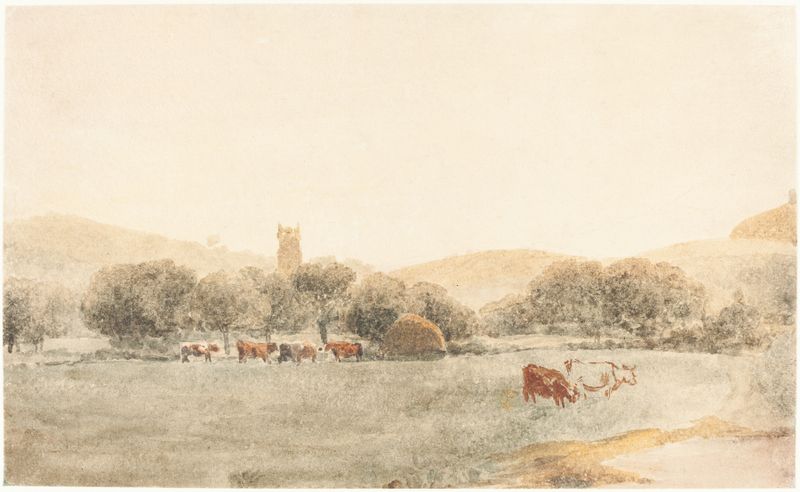
A Meadow with Cattle near Glastonbury
Peter De Wint
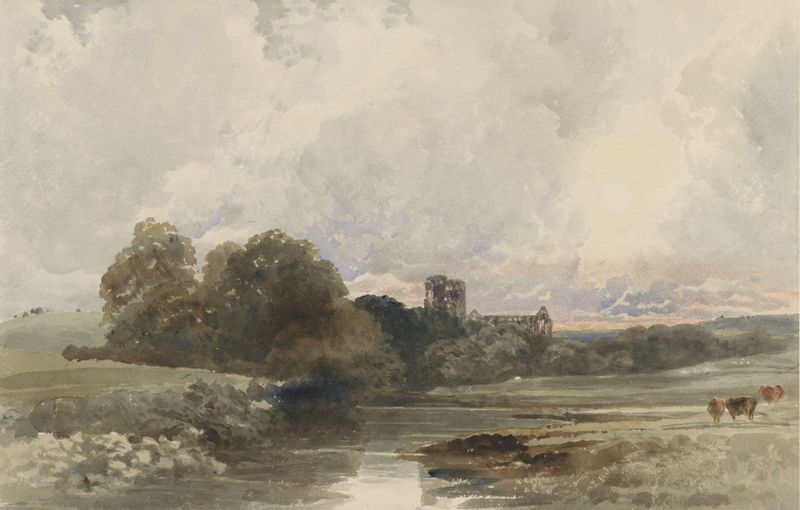
Avondlandschap met de ruïne van Kirkstall Abbey, Yorkshire
Peter De Wint
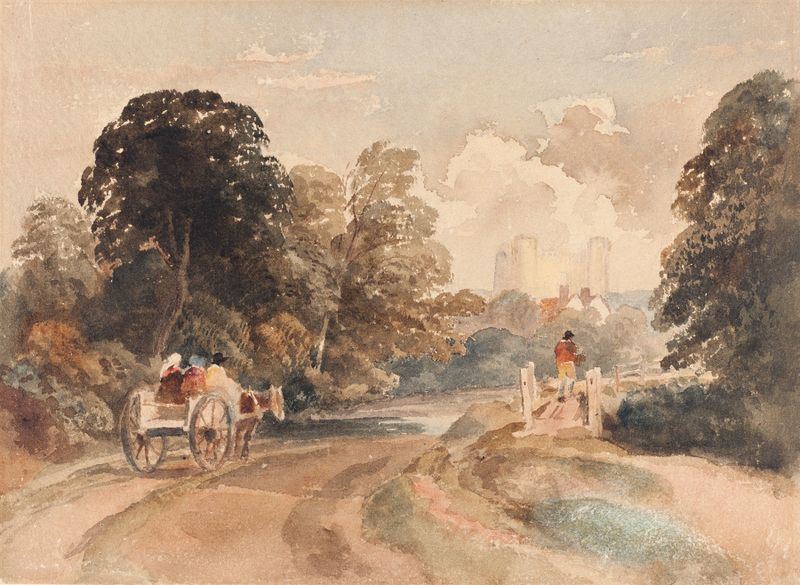
Landscape
Peter De Wint

Welsh Landscape with Cattle
Peter De Wint
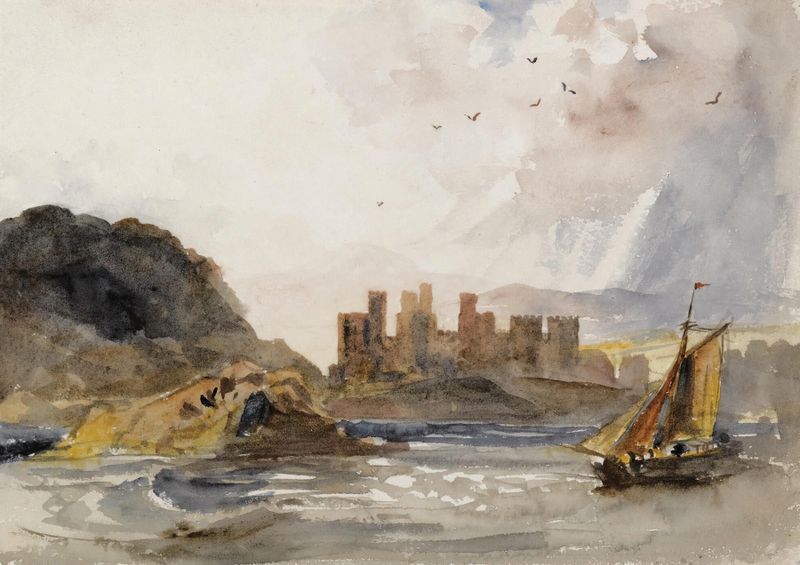
Conway Castle, North Wales
Peter De Wint

Evening on the Foss Dyke near Lincoln
Peter De Wint
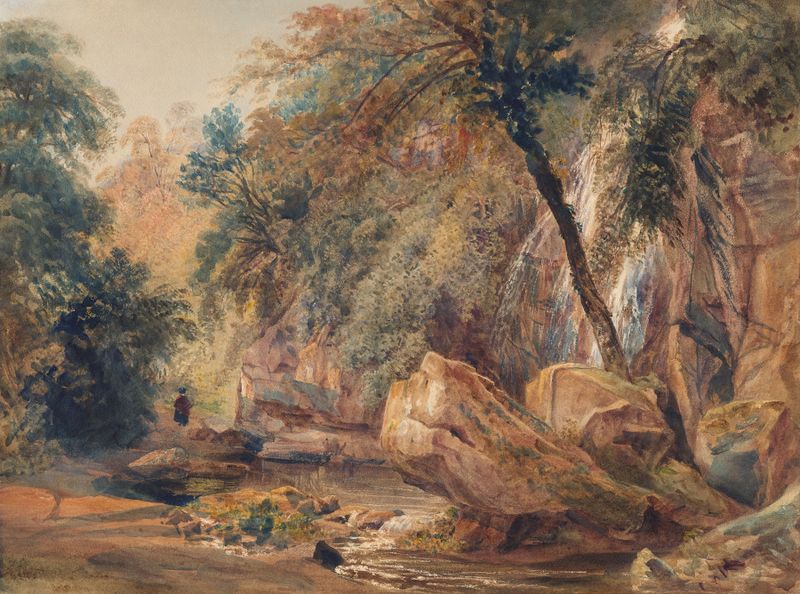
Waterfall in the Dingle at Badger Hall
Peter De Wint

Harvesting
Peter De Wint

Neath Abbey
Peter De Wint

Farmyard at Compton
Peter De Wint





