
West Wall of the Oranjezaal, Huis ten Bosch, The Hague — History & Facts
Could a single brushstroke hold eternity? In the delicate interplay of color and light, one can catch glimpses of an everlasting serenity that whispers through time. Focus your gaze on the magnificent expanse of the west wall, where intricate patterns and serene landscapes weave a tapestry that draws you in. Notice how the soft hues of blue and gold harmonize, each stroke meticulously applied, creating an aura of opulent tranquility. Bruining’s command of light reveals a divine glow that dances across the surface, inviting contemplation and connection with the intricate details of nature and artistry alike. As you explore further, you might find deeper meanings nestled within the foliage and architectural elements.
The harmony of the scenes suggests a balance between human creation and the natural world, a gentle reminder of our place within the greater tapestry of existence. The serenity presented contrasts with the chaotic world outside, urging us to pause and reflect on life's quiet moments, even amidst a bustling era. In 1860, at the height of the Dutch Romantic movement, Tieleman Cato Bruining painted this masterpiece within the ornate setting of Huis ten Bosch in The Hague. During this period, the artist sought to elevate national pride through art, capturing both the beauty of nature and the grandeur of human achievement.
His work emerged from a time when the art world was grappling with new ideas, striving for authenticity and deep emotional resonance in the face of modernity.
More Artworks by Tieleman Cato Bruining
Browse all →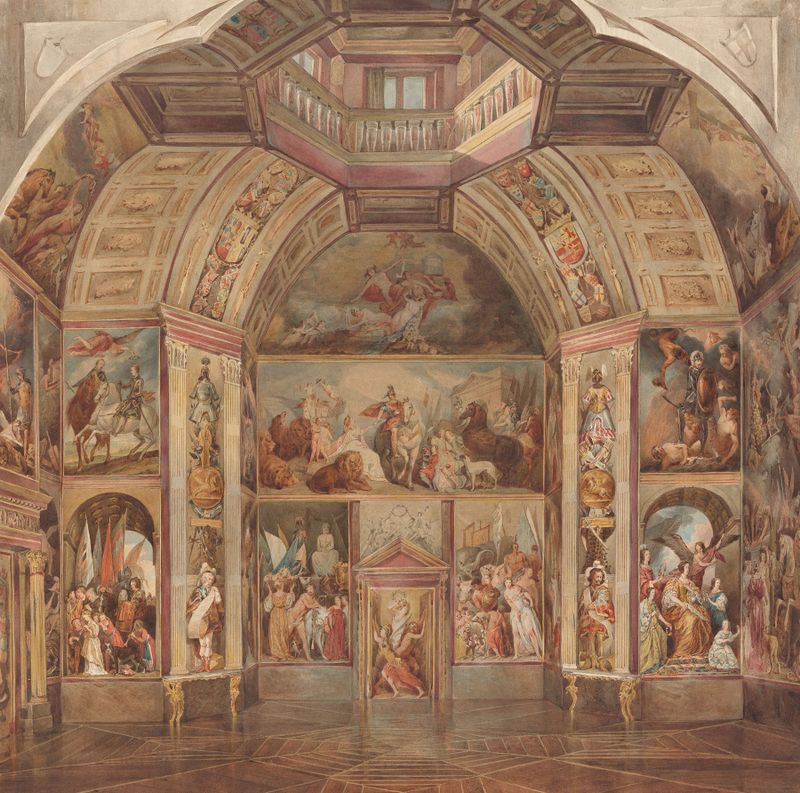
More Architecture Art
Browse all →
The statue of Liberty
Frédéric Auguste Bartholdi

View of Houses in Delft, Known as ‘The Little Street’
Johannes Vermeer

View of Houses in Delft, Known as ‘The Little Street’
Johannes Vermeer

The Cathedral in Rouen. The portal, Grey Weather
Claude Monet

The yellow house
Vincent van Gogh

The Church in Auvers-sur-Oise, View from the Chevet
Vincent van Gogh