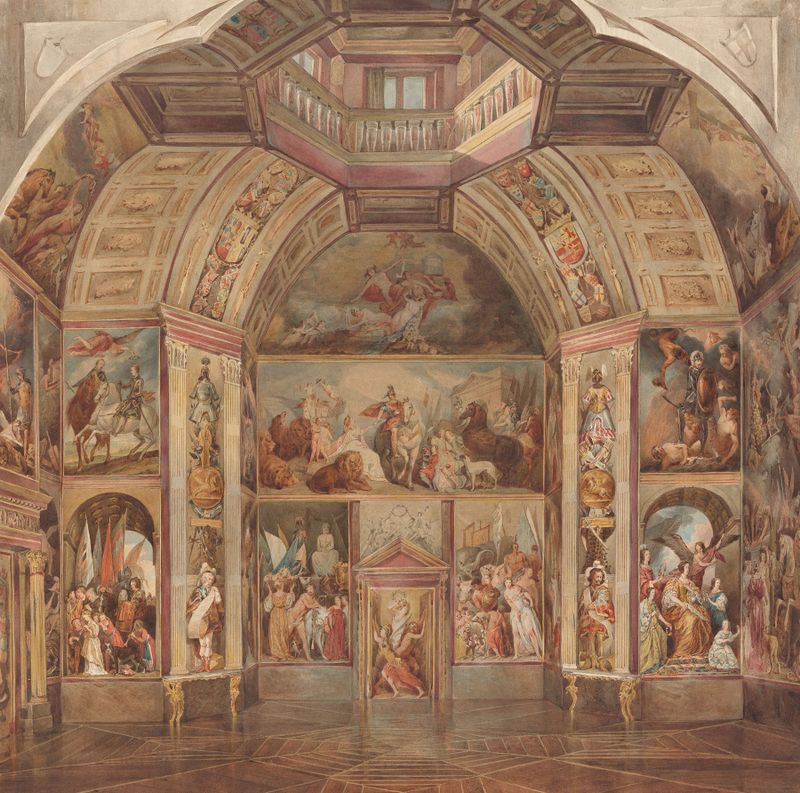
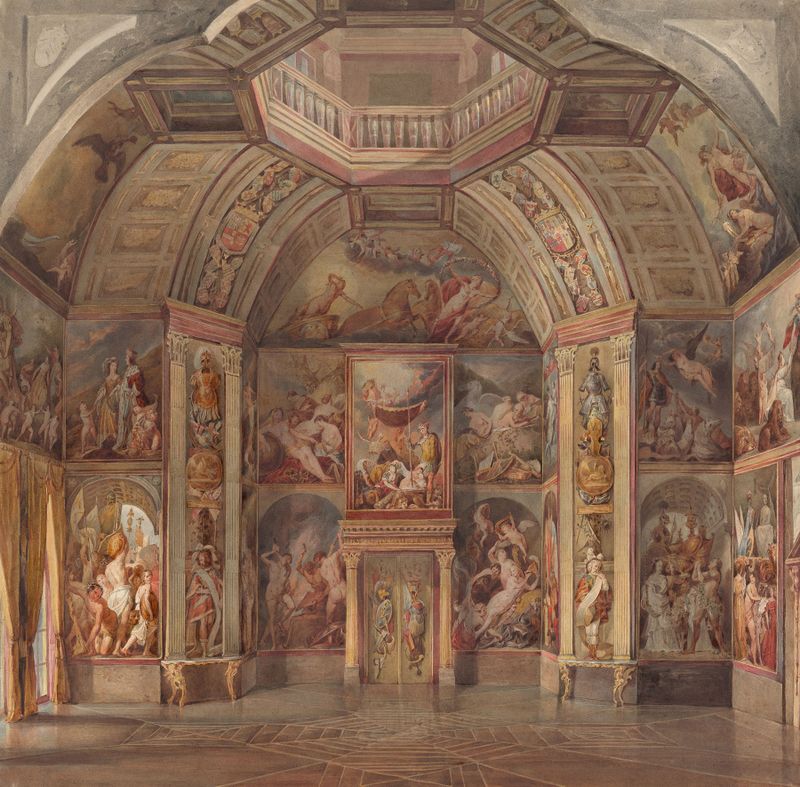
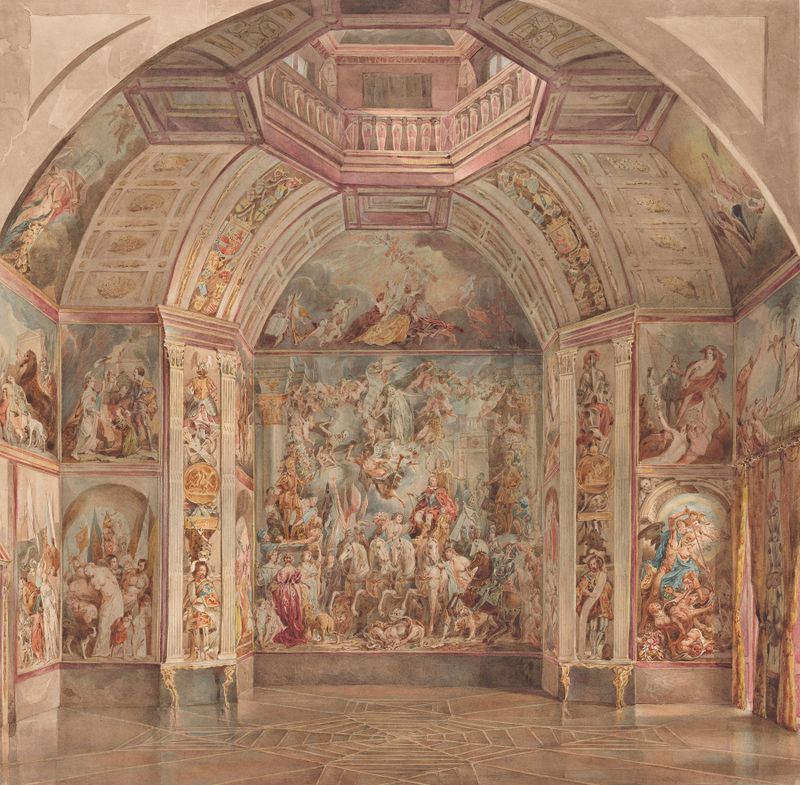
South Wall of the Oranjezaal, Huis Ten Bosch, The Hague — History & Facts
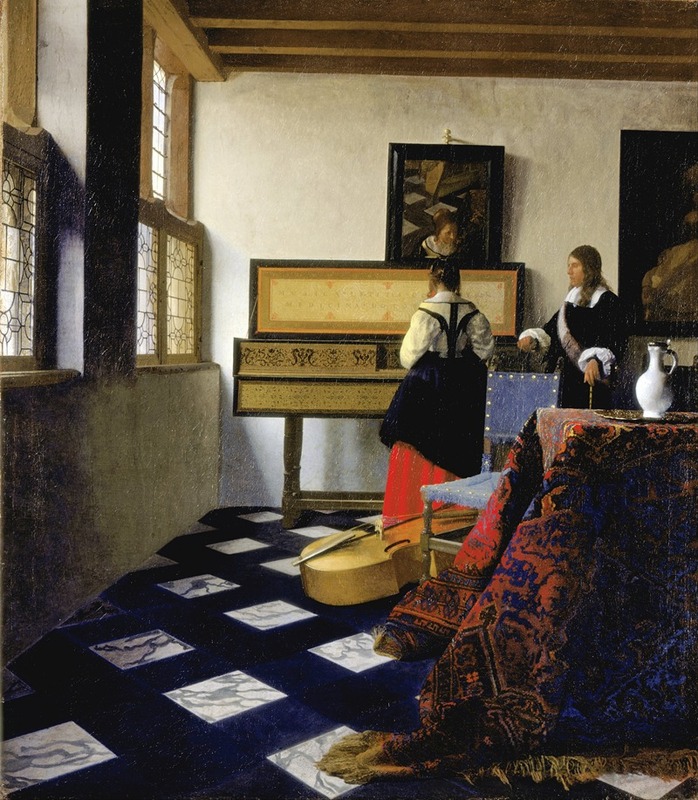
Is this a mirror — or a memory? Within the ornate confines of the Oranjezaal, the interplay of light and shadow dances across the wall, inviting contemplation of both reality and illusion. The rich colors and intricate details blur the line between what is seen and what is felt, compelling the viewer to question the essence of their own perception. Focus on the bold oranges and deep blues that dominate the composition, their vibrancy punctuating the space like whispered secrets. Notice how the light falls upon the gilded accents, illuminating the delicate brushwork that brings historical scenes to life.
This wall, a tapestry of narrative, beckons the eye to explore the juxtaposition of past and present, each element meticulously placed to create a harmonious dialogue within the room. Delve into the figures depicted; they are not mere representations but echoes of a storied past, each expression a window into their time. The careful arrangement hints at social hierarchy and cultural identity, with the ornate patterns surrounding them amplifying the significance of their presence. This blend of personal history and national pride invites reflection on how memory shapes our understanding of legacy. In 1860, Tieleman Cato Bruining was at a pivotal moment in his career, engaged in the creative revival of historical themes within Dutch art.
Working in The Hague, Bruining sought to capture not just the grandeur of his subjects but also the emotional resonance they held for society. As Europe navigated shifts in identity and culture, his work served as a bridge between the past's influence and the future's possibilities.