
Wiesenburg und Söhne Neubau — History & Facts
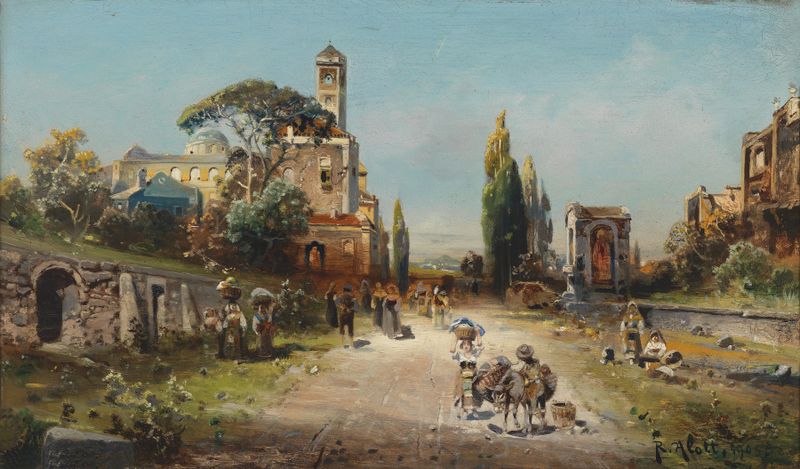
Did the painter know this moment would outlive them? In Wiesenburg und Söhne Neubau, the transient essence of architecture blends with the permanence of artistic vision, evoking an emotional undercurrent of loss intertwined with hope. Look to the left at the intricate detailing of the building façade, where the play of light casts shadows that dance across the warm terra cotta and cool blues. Each window, framed with care, beckons the eye to explore beyond mere structure, inviting contemplation on the stories held within. The soft brush strokes reveal both the solidity of the edifice and the fluidity of time, suggesting a space both lived in and eternally observed. Beneath the surface lies a poignant contrast: the robust architecture stands resilient against the ephemeral nature of human existence.
The artist deftly hints at the shifting tides of industry, encapsulating the tension between progress and the inevitable passage of time. Each corner of the structure whispers tales of loss, of families and dreams that inhabit its walls yet vanish into memory, leaving behind only the echo of their lives. In 1883, Robert Alott painted this work amid the burgeoning industrial landscape of Germany, where the clash of modernity with tradition shaped his artistic narrative. He was deeply engaged with the themes of urban expansion and architectural innovation, reflecting the complexities of his time.
This piece serves as both a celebration of craftsmanship and a meditation on what is left behind as society evolves.
More Artworks by Robert Alott
Browse all →
View of the Via Appia
Robert Alott
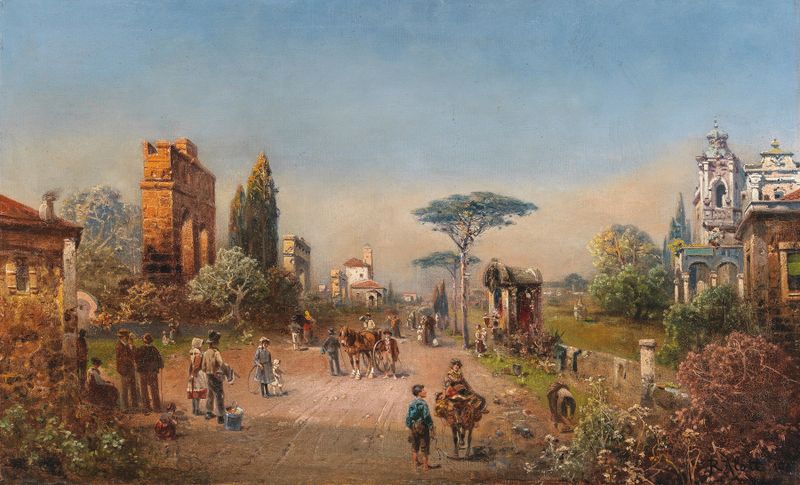
A View of the Via Appia
Robert Alott

Fisherfolk on the Neapolitan coast
Robert Alott

Südliches Capriccio
Robert Alott
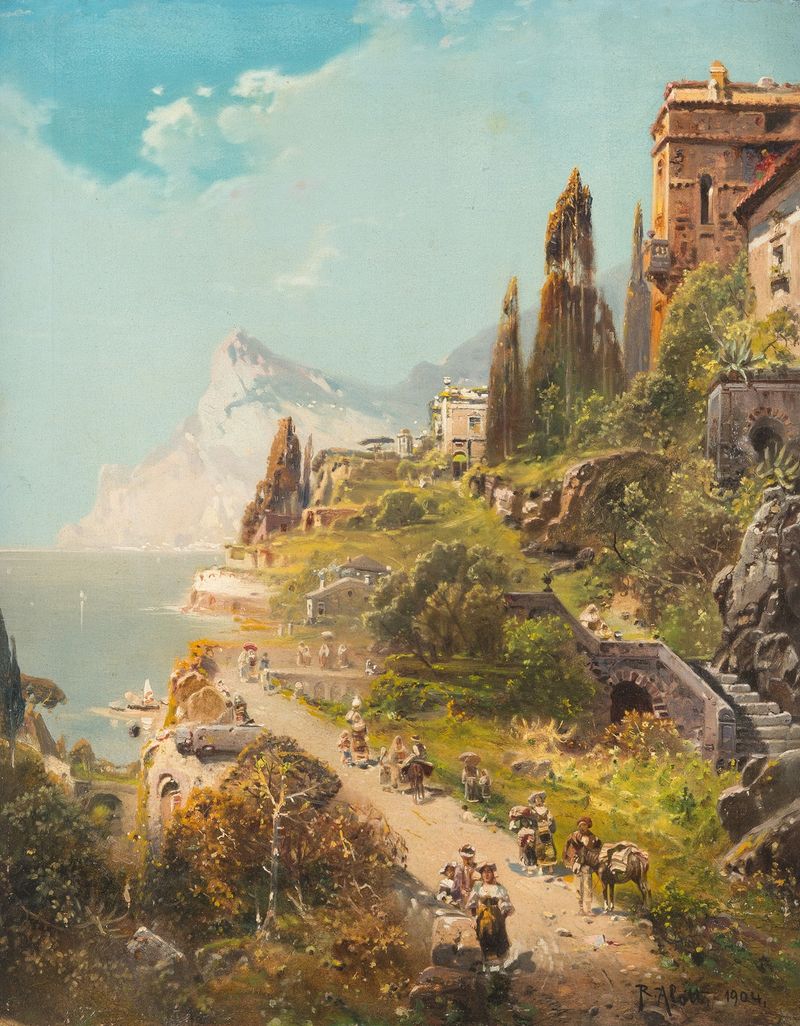
Riviera di Levante
Robert Alott
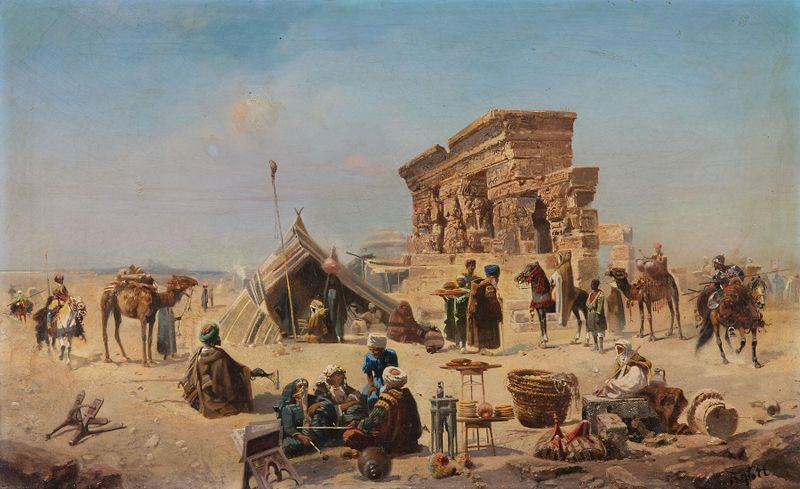
Orientalische Szene
Robert Alott

Süditalienische Szene
Robert Alott

Fischer an einer süditalienischen Küstenlandschaft
Robert Alott
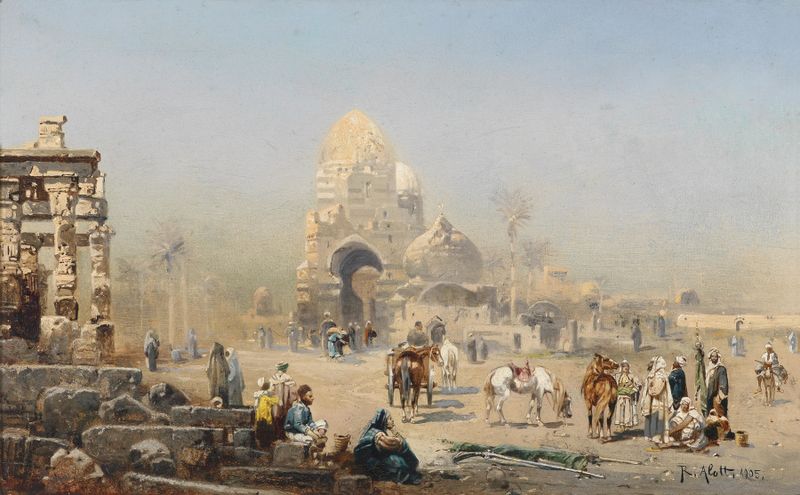
Orientalische Straßenszene
Robert Alott
Via Appia
Robert Alott
More Architecture Art
Browse all →
The statue of Liberty
Frédéric Auguste Bartholdi

View of Houses in Delft, Known as ‘The Little Street’
Johannes Vermeer

View of Houses in Delft, Known as ‘The Little Street’
Johannes Vermeer

The Cathedral in Rouen. The portal, Grey Weather
Claude Monet

The yellow house
Vincent van Gogh

The Church in Auvers-sur-Oise, View from the Chevet
Vincent van Gogh