Wimpfen im Tal — History & Facts
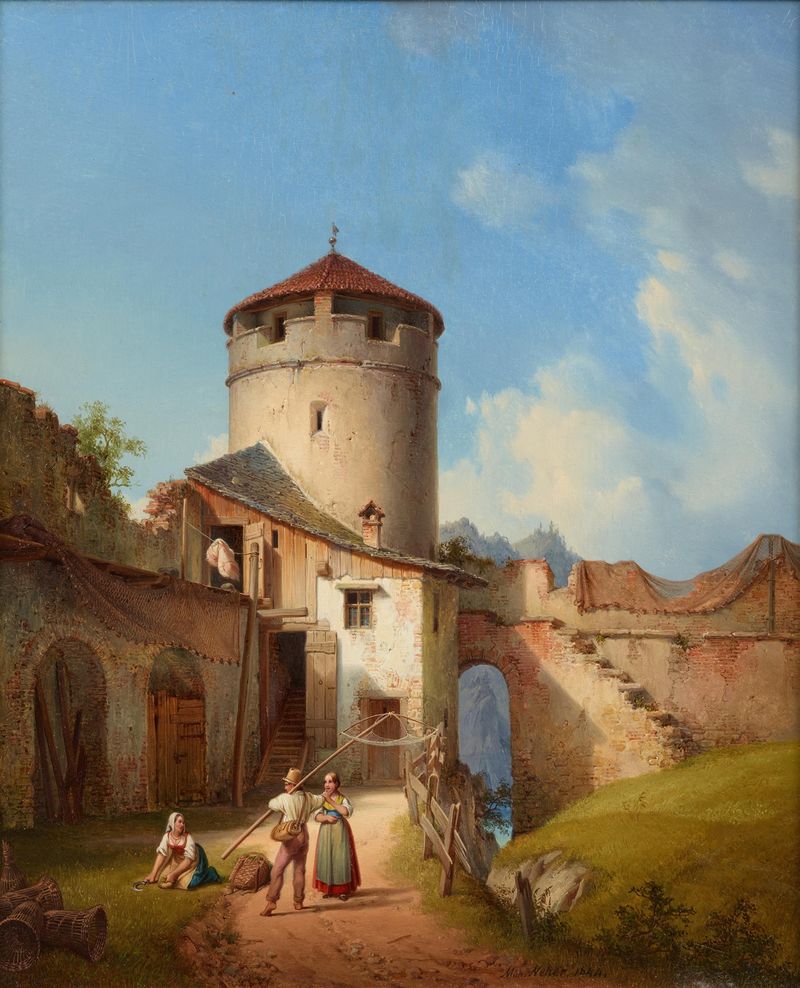
In the stillness of a moment, time seems to pause, allowing grief to seep into the fibers of existence. The landscape unfolds like a delicate whisper, revealing a world touched by melancholy, where the echoes of history linger in the air. Focus on the soft hues that blend seamlessly at the horizon, where the twilight sky kisses the earth. The muted colors of the valley below evoke a sense of quiet reflection, drawing the eye toward the winding path that meanders through the scene.
Notice how the distant hills cradle the town of Wimpfen, their gentle curves inviting contemplation. The brushwork is meticulous yet flowing, lending an ethereal quality that mirrors the complexity of sorrow. Beneath the surface, the painting alludes to deeper emotional tensions. The winding path symbolizes the journey of grief, with each twist and turn representing the unpredictable nature of loss.
The presence of the town, nestled quietly in the valley, suggests a sense of isolation — a reminder that even in bustling life, grief can be profoundly solitary. The interplay between light and shadow reflects the dual nature of hope and despair, blending seamlessly into a landscape that feels both real and surreal. In 1864, the artist was residing in Germany, a period marked by the lingering effects of the wars and personal tragedies that shaped his life. This was a time of artistic exploration and reflection, where the emotive qualities of landscapes began to resonate deeply within the hearts of viewers.
Neher, responding to the world around him, captured not just a scene but the essence of human emotion, forever memorializing the weight of grief in the tranquil embrace of Wimpfen.