
Windsor castle — History & Facts
Where does light end, and longing begin? In the ethereal landscape of Windsor Castle, a delicate dance between reality and dream takes shape, inviting viewers to wander through a realm of imagination. Look to the left at the castle's contours, where soft hues of cream and gold blend seamlessly into the vibrant blues of the sky. The light cascades over the turrets, illuminating the stonework with a warm glow that seems to breathe life into the structure. The artist's masterful brushstrokes create a sense of fluidity, as if the scene itself were caught in a moment of suspended time, ensconced in gentle whispers of nostalgia. Beneath the serene beauty lies a tension between permanence and transience.
The wisps of clouds hint at fleeting moments, while the solid, steadfast presence of the castle evokes stability and history. This contrast mirrors the artist's own sense of yearning for a simpler, idyllic past, a feeling echoed in the gentle ripples of the water below, which reflect not just the castle but the dreams and aspirations of those who gaze upon it. In 1913, Albert Goodwin painted this piece during a time marked by societal changes and artistic innovation. His work emerged in the context of the burgeoning modernist movement, where traditional forms were being challenged and redefined.
Goodwin, influenced by the tonal landscapes of the Pre-Raphaelites, sought to capture the emotional resonance of his subjects, finding beauty in both the familiar and the fantastical.
More Artworks by Albert Goodwin
Browse all →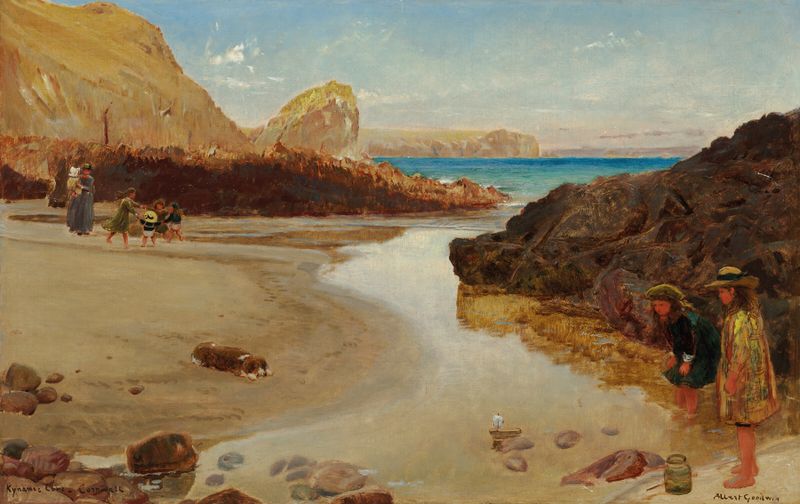
Kynance Cove, Cornwall
Albert Goodwin

Evening, St Hilda’s Abbey, Whitby, Yorkshire
Albert Goodwin

Sunset, Venice
Albert Goodwin
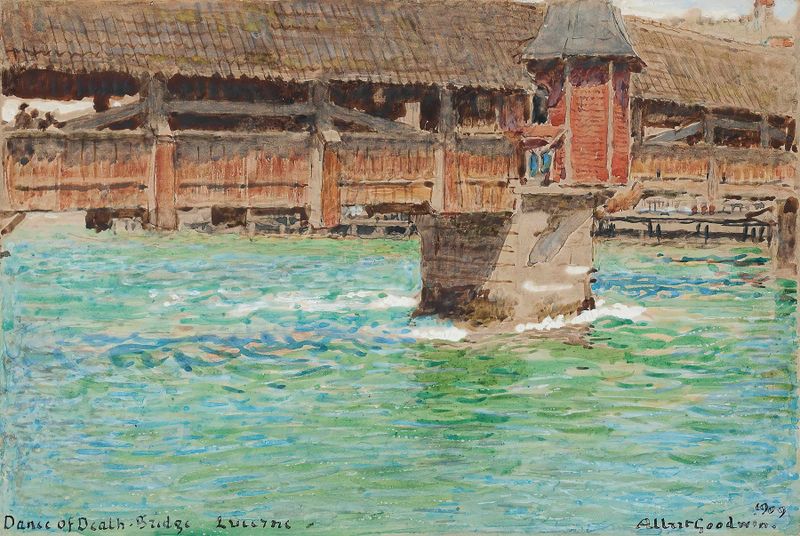
Dance Of Death Bridge, Lucerne
Albert Goodwin
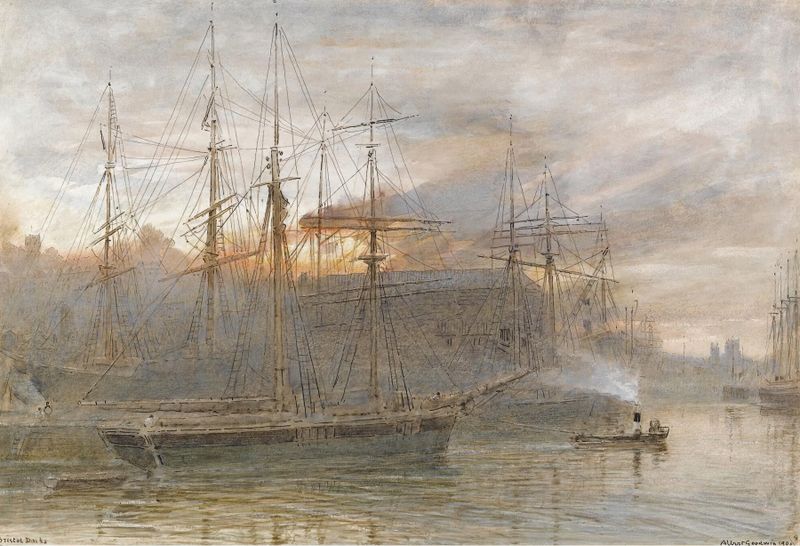
Bristol docks
Albert Goodwin

A view over Lake Lucerne
Albert Goodwin

Rockstone, Demerara, Guyana
Albert Goodwin

Autumn at Braunston, North Devon
Albert Goodwin

Night – faithful unto death
Albert Goodwin

Cabbage palms, Demerara, Guyana
Albert Goodwin





