
Winter in Maine — History & Facts
In the stillness of winter, a longing reverberates through landscapes cloaked in white; it captures the essence of yearning for warmth and connection. Look to the foreground, where the delicate interplay of light and shadow graces the snow-laden trees. The artist’s brush delineates each branch, their forms etched against a backdrop of soft blues and grays. Notice how the cool tones harmonize with the subtle warmth of the horizon, hinting at a sun that struggles to break through the clouds.
This careful balance of color invites the viewer to breathe in the crisp air of the scene, yet it also holds an underlying tension—nature’s beauty ensnared in the chill of winter’s grip. In the distance, the ocean meets the shore with gentle waves lapping against frozen rocks, a reminder of life persisting amid the harshness. Here, the stillness reflects a deeper emotional landscape—the contrast of life’s vibrancy against the starkness of the season. Those fleeting hints of warmth in the sky evoke a sense of hope, suggesting that even in the depths of winter, there is the promise of renewal and return. Created in 1887, this work emerged during a period when Bricher was exploring the New England landscape, firmly establishing his reputation as a leading figure in American luminism.
At this time, he was deeply engaged with portraying the natural world, capturing the ethereal effects of light. The late 19th century was a turning point for American art, as artists increasingly sought to express emotional depth through their portrayals of the landscape, a journey of reflection mirrored in this evocative piece.
More Artworks by Alfred Thompson Bricher
Browse all →
New England Coast
Alfred Thompson Bricher
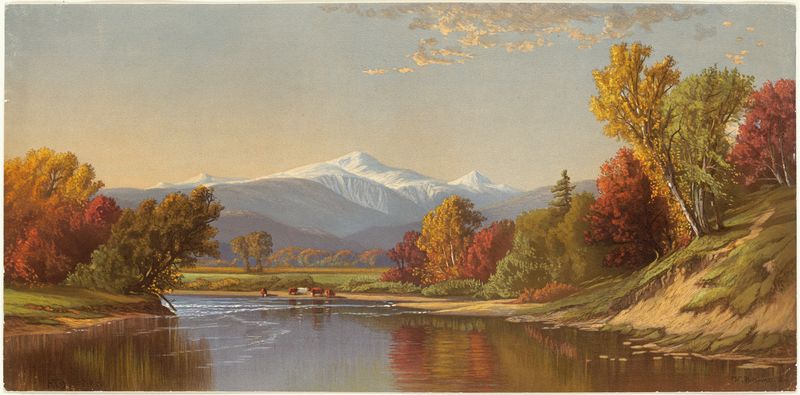
Late Autumn in the White Mountains
Alfred Thompson Bricher
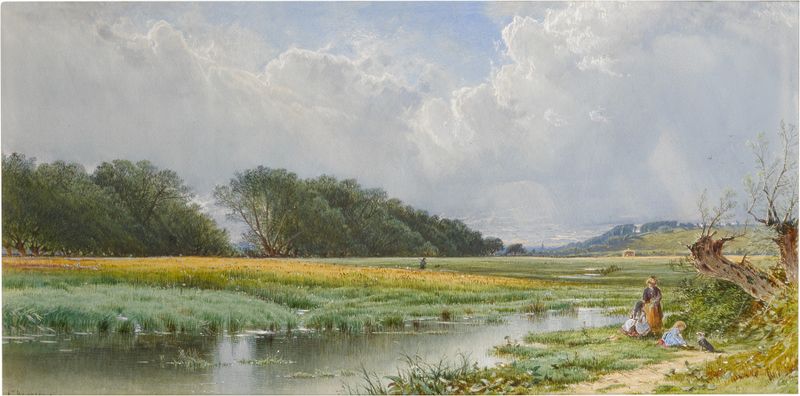
On the Meadows of Old Newburyport
Alfred Thompson Bricher

Along the Maine Coast
Alfred Thompson Bricher
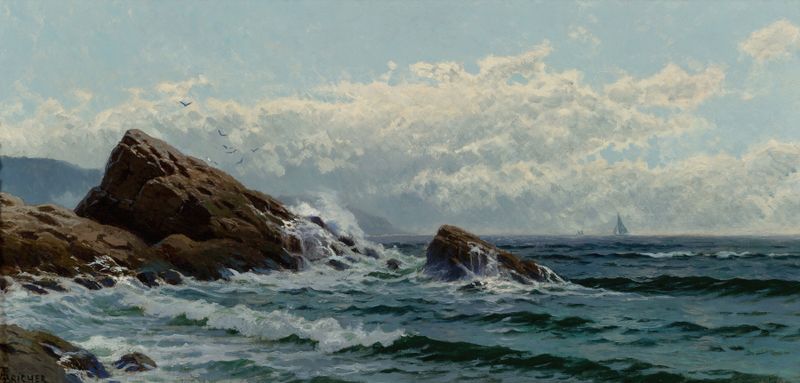
Crashing Waves
Alfred Thompson Bricher

At Water’s Edge
Alfred Thompson Bricher
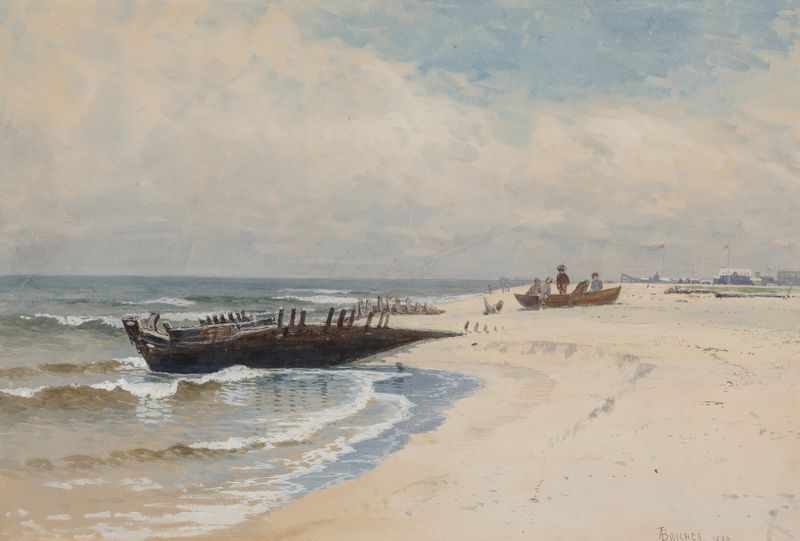
Low Tide
Alfred Thompson Bricher
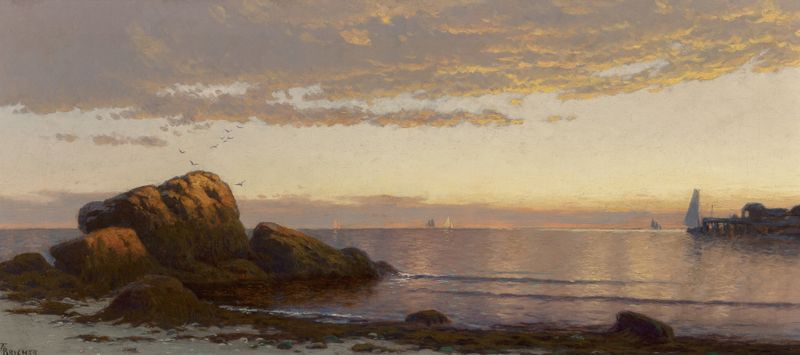
Sunset on the Coast
Alfred Thompson Bricher

Castle Rock, Nahant, Massachusetts
Alfred Thompson Bricher

On the Meadows of Old Newburyport
Alfred Thompson Bricher





