
Winter Landscape — History & Facts
In the stillness of winter, time seems suspended, whispering secrets of the landscape buried beneath the snow. The chill air freezes every breath, holding moments as fragile as the frost on bare branches. Look to the foreground where delicate snowflakes blanket the ground, creating a serene canvas of white. Notice how the muted colors blend seamlessly, with soft grays and blues contrasted by the dark silhouettes of leafless trees rising against the horizon.
The composition invites your gaze to drift along the winding path that draws you deeper into the scene, leading your eye toward the distant hills shrouded in mist. Light filters through the clouds, casting a gentle glow that illuminates the snow, giving life to what might otherwise feel desolate. Beneath the tranquil exterior lies a powerful tension between isolation and introspection. The barren trees symbolize resilience amidst the harshness of winter, while the winding path suggests a journey—perhaps one of reflection or solitude.
This juxtaposition of emptiness and potential evokes a sense of longing, creating an emotional resonance that lingers in the mind long after viewing. During the years spanning 1908 to 1912, the artist immersed himself in the evocative landscapes of Poland, reflecting on the complexities of life and nature. At this time, the art world was witnessing a shift, with movements such as Impressionism and Symbolism influencing artists to explore emotional depth and atmospheric effects. In this context, Szczygliński's work stands as a testament to his keen observation of the natural world and his ability to convey profound sentiments through seemingly simple scenes.
More Artworks by Henryk Szczygliński
Browse all →
The joint-stock brewery in Tenczynek
Henryk Szczygliński

House in the Sun
Henryk Szczygliński

Landscape near Vilnius
Henryk Szczygliński
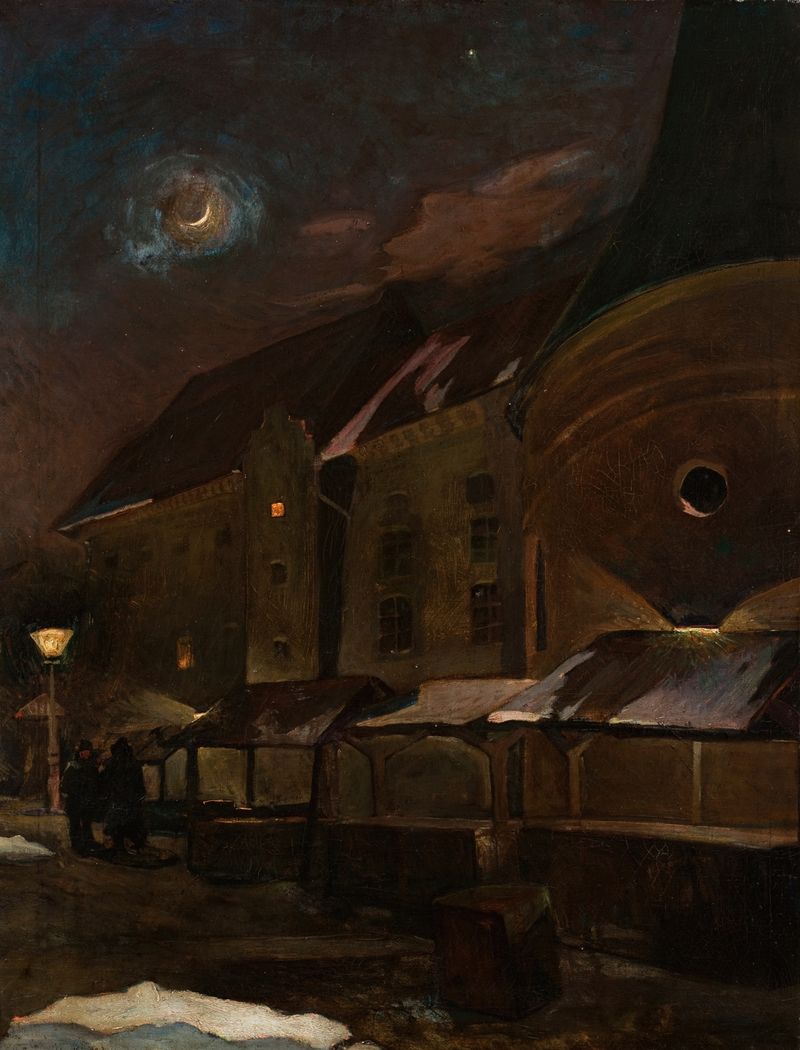
Small Market Square in Krakow at Night
Henryk Szczygliński

Dominican Shambles (Slaughterhouses) in Krakow
Henryk Szczygliński

Winter landscape at night with a halberdier
Henryk Szczygliński

Babia Góra
Henryk Szczygliński
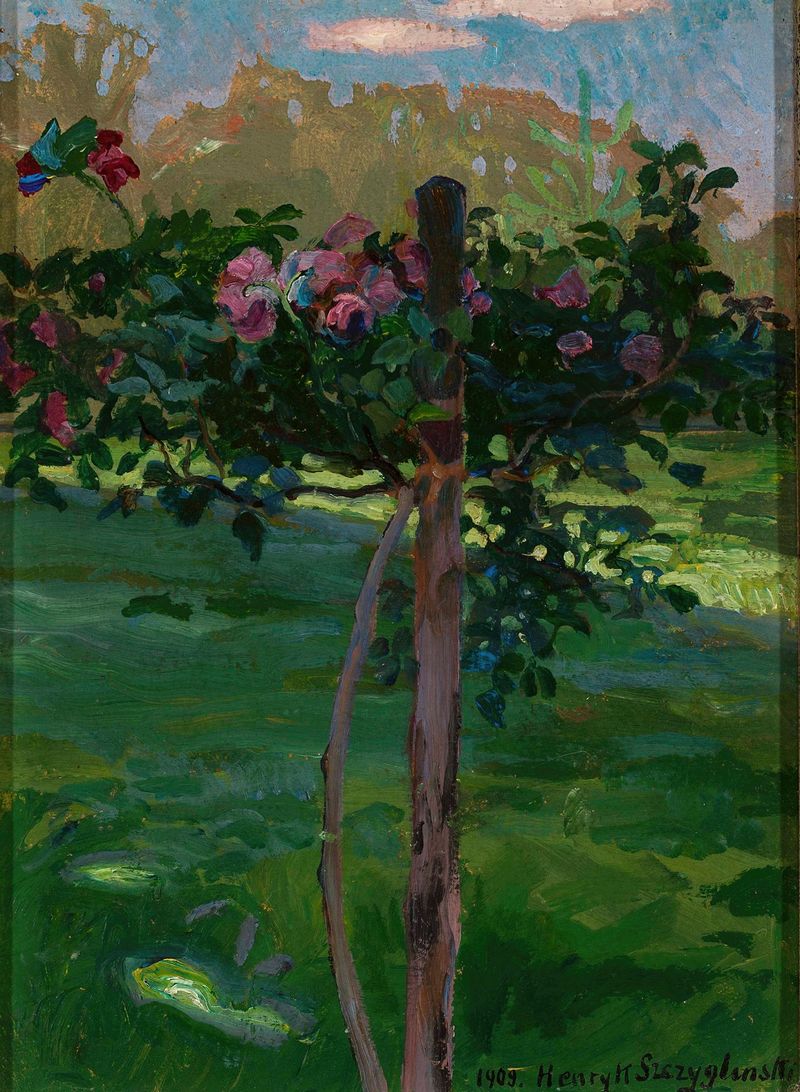
Rose shrub
Henryk Szczygliński
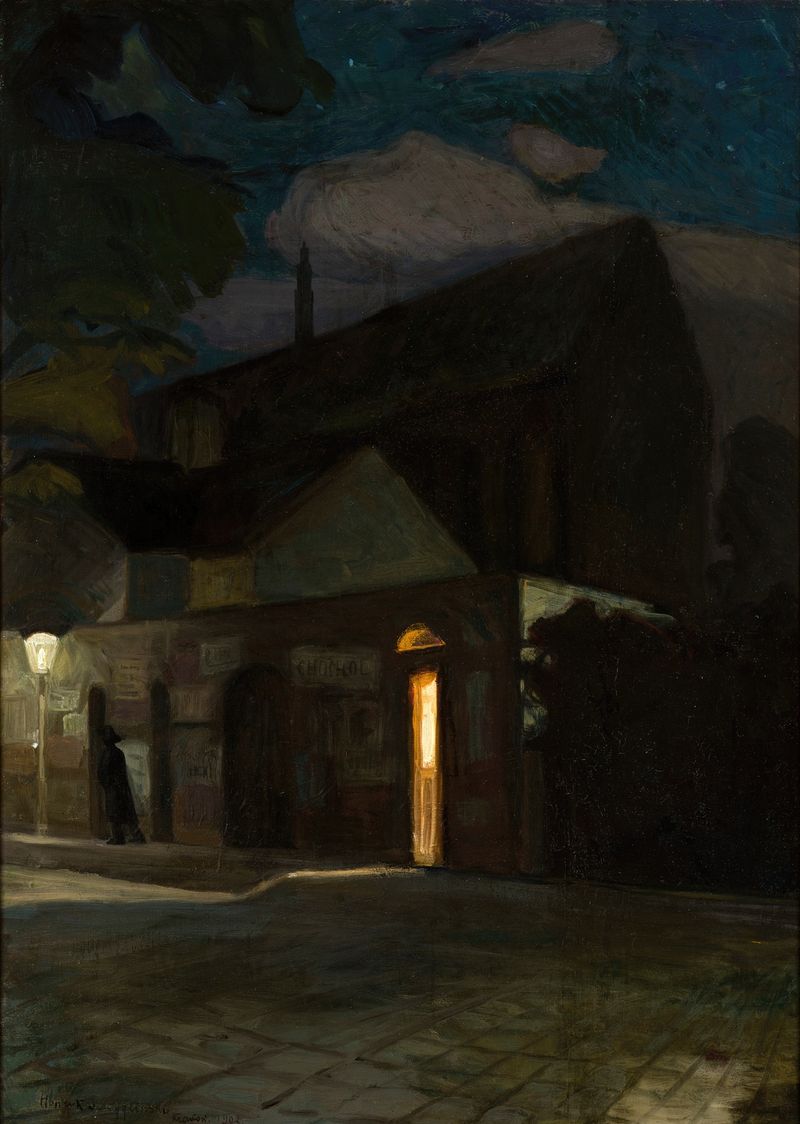
The Domincan Church in Krakow at Night
Henryk Szczygliński

Along the old route of our forefathers
Henryk Szczygliński





