Winter Landscape in the Evening Light — History & Facts
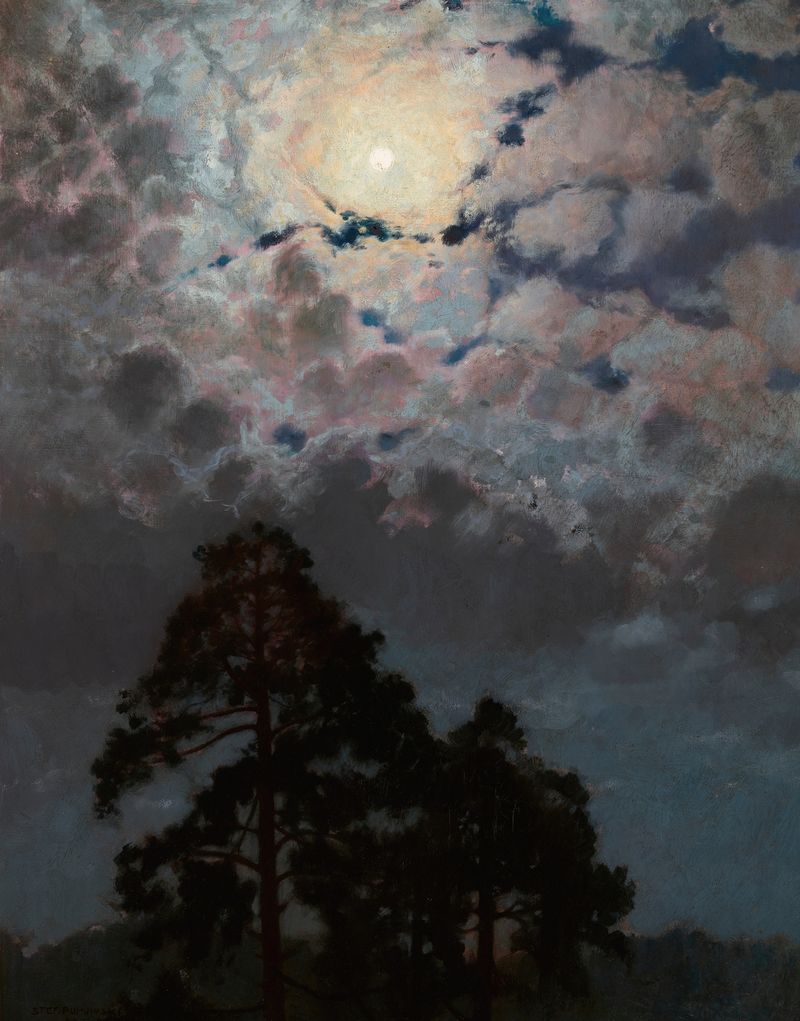
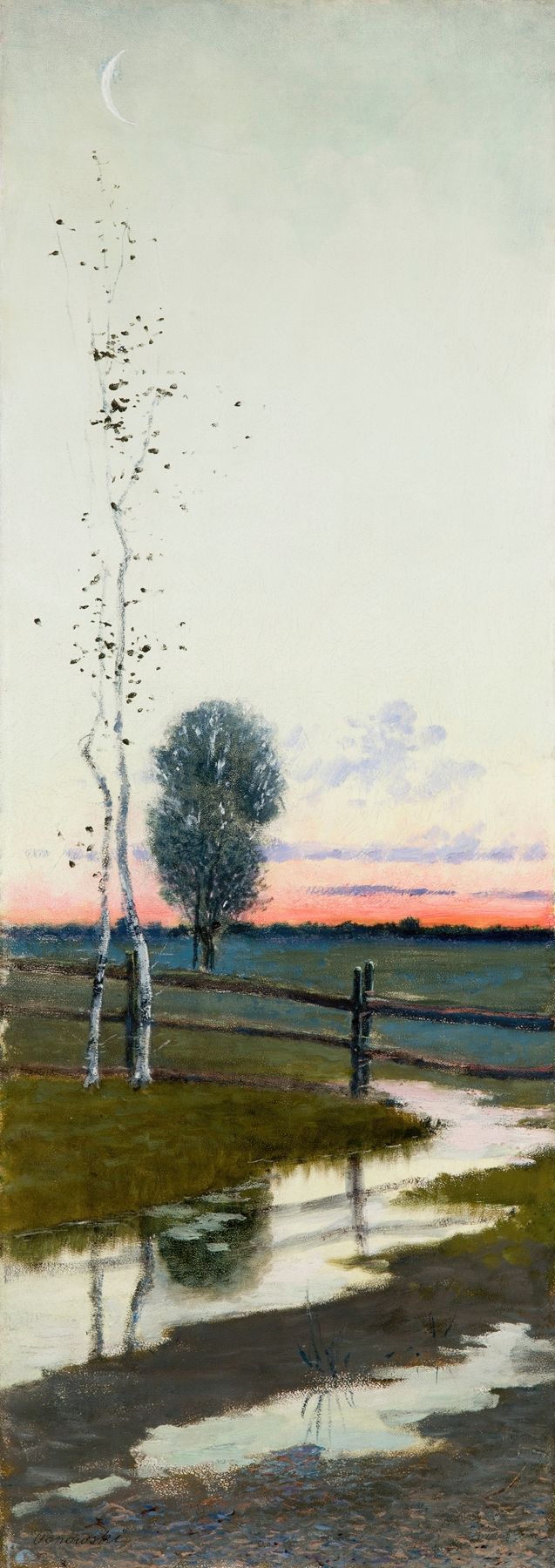
In the stillness of a winter evening, the world outside blurs, inviting a dreamlike exploration of solitude and reflection. Look to the left at the soft cascade of snow, its delicate texture glistening under the fading light, suggesting an ethereal purity. The horizon is painted with gentle strokes of blue and lavender, a tranquil gradient that creates both depth and a sense of calm. Notice how the shadows of the trees stretch across the canvas, their dark forms contrasting with the luminous sky — a reminder of the warmth that flickers on the edge of cold.
The subtle interplay of light and shadow encapsulates a moment suspended in time, inviting the viewer to linger. Within this winter landscape, emotional tensions emerge. The barren branches of the trees, stark against the pastel sky, evoke feelings of loneliness and introspection. Yet, there remains a sense of hope, as the evening light hints at the promise of dawn — a delicate symbol of renewal amid desolation.
Each brushstroke seems to whisper secrets, offering glimpses into dreams that linger just beyond reach, illuminating the tender balance between isolation and yearning. In 1935, Stefan Popowski painted this work while residing in Paris, a city throbbing with artistic energy and innovation during the interwar period. This vibrant environment fostered a deep engagement with the nuances of light and atmosphere, allowing him to capture the subtle emotional undercurrents of winter's embrace. At that time, Europe was navigating the complexities of a post-war identity, and his art reflects both the tranquility sought in natural beauty and the underlying tensions of a world in flux.