Wocheiner See — History & Facts
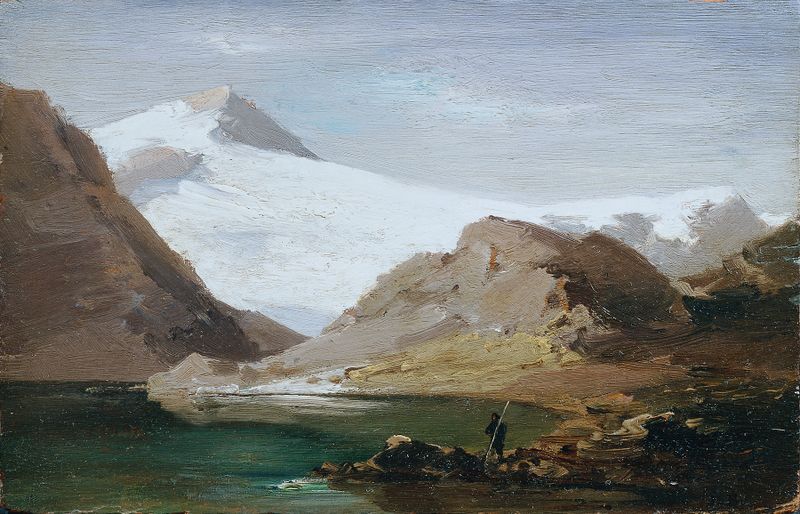
What if the unfolding of destiny lies within nature’s embrace, revealing beauty in the randomness of existence? Focus on the tranquil expanse of water at the center of the composition, where soft blues and greens merge to create a serene reflection of the sky. The trees, standing sentry along the banks, frame the scene with their lush foliage, painted in varied strokes that convey a sense of movement. Note how the light dances across the surface of the lake, creating ripples that invite the viewer to explore the depths of the natural world. In this artwork, the viewer is drawn into a contemplative atmosphere where stillness contrasts with the dynamic interplay of color and form.
Each brushstroke suggests a moment frozen in time, yet echoes the flowing inevitability of nature. The delicate balance between light and shadow hints at the transient nature of life, inviting thoughts on how destiny shapes every unfolding experience. Joseph Brunner painted Wocheiner See between 1885 and 1886 during a period of artistic exploration within the Austrian landscape school. Living in a time when Impressionism took hold in Europe, he sought to capture the essence of nature with a blend of observation and emotion.
This work reflects not only his personal journey as an artist but also the broader shift towards capturing the ephemeral beauty of the world.