
Woge — History & Facts
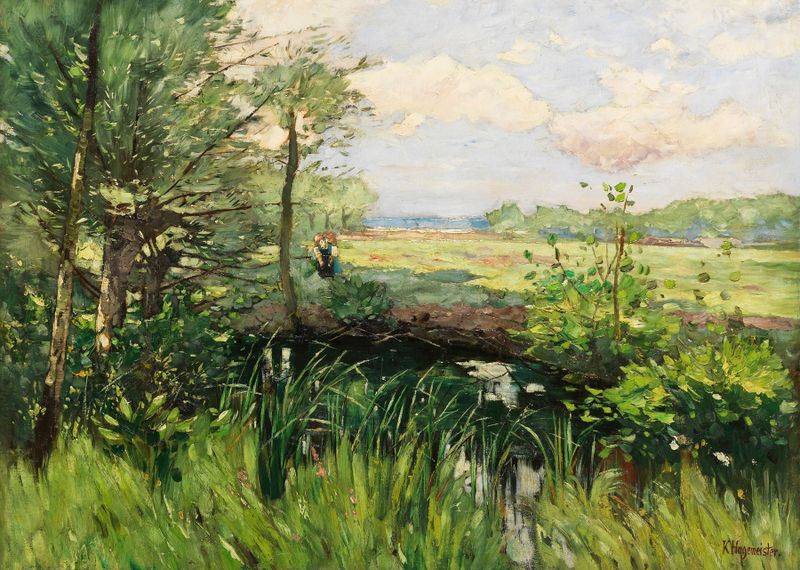
In a world fraught with chaos, the serene whispers of nature remind us of the beauty in stillness. Look to the bottom of the artwork, where gentle waves embrace the shore, shimmering in hues of soft blues and silvery whites. The brushstrokes are fluid, almost rhythmic, drawing the viewer's gaze across the landscape as if carried by the tide itself. Notice how the light dances on the water's surface, an interplay of sun and shadow that evokes a sense of tranquility—each stroke revealing the artist's deep connection to the natural world. This painting is layered with contrasts that speak to the complexity of serenity.
The turbulent movement of the water, captured with dynamic energy, stands in stark juxtaposition to the calmness of the horizon. Hidden in the depths of the waves are reflections of the sky—hinting at fleeting moments of clarity amidst life's tempests. Such dualities invite contemplation, urging us to find peace not in the absence of conflict, but in its coexistence. In 1912, Karl Hagemeister created Woge during a transformative period for European art, as the avant-garde movements began to challenge traditional forms.
Living and working in Germany, he explored impressionistic techniques that celebrated nature’s ephemeral beauty while navigating his own artistic evolution. The era's burgeoning interest in color theory and emotional expression can be felt in this work, encapsulating a moment of introspection amid the shifting tides of modernity.
More Artworks by Karl Hagemeister
Browse all →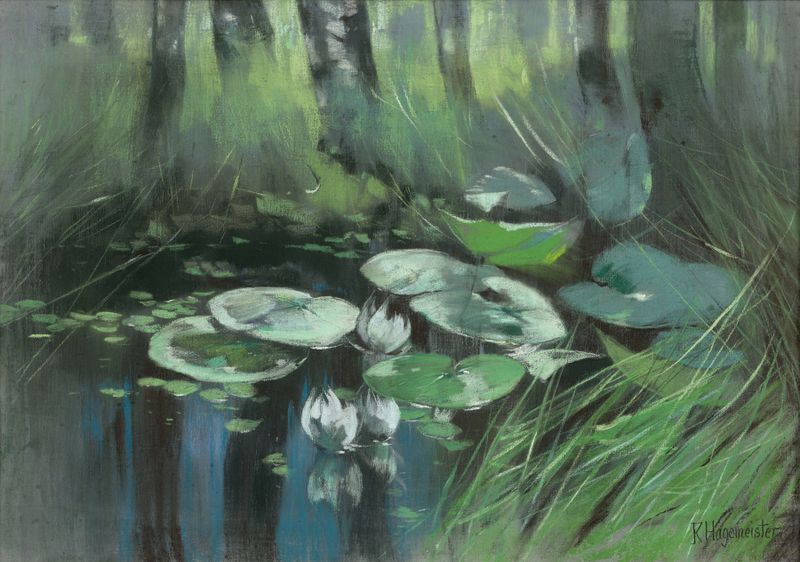
Teich in der Mark mit Seerosen
Karl Hagemeister
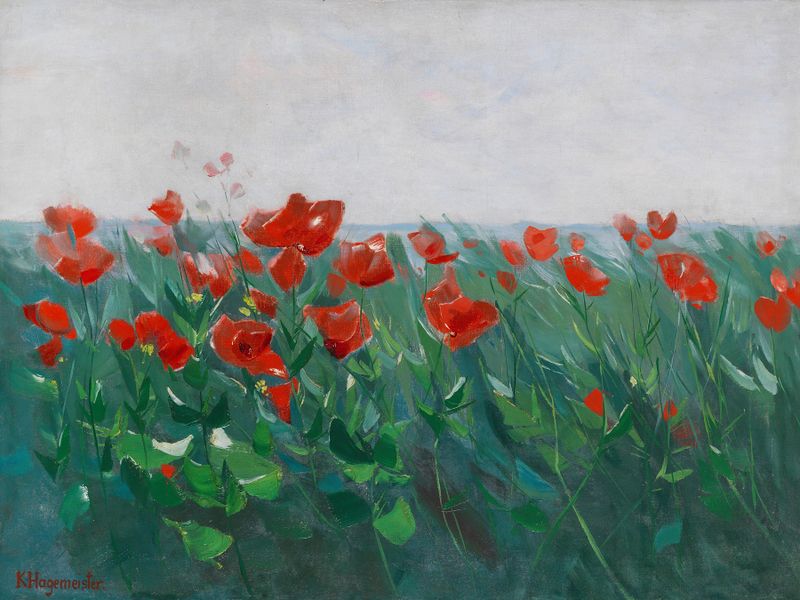
Roter Mohn am Seeufer
Karl Hagemeister

Bauernhaus bei Ferch
Karl Hagemeister
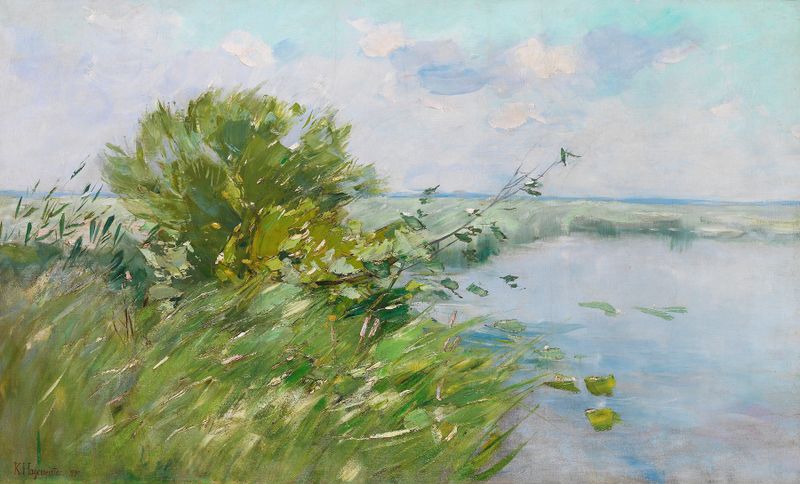
Märkische Seenlandschaft
Karl Hagemeister

Seeufer bei Ferch
Karl Hagemeister
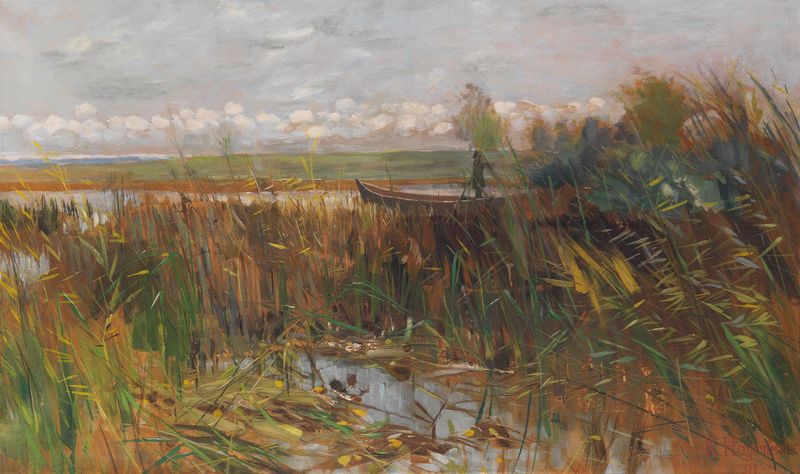
Märkische Seenlandschaft mit Entenjäger im Kahn stehend
Karl Hagemeister
Der Schwielowsee bei Kaputh – Frühling
Karl Hagemeister

Waldweiher
Karl Hagemeister

Waldlandschaft mit Bachlauf (Golmer Luch)
Karl Hagemeister

Sanddornstrauch an der Meeresküste
Karl Hagemeister





