
Wood gatherers on the ice — History & Facts
In the chill of a winter’s day, dreams of warmth and vitality are transformed onto a canvas, capturing the very essence of survival. Look to the left where figures hunch against the biting cold, their silhouettes stark against the bright expanse of ice. The artist employs a muted palette dominated by icy blues and grays, with touches of earthy browns that evoke the wood they're gathering. Notice how the light shimmers on the surface of the frozen lake, creating a stark contrast between the harshness of their task and the ethereal beauty surrounding them.
Each brushstroke encapsulates their struggle, binding the moment within its serene yet chilling embrace. Delve deeper into the scene, where the interplay of shadow and light reveals the emotional weight of resilience. The distance between the figures speaks volumes; their solitary forms reflect a shared experience, yet each man is isolated in his labor, a poignant reminder of existence amidst nature's indifference. The fine details — a tattered coat here, a bent knee there — echo stories of hardship, forging a connection between viewer and subject that transcends generations. In 1861, Spohler painted this work during a period of great change in Europe, where industrialization began to encroach on traditional ways of life.
As he captured these humble gatherers, he found himself entrenched in the evolving art scene of the Netherlands, which was grappling with the passage of time and modernity. This juxtaposition of reality and dream in Wood gatherers on the ice reflects the artist's contemplation of memory in a world relentlessly shifting beneath his feet.
More Artworks by Jan Jacob Coenraad Spohler
Browse all →
Figures on a Dutch frozen waterway
Jan Jacob Coenraad Spohler
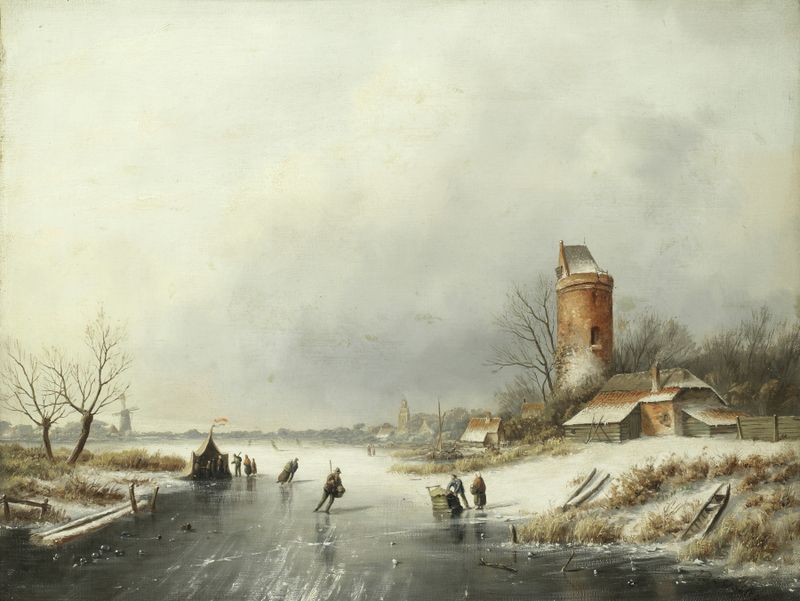
A winter landscape with figures on the ice
Jan Jacob Coenraad Spohler
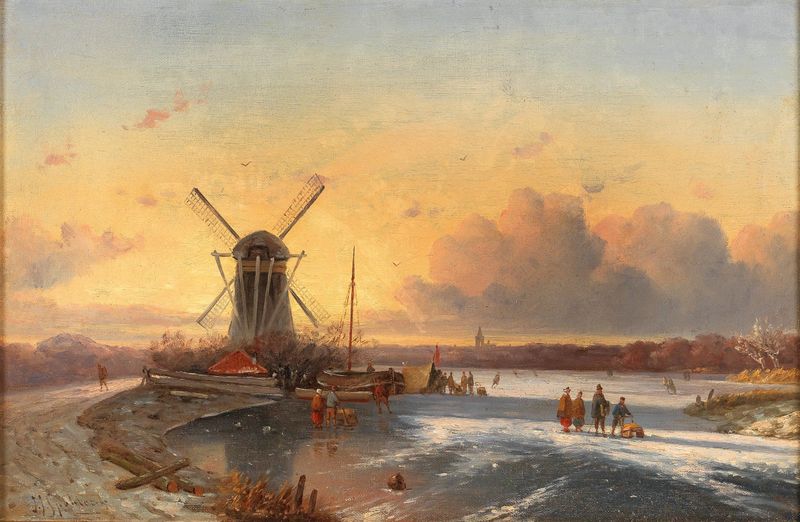
Fun On The Ice
Jan Jacob Coenraad Spohler

Winter landscape with skaters beside a windmill
Jan Jacob Coenraad Spohler
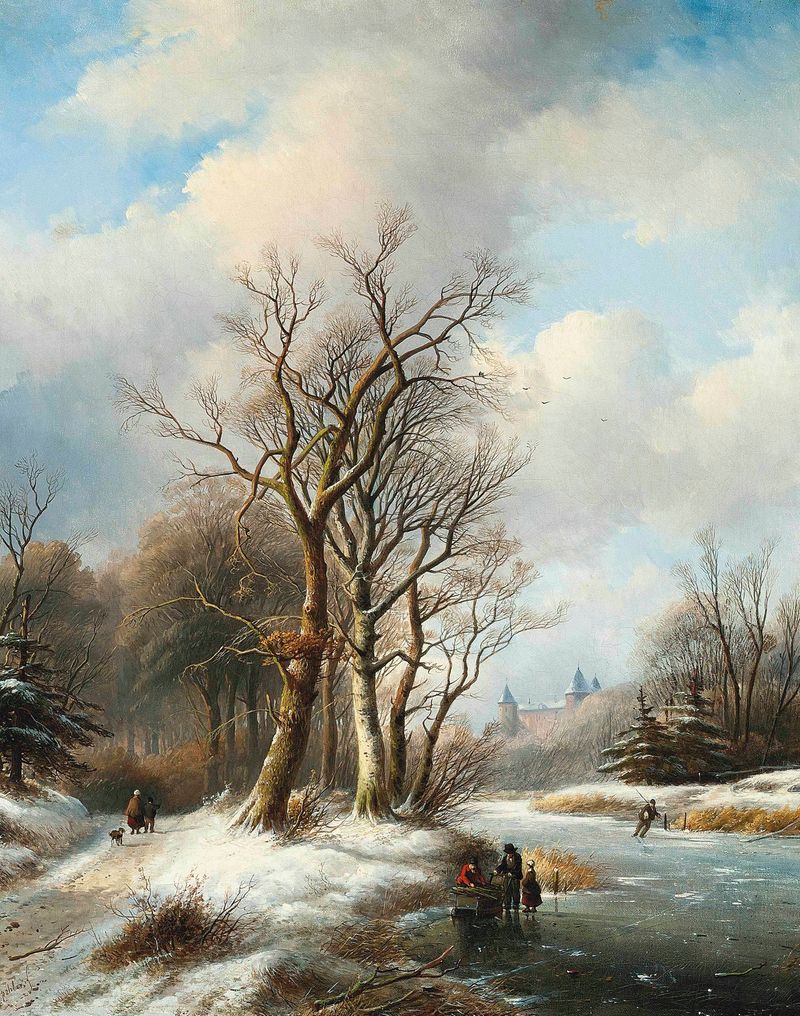
Figures on a frozen waterway, a castle beyond
Jan Jacob Coenraad Spohler
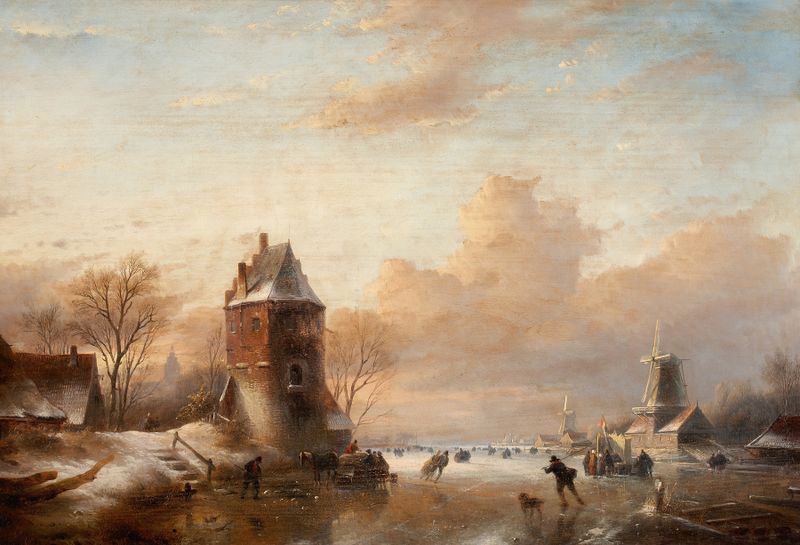
Winter Landscape with Windmills and Skaters
Jan Jacob Coenraad Spohler

Skating Pleasures
Jan Jacob Coenraad Spohler

Holländische Flusslandschaft
Jan Jacob Coenraad Spohler
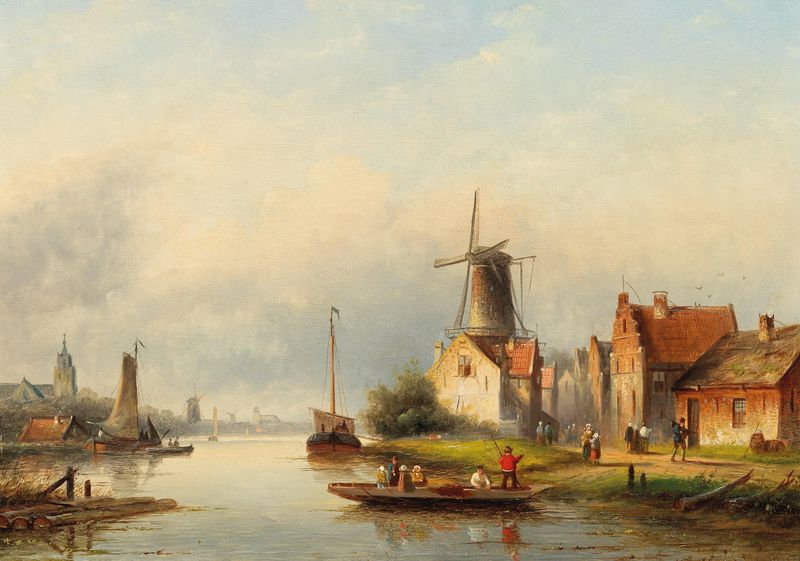
Fishermen On The Canal
Jan Jacob Coenraad Spohler
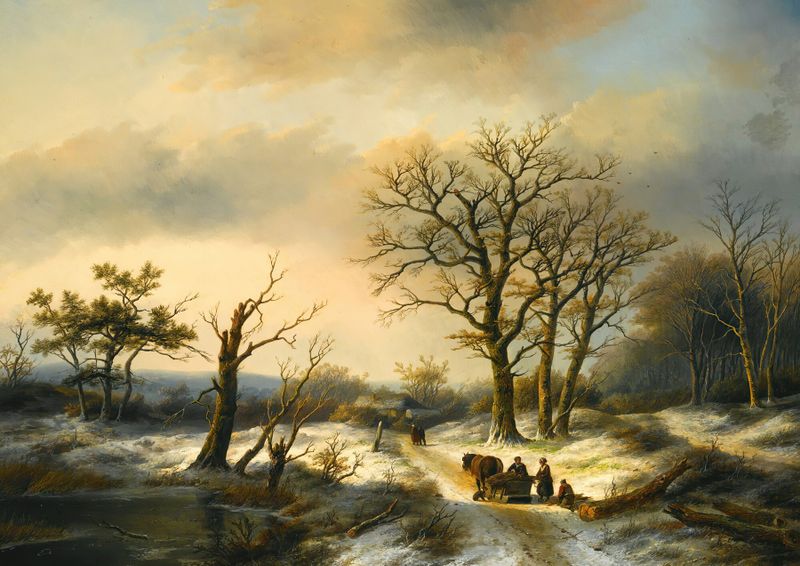
Wood Gatherers On A Snowy Path
Jan Jacob Coenraad Spohler





