Wooded Landscape — History & Facts
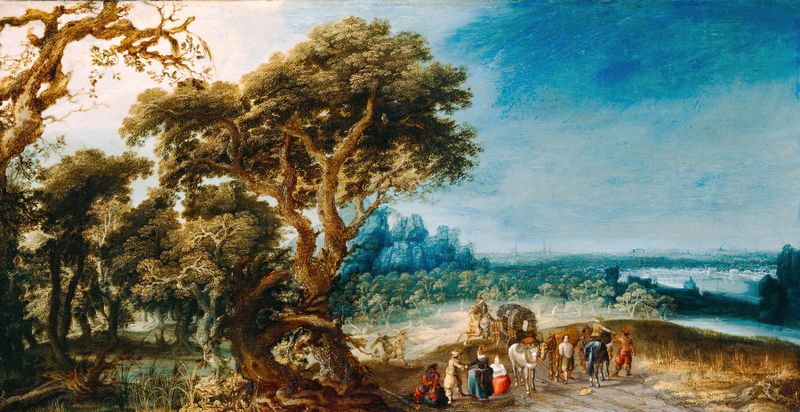
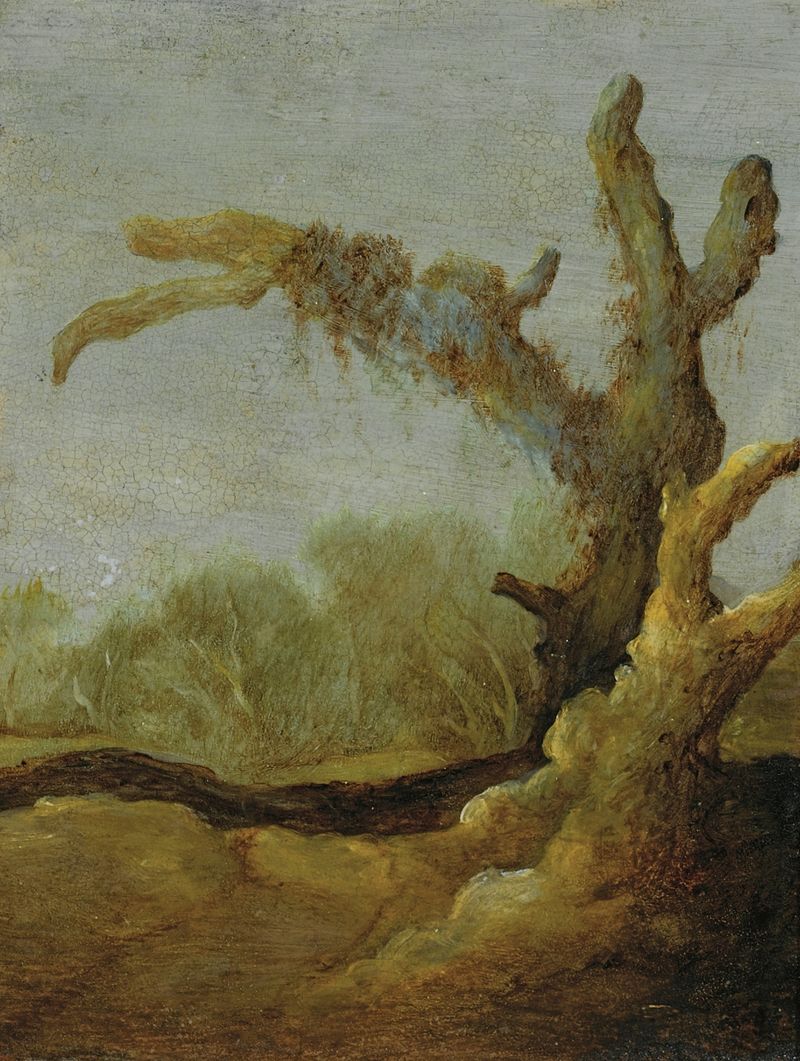
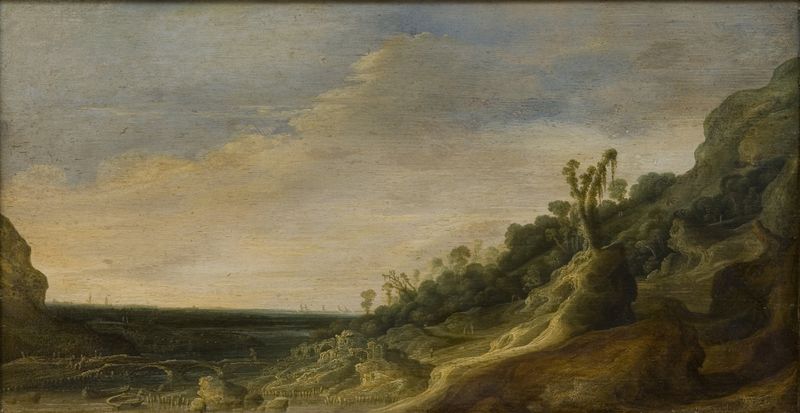
In Wooded Landscape, the artist breathes life into the delicate interplay between nature’s beauty and the inevitability of mortality. This work invites contemplation of a world where every vibrant hue is infused with transience, urging us to reflect on our fleeting existence amid the tranquility of the natural realm. To fully appreciate the depth of the painting, look first to the foreground, where a gentle stream winds through verdant foliage. Notice how the lush greens are punctuated by dappled sunlight filtering through the trees, casting playful shadows that dance upon the ground.
The textured brushwork brings the leaves to life, each stroke a testament to the artist’s skill in capturing the essence of an idyllic woodland scene. The composition is carefully balanced, leading the eye deeper into the picture, where a horizon hints at the vastness beyond. Within this serene landscape, contrasts pulse with meaning. The vibrancy of life is present, yet the muted tones of the underbrush whisper of decay, reflecting nature’s duality.
The juxtaposition of dynamic movement in the water against the stillness of the trees evokes the tension between permanence and impermanence—an echo of our own lives caught in the flow of time. Each element, from the gentle sway of the branches to the quiet murmur of the stream, blends into a meditation on existence, urging us to pause and consider our place in this tapestry. Jacob van Geel painted Wooded Landscape around 1633, a time when he was establishing his reputation within the Dutch golden age of painting. Residing in Utrecht, he thrived in a vibrant artistic community where nature was a favored subject, reflecting both the cultural reverence for the outdoors and a burgeoning interest in realism.
His works from this period are marked by a keen attention to detail and an emerging narrative style, characteristics that would define his artistic legacy.