Landscape with a Carriage Hold-Up — History & Facts
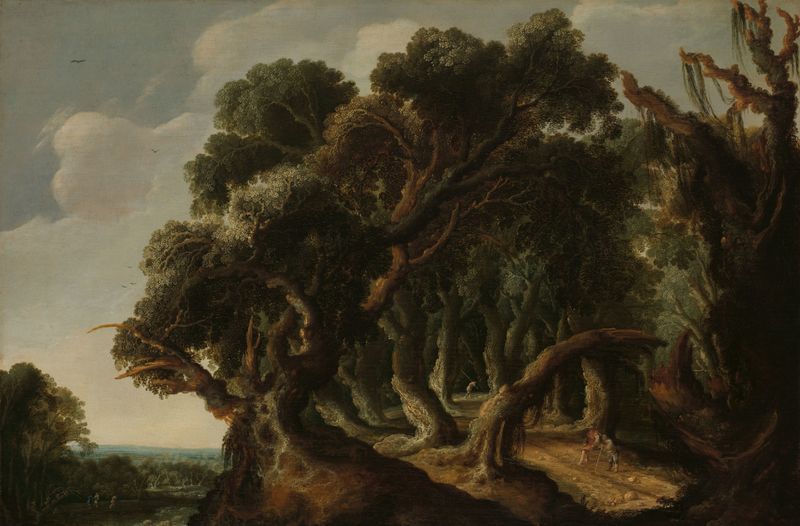
Can beauty exist without sorrow? In the stillness of Landscape with a Carriage Hold-Up, memory whispers from the canvas, merging tranquility with a haunting tension that permeates the air. Look to the foreground, where the carriage stands stranded, its passengers caught in a moment frozen in time. The earthy tones of the landscape—soft greens and browns—contrast sharply with the vivid reds of the carriage, drawing your eye to the scene's pivotal action. The play of light—golden beams piercing through the clouds—illuminates the figures with an almost ethereal glow, evoking a sense of vulnerability amidst the chaos.
Notice how the path stretches into a hazy distance, hinting at a journey interrupted, a story untold. Examining the details reveals deeper insights into the emotional landscape of this work. The expressions on the faces of the figures range from shock to fear, capturing a spectrum of human experience in the face of adversity. The surrounding trees, though majestic, seem to watch over the scene with a heavy silence, amplifying the weight of the moment, suggesting that beauty often resides within the cradle of sorrow and uncertainty.
The juxtaposition of nature's serenity against human turmoil speaks to the fragility of existence. During the early 1620s, Jacob van Geel painted this work in the Netherlands, a time marked by both the flourishing of Dutch art and the tensions of the Thirty Years' War. The artist, emerging from the burgeoning Baroque movement, sought to capture not only the picturesque beauty of landscapes but also the complexities of human emotions. In doing so, he contributed to a legacy that reveals how art can hold a mirror to the human condition, encapsulating moments of both light and shadow.