Wooded landscape with a hut in a storm — History & Facts
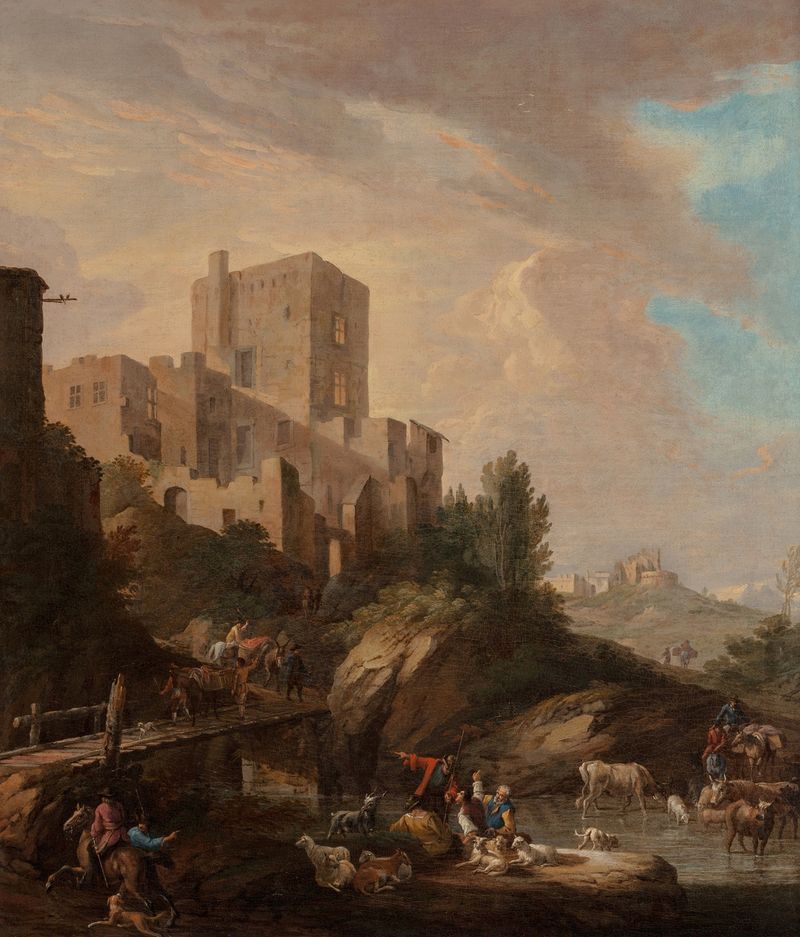
Can beauty exist without sorrow? The turbulent sky looms over a tranquil scene, a poignant reminder that within nature's splendor often lies a whisper of despair. This duality, captured in Wooded Landscape with a Hut in a Storm, draws viewers into a contemplation of the delicate balance between chaos and serenity. Look to the left where the dense, stormy clouds swirl, painted with rich shades of gray and deep blue, evoking a sense of impending turmoil. The small, humble hut stands resilient against nature’s fury, its earthy browns and warm tones offering a stark contrast to the surrounding darkness.
Notice how the brushwork captures the swaying trees, their leaves dancing in the wind, while the light breaks through in delicate slivers, illuminating patches of the landscape, suggesting a glimmer of hope amidst the brewing tempest. Beneath the apparent beauty of the scene lies a tension between tranquility and the foreboding storm. The hut, a symbol of human perseverance, contrasts sharply with the uncontrollable forces of nature, inviting viewers to reflect on vulnerability and strength. Furthermore, the lush greenery, though vibrant, is overshadowed by the looming threat of the storm, evoking feelings of unease that challenge the notion of beauty as purely idyllic. Created by an anonymous artist from the German School in the 18th century, this work reflects a period marked by a growing interest in the sublime and the picturesque within landscapes.
Amidst the rise of Romanticism, artists sought to depict not just beauty but also nature’s might, resonating with the societal contemplation of humanity’s place within an ever-changing world. This painting embodies that spirit, capturing a moment where nature’s beauty is intertwined with the suggestion of danger.