Zielony Staw (Green Lake) at the Foot of Mounts Kościelec i Świnica — History & Facts
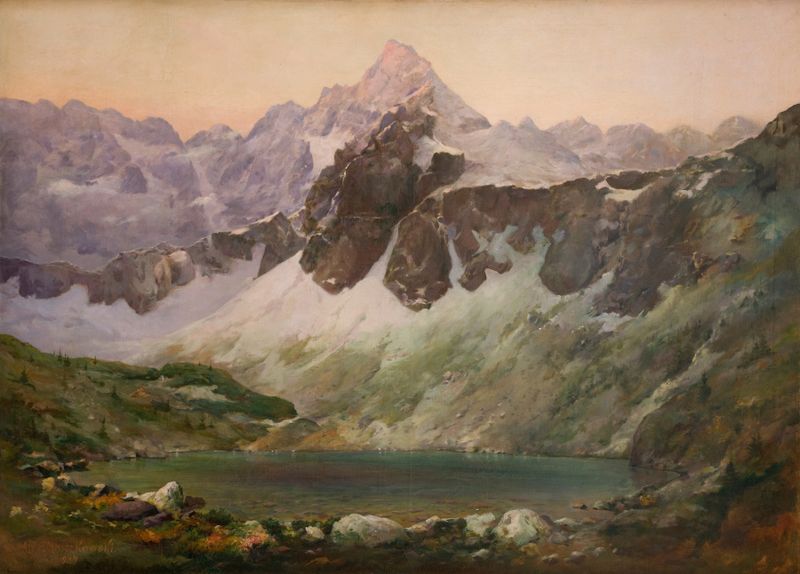
Can paint confess what words never could? In Zielony Staw, the melancholy of an untouched landscape whispers secrets that linger in the stillness of nature. Focus on the tranquil expanse of the lake, its emerald surface shimmering under a veil of soft light. Notice how Mroczkowski captures the delicate interplay of green and blue, invoking a sense of peace yet hinting at something deeper beneath the surface. The grandeur of the surrounding mountains looms in the background, their rugged forms contrasting with the lake's serene quality, drawing the viewer into a dialogue of movement and stillness. The painting offers an exploration of solitude, where the still water reflects not just the sky, but the weight of unspoken emotions.
The viewer may feel a tension between the calm surface and the jagged peaks, suggesting that beauty often masks a more profound sadness. Small details, like the gentle ripples at the water’s edge, pulse with life, yet evoke a sense of ephemeral existence, inviting contemplation on the passage of time and the nature of longing. Created in 1921, this piece emerged from Mroczkowski's experiences in the aftermath of World War I, a period marked by personal and collective introspection. Residing in Poland, he was influenced by the shift in artistic landscapes that followed the war, exploring themes of nature and identity.
This work reflects not only personal emotions but also a broader cultural yearning for peace and beauty amidst the scars of conflict.