The Morskie Oko Lake in the Tatras — History & Facts
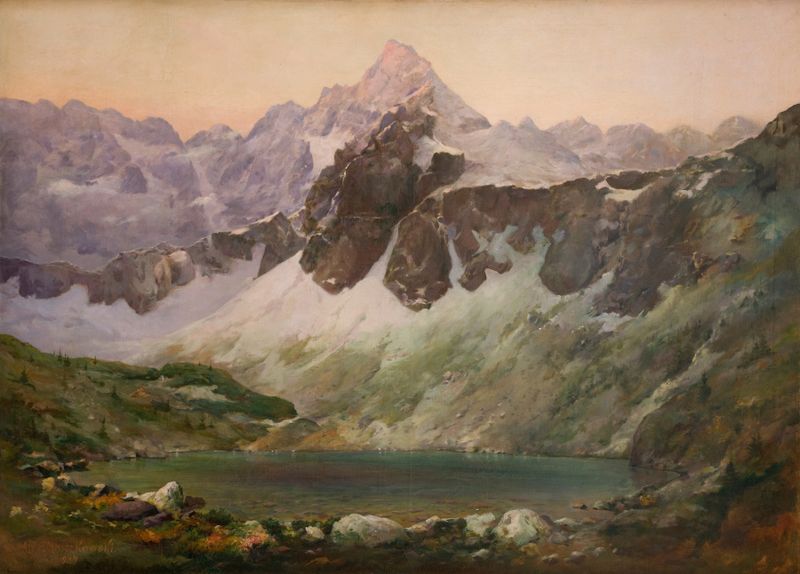
Can beauty exist without sorrow? The question lingers in the stillness captured within this serene landscape, evoking a yearning for the elusive and the extraordinary. Look closely at the crystalline waters of Morskie Oko, where the surface reflects a hauntingly beautiful sky, skillfully rendered in soft blues and gentle whites. Notice how the artist employs rich greens in the surrounding pine trees, creating a harmonious contrast against the tranquil lake. The delicate brushstrokes give life to the scene, while shadows dance across the rugged mountain peaks, hinting at the mysteries that lie beneath their majestic facades. As you explore the composition, consider the emotional resonance of solitude that permeates the painting.
The vastness of the landscape envelops the viewer, inviting contemplation and introspection, while the stillness of the lake suggests a longing — perhaps for connection, or for a past that can never be recaptured. The juxtaposition of the vibrant natural beauty and the quiet loneliness evokes a poignant tension, reflecting the duality of desire and fulfillment. Aleksander Mroczkowski painted this masterpiece in 1891, during a time when the artistic world was deeply influenced by Romantic ideals. Working in Poland, he sought to capture the sublime essence of nature, blending realism with emotional depth.
The late 19th century marked a significant period of exploration in landscape painting, where artists grappled with their relationship to the natural world and the emotions it stirred within them.