Zingende geestelijke — History & Facts
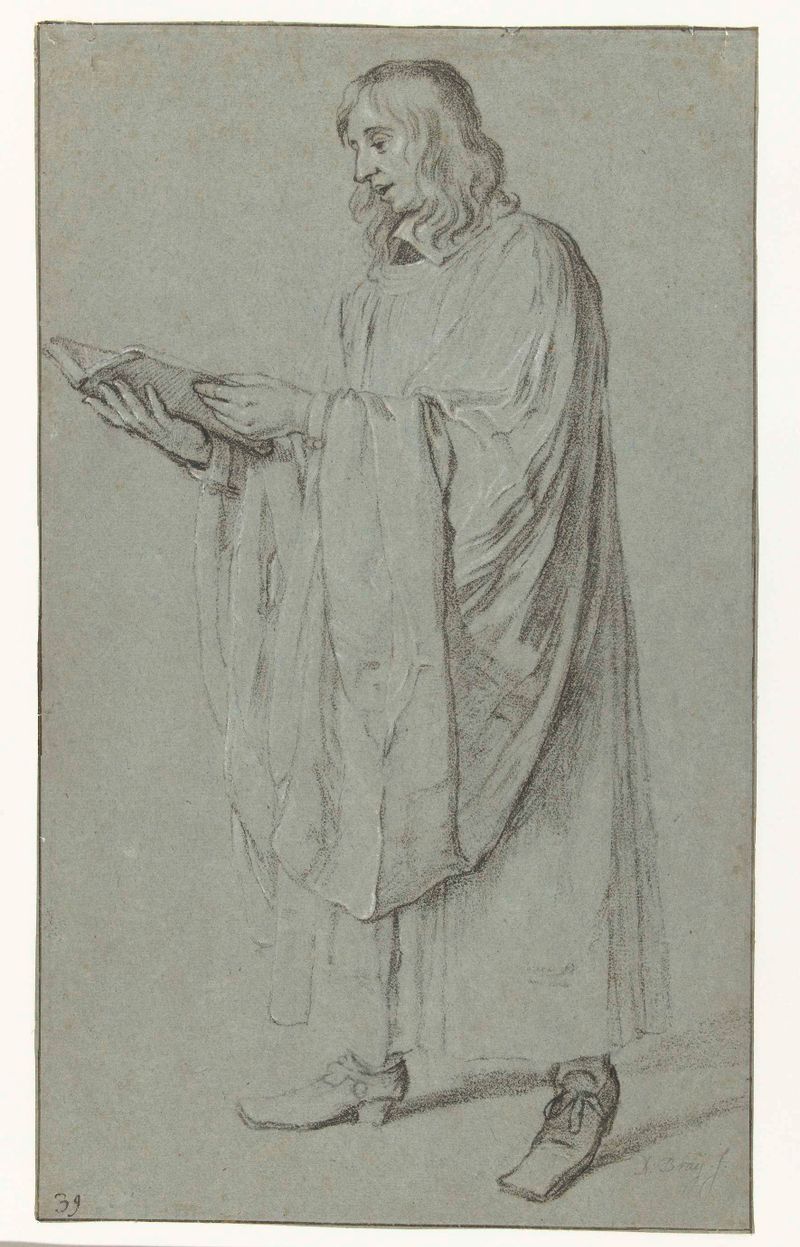
Is this a mirror — or a memory? The vibrant hues of the canvas dance playfully, challenging our perception of reality, drawing us into a world where color reveals deeper truths and hidden narratives. Look to the left at the figure, draped in rich reds and deep blues, whose expressive gestures evoke a sense of both joy and contemplation. The artist’s meticulous attention to detail shines through in the texture of the fabric and the delicate play of light that captures the contours of the face. Notice how the soft illumination accentuates the golden tones in the background, creating a warm aura that cradles the subject, suggesting an inner radiance that transcends the mere physical. Yet, the vibrant colors contrast with the pensive expression of the figure, hinting at the emotional complexity beneath the surface.
Each brushstroke seems to whisper secrets, revealing a tension between the joy of song and the weight of memory. The color palette itself becomes a character in this narrative, with vibrant red symbolizing passion intertwined with the muted tones of reflection, illustrating the duality of the human experience — joyous yet sorrowful. In the late 17th century, Jan de Bray created this work during a period marked by the flourishing of Dutch art, amidst evolving themes of individualism and introspection. Living in Haarlem, he was influenced by the art of his contemporaries while carving his own path.
This painting stands as a testament to his mastery in merging vibrant color with profound emotional exploration, reflecting a society in transition, where art became a mirror to the complexities of the human soul.